Neuromorphic Devices and Quantum Computing - Materials Science Perspectives
Exploring materials science's role in neuromorphic devices and quantum computing, with insights on future MRS priorities from incoming president Matt Copel.
Machine Learning and AI for Data-Driven Materials Development and Design - Part 2
Explore machine learning's role in materials research, covering its application in experimental and theoretical materials science and discussing future impacts on the field.
From Physics to Machine Learning and Back
Explore the fascinating intersection of physics and machine learning, uncovering how these fields influence and enhance each other's methodologies and discoveries.
Deep Generative Modeling for HEP, Cosmology and Fluid Dynamics
Explore deep generative modeling applications in high-energy physics, cosmology, and fluid dynamics with insights from NERSC expert Karthik Kashinath.
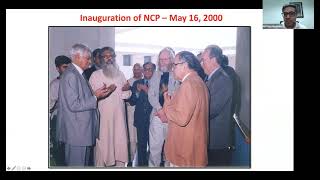
Physics Matters - Fluid Dynamics of Wildfires
Explore the fluid dynamics of wildfires, their environmental impact, and how Computational Fluid Dynamics can model and potentially prevent these destructive natural phenomena.
Seeding Environmental Sustainability Into the Cloud Native Community
Explore the CNCF Environmental Sustainability Working Group's mission to integrate eco-friendly practices in cloud-native systems, addressing growing computing power demands and fostering a sustainable digital future.
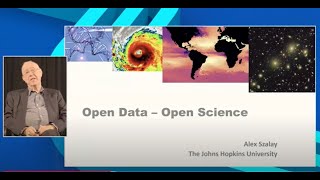
Open Science Plenary - Advancing Data-Driven Discovery
Explore the future of open science with Alexander Szalay's plenary address at AGU22, discussing innovative approaches and advancements in scientific collaboration and data sharing.
Deep Learning Applications for Automated Subsurface Model Building
Explore AI/ML applications in geoscience for automated subsurface model building, improving efficiency and accuracy in workflows using seismic, wellbore, and geophysical data.
Automotive Collaboration: Progress and Challenges in the Last Year
Explore the progress in automotive software collaboration, focusing on recent improvements, challenges, and the impact of open-source initiatives on the industry's complex development landscape.
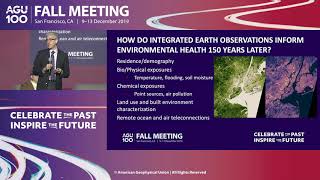
Earth Science Data Access and Integration at the Nexus of Science, Policy, and Society
Explore Earth science data integration with socio-economic and health data for transdisciplinary research. Learn about challenges and opportunities in data access, harmonization, and analysis frameworks.
One Hundred Years of Technological Advances in the Earth and Space Sciences
Explore a century of technological breakthroughs in Earth and Space sciences, from in situ sensors to AI, and their impact on scientific understanding and future advancements.
Fighting Climate Change with Blockchain and Open Source
Explore innovative approaches to combat climate change using blockchain technology and open-source solutions, presented by Si Chen from Open Source Strategies, Inc.
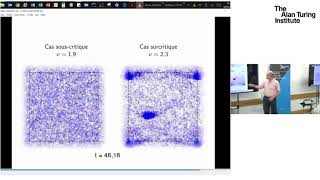
From Micro to Macro in Collective Dynamics
Explore methods for modeling collective dynamics, from microscopic to macroscopic scales. Learn techniques for analyzing complex systems in various scientific fields.

Living Body - Forensics in the Courtroom - Christmas Lecture 3
Forensic anthropologist Sue Black investigates a heist, demonstrating forensic techniques and their courtroom applications in this engaging Royal Institution Christmas lecture.

Constructor Theory: A New Explanation of Fundamental Physics
Explore constructor theory, a revolutionary approach to fundamental physics, offering new perspectives on laws of nature and potential applications in quantum computing and AI.

John Tyndall - The Physicist Who Proved the Greenhouse Effect
Explore John Tyndall's diverse scientific contributions, from diamagnetism to the greenhouse effect, and his impact on modern environmental concerns and communication technology.
Our Quest to Understand the Brain - History and Modern Approaches
Explore the brain's complexity through history, from mechanical analogies to modern AI. Discover how scientific understanding has evolved and what current research reveals about memory and cognition.
AI and Climate: A Cause for Hope - Session 1
Explore AI's role in addressing climate change, from COP26 reflections to future prospects. Learn how technology and collaboration can drive solutions for a sustainable future.
How to Speak Whale - Decoding Animal Communication
Explore advances in decoding animal communication, focusing on whales. Learn how machine learning tools are revolutionizing our understanding of underwater language and animal intelligence.
How Much Can We Limit the Rising of the Seas? - The Turing Lectures
Explore the science behind sea level rise, its causes, and potential mitigation strategies through expert analysis of glaciers, ice sheets, and climate models.
Machine Learning in Astrophysics and Cosmology
Explore how astrophysics and cosmology leverage machine learning to analyze vast datasets, pioneering new methods and infrastructure for handling big data in scientific research.