Global Democracy and Technology - AI and Evolving Complexity in the 2024 Elections
Explore the evolving role of AI in global election management, its impact on democracy, and the emerging algorithmic systems shaping electoral processes worldwide in 2024 and beyond.
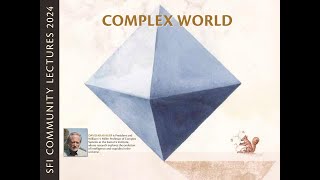
Complex World - Understanding and Surviving in an Interconnected Era
Explore the limitations of simple assumptions in economics, healthcare, AI, and global governance, and discover a new framing for understanding and thriving in our complex world.

Nature of Intelligence - What is Intelligence? - Episode 1
Explore the concept of intelligence, comparing human and machine cognition, and discuss AI's potential impact on society with experts John Krakauer and Alison Gopnik.
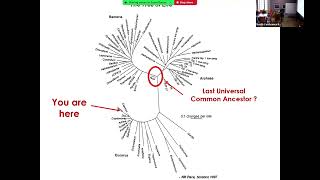
Topological Scaling Laws and the Mathematics of Evolution
Explore topological scaling laws in evolutionary biology, examining phylogenetic tree structures and their implications for understanding large-scale evolutionary patterns and processes.
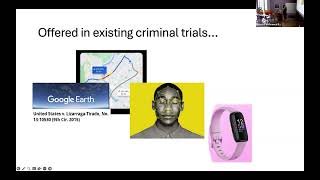
Beyond Prediction: Algorithmic Proof of Guilt or Innocence in Criminal Trials
Explore the use of algorithms in criminal trials for evidence, examining accuracy, fairness, and transparency concerns. Discuss challenges and potential solutions for courts and researchers.
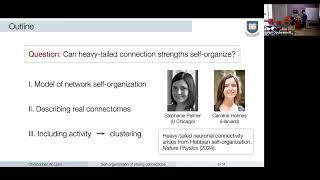
Self-Organization of Strong Connections in the Brain
Uncover how heavy-tailed connectivity in neural networks emerges from simple mechanisms. Explore a model of synaptic self-organization and its implications for understanding brain structure across species.
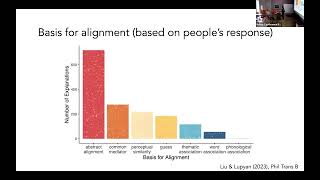
Cross-Domain Similarity Mapping: From Bananas to Cloudy Days - Cognitive Science Insights
Explore the intriguing world of cross-domain mappings and how humans draw connections between seemingly unrelated concepts, backed by studies and language model simulations.
Install Kubernetes Cluster from Scratch
Step-by-step guide to deploying a Kubernetes cluster from scratch, covering infrastructure setup, security, networking, and testing. Ideal for hands-on learners seeking in-depth understanding of Kubernetes architecture.

Quantum Information and Computing
The course is Primarily for Students of Physics and Engineering having exposure to basic quantum mechanics and knowledge of Linear Algebra.
Quantum Information and Computing
The course is Primarily for Students of Physics and Engineering having exposure to basic quantum mechanics and knowledge of Linear Algebra.
Sentiment Analysis with-without NLTK Python
Learn to perform sentiment analysis in Python, covering text cleaning, tokenization, emotion detection, and visualization, with optional NLTK integration for advanced analysis.
Biophysical Chemistry
Explore protein structure, folding mechanisms, and biophysical techniques. Gain insights into forces driving protein stability, denaturation processes, and experimental methods for studying protein dynamics.
Tabular Data
Learn machine learning techniques for tabular data, including model evaluation, feature engineering, tree-based models, hyperparameter tuning, and neural networks using AWS SageMaker.
Thermodynamics - Classical to Statistical
Comprehensive exploration of thermodynamics, from classical concepts to statistical mechanics, covering fundamental principles, applications, and advanced problem-solving techniques.
Phase Equilibrium Thermodynamics
Explore thermodynamic principles, phase equilibria, and solution behavior. Learn about laws, entropy, Gibbs energy, P-v-T relationships, chemical potential, fugacity, and ideal/non-ideal solutions.
Introduction to Statistical Mechanics
This is an introductory course in classical and quantum statistical mechanics which deals with the principle of ensembles, Classical, Fermi and Bose ideal gases, Pauli paramagnestim, Debye and Einstein’s theory of specific heat and the 1D Ising model.
16-Bit Virtual Machine in JavaScript
Learn to build a 16-bit virtual machine in JavaScript, covering memory access, stack mechanics, I/O, assembly language, parsing, code generation, and advanced topics like bank switching and interrupts.
DevOps CI-CD
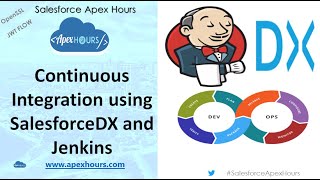
Explore CI/CD in Salesforce DevOps: SalesforceDX, Jenkins, Azure DevOps, Unlocked Packages, CLI plugins, CumulusCI, test automation, and best practices for streamlined app development and deployment.
Introduction to Database Systems
This course introduces the students to the various theoretical and practical principles involved in the design and use of databases systems with the help of database management systems (DBMS) and the SQL Standard.
Intro to Machine Learning
Dive into machine learning fundamentals with engaging videos covering models, data exploration, validation, and advanced concepts like random forests and AutoML.
SQL Summer Camp
In this series of videos, Kaggle Data Scientist, Rachael, will walk you through how to use SQL.