Cut Sparsification and Succinct Representation of Submodular Hypergraphs
Explore cut sparsification of hypergraphs, focusing on submodular functions. Learn about new bounds, polynomial bounds, and succinct representation techniques for various submodular function families.
The Approximate Structure of Triangle-Free Graphs
Explore the structure of dense triangle-free graphs and learn about efficient algorithms for computing their approximate representations using smaller graphs.
Maximal Matching in Bounded-deletion Streams
Explore maximal matching in bounded-deletion graph streams, analyzing space complexity as a function of deletion parameter K. Gain insights into algorithmic techniques and lower bound results.
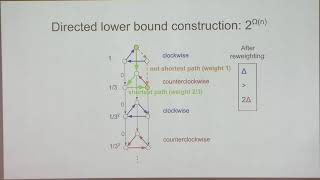
Graphs with Large Edge Weights for Shortest Path Structure - Sublinear Graph Simplification
Explore the relationship between graph shortest paths and edge weight ratios, examining reweighting techniques to preserve path structures.
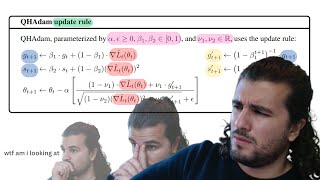
How to Read Math in Deep Learning Papers - A 5-Step Process
Learn a 5-step method to decipher mathematical formulas in deep learning papers, enhancing your understanding and intuition of complex AI concepts.
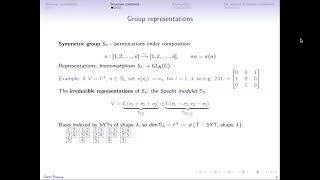
The Mysterious Kronecker Coefficients in Algebraic Combinatorics
Explore the enigmatic Kronecker coefficients, their significance in algebraic combinatorics, and recent developments in positivity, asymptotics, and computational complexity.
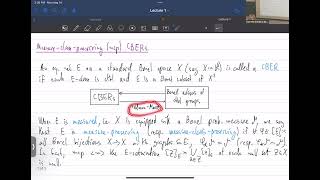
The Geography of Amenable Subrelations of Acyclic Graphs and Beyond - Part I
Explore advanced graph theory concepts, focusing on amenable subrelations of acyclic graphs and their geographical implications in mathematics.
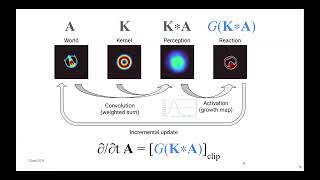
Lenia: A Continuous Model of Virtual Cell Growth Patterns
Explore virtual cell growth patterns through Lenia, a continuous model presented by Dr. Bert Chan in this Mathematical Oncology seminar.
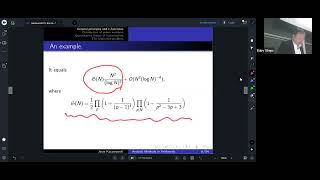
Analytic Methods in Arithmetic
Explore advanced analytic techniques in arithmetic, focusing on their applications and theoretical foundations in number theory.
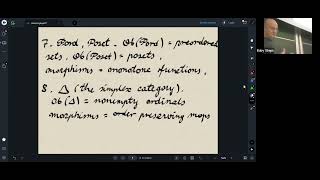
Who Would Need Abstract Nonsense?
Explore the concept of abstract nonsense in mathematics and its practical applications with insights from Tomasz Maszczyk of the University of Warsaw.
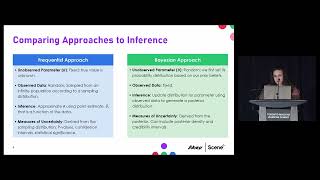
Building a Measurement System for Personalization - A Bayesian Approach
Explore Bayesian approaches for measuring personalization effectiveness, optimizing customer assignments, and designing MLOps-inspired measurement platforms for complex hierarchical experiments.
Causal Inference to Inform Curation Practices in Online Platforms
Explore causal inference methods for improving content curation on digital platforms. Examine case studies on Reddit, discuss implications for policy, and consider future research directions in the era of generative AI.
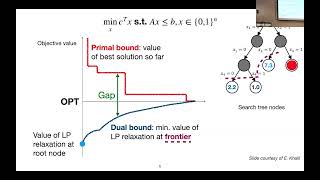
Mixed-Integer Programming: 65 Years of History and the Artificial Intelligence Challenge - DS4DM Coffee Talk
Explore the evolution of Mixed-Integer Programming, from its 1958 roots to modern AI integration, and its impact on solving diverse optimization problems.
Random Subgroups - Lecture 1: Invariant Random Subgroups
Explore the theory of invariant random subgroups (IRS) and its applications to lattices and asymptotic invariants in locally symmetric manifolds and discrete subgroups of Lie groups.
Random Subgroups - Lecture 3: Non-Invariant Random Subgroups
Explore the theory of stationary random subgroups (SRS) and its applications to lattices and asymptotic invariants in Lie groups, expanding beyond invariant random subgroups (IRS).
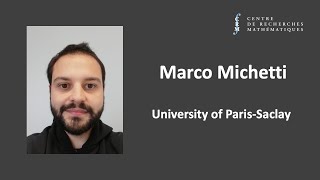
Maximization of Neumann Eigenvalues under Diameter Constraint
Explore Neumann eigenvalue maximization under diameter constraints, delving into advanced spectral geometry concepts and mathematical analysis techniques.
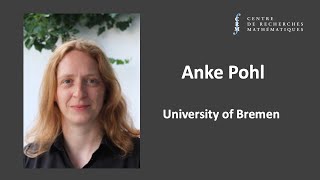
Fractal Weyl Bounds
Explore fractal Weyl bounds in spectral geometry with Anke Pohl, delving into advanced mathematical concepts and their applications.
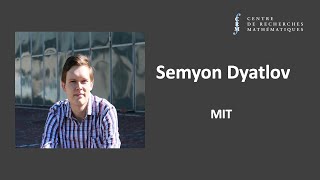
Ruelle Zeta at Zero for Nearly Hyperbolic 3-Manifolds
Explorez la fonction zêta de Ruelle pour les variétés presque hyperboliques en 3D, en examinant ses propriétés spectrales et géométriques.
Matrix Spaces and Graphs: Connections and Applications
Explore connections between matrix spaces and graphs, uncovering surprising equivalences and their applications in theoretical computer science, quantum information theory, and algebra.
Polynomial-Time Power-Sum Decomposition of Polynomials - Efficient Algorithms and Applications
Explore efficient algorithms for power-sum decomposition of polynomials, improving on prior work for tensor decomposition and Gaussian mixture identifiability. Gain insights into numerical linear algebra and noise-resilient techniques.
Tensor Decomposition Algorithms via Algebraic Complexity
Explorez les algorithmes de décomposition tensorielle et leur lien avec les circuits arithmétiques, en examinant les cas moyens et les pires scénarios pour les tenseurs de faible rang.