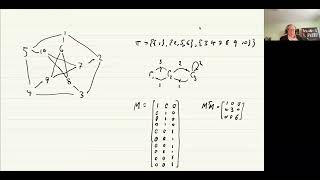
Algebraic Graph Theory and Quantum Computing - Lecture 21
Explore connections between algebraic graph theory and quantum computing, examining mathematical concepts and their applications in quantum information science.
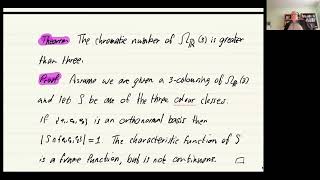
Algebraic Graph Theory and Quantum Computing - Lecture 26
Explore the intersection of algebraic graph theory and quantum computing, delving into advanced mathematical concepts and their applications in quantum information science.
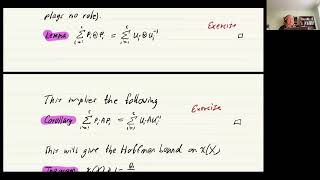
Algebraic Graph Theory and Quantum Computing - Lecture 25
Explore the intersection of algebraic graph theory and quantum computing, delving into advanced mathematical concepts and their applications in quantum information science.
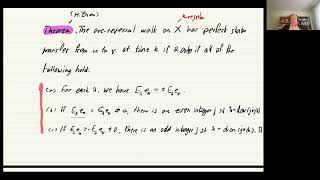
Algebraic Graph Theory and Quantum Computing - Lecture 20
Explore the intersection of algebraic graph theory and quantum computing, uncovering mathematical connections and potential applications in quantum information science.
Algebraic Graph Theory and Quantum Computing - Lecture 10
Explore the intersection of algebraic graph theory and quantum computing, delving into advanced mathematical concepts and their applications in quantum information science.
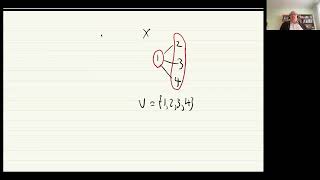
Algebraic Graph Theory and Quantum Computing - Lecture 6
Explore connections between algebraic graph theory and quantum computing, delving into mathematical concepts that bridge these fields and their practical applications.
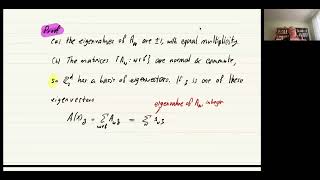
Algebraic Graph Theory and Quantum Computing - Lecture 12
Explore connections between algebraic graph theory and quantum computing, delving into mathematical concepts that bridge these fields and their practical applications.
Global Asymptotics of Jack-Deformed Random Young Diagrams via Lukasiewicz Paths
Explores discrete analogues of log-gas systems, examining universal formulas for global asymptotics in various temperature regimes, using weighted lattice paths and revealing phase transition phenomena.
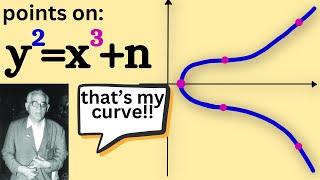
Integer Points on Mordell Curves
Explore integer solutions on Mordell curves, a fascinating topic in number theory. Gain insights into this complex mathematical concept through clear explanations and examples.
High Dimensional Expanders - HDXs
Explore high-dimensional expanders, their mathematical foundations, and recent applications in computer science, including property testing, coding theory, and approximate counting.
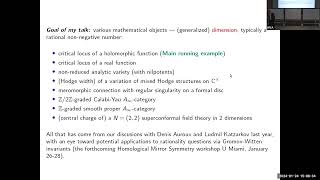
Fractal Dimensions of Critical Loci in Algebraic Geometry
Explore fractional dimensions in mathematics, focusing on critical loci of holomorphic functions. Discover theories from algebraic geometry, singularity theory, and more, with the smallest non-zero dimension at 1/3.

Making Enemies with the NSA - Martin Hellman's Cryptography Career - 2015 Turing Award
Turing Award winner Martin Hellman recounts his groundbreaking work in cryptography, confrontation with the NSA, and shift to nuclear risk education, offering insights into secure communication and global peace.
Induced Functors on Drinfeld Centers via Monoidal Adjunctions
Explore induced functors on Drinfeld centers through monoidal adjunctions, examining their compatibility with braiding and preservation of commutative objects in tensor categories.
Growth and Tensor Products in Representation Theory - Lecture 1
Explore asymptotic counting of summands in tensor products of representations, with numerous examples to illustrate concepts in symmetric tensor categories and representation theory.
Conservative Adaptive Rank Integrators for Nonlinear Kinetic Models
Explore low-rank time integrators for PDEs, including explicit and implicit schemes, with applications to Vlasov, heat, Fokker-Planck, and advection-diffusion equations.
High-Dimensional PDEs, Tensor Networks, and Convex Optimization
Explore innovative computational methods for high-dimensional PDEs using tensor networks and convex relaxations, addressing the curse of dimensionality with low-order statistics approximations.
Border Subrank of Tensors
Exploration of tensor subrank and border subrank, including construction of maximal border subrank tensors and lower bound computation for the dimension of maximal border subrank tensor sets.
Solving High-Dimensional Optimal Control Problems with Empirical Tensor Train Approximation
Explore innovative approaches to solve high-dimensional optimal control problems using Tensor Train approximation, with applications to destabilized viscous Burgers and diffusion equations.

Machine Assisted Proof
Explore cutting-edge applications of AI in mathematical proofs with renowned mathematician Terence Tao, delving into the potential and challenges of machine-assisted theorem verification.
Small Ball Probabilities for Random Tensors and Analysis of Tensor Decompositions
Explore sharp anticancellation inequalities for simple random tensors and their applications in tensor reconstruction algorithms, presented by Grigoris Paouris at IPAM's Tensor Networks Workshop.
Polyhedral Techniques in Combinatorial Optimization - Matchings and Tours
Explore recent advancements in combinatorial optimization, focusing on matching and traveling salesman problems. Learn about polyhedral techniques and linear programming formulations for designing efficient algorithms.