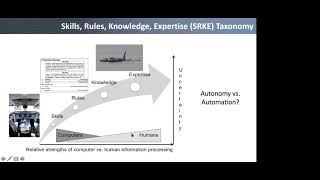
Future Pitfalls and Promises of Safety in Autonomous Systems
Explore the potential impacts and ethical considerations of autonomous vehicle technology, including its effects on driving habits and society at large.
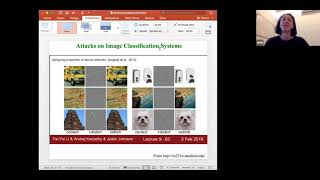
Conceptual Abstraction and Analogy in Natural and Artificial Intelligence
Explore the limitations of AI in conceptual abstraction and analogy-making, examining recent research and discussing implications for real-world applications and AI brittleness.
Complexity as Seen Through Modern Statistical Mechanics - New Perspectives
Explore nonextensive statistical mechanics and its applications in studying complex systems across various fields, with insights from Constantino Tsallis on recent developments and q-triplets.
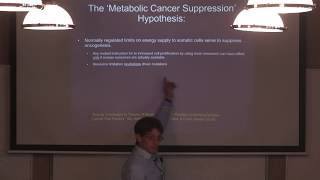
Does the Ecology of Somatic Tissue Normally Constrain Cancer Evolution?
Exploring how energy supply to tissues affects cancer evolution, proposing that normal physiological limits on cellular energy may suppress oncogenesis, with implications for cancer risk factors and prevention.
Swarming Across Scales - From Robotic Swarms to Nanoparticles
Explore swarm intelligence and its applications in robotics, medicine, and engineering. Learn how simple rules create complex behaviors, revolutionizing technology across various fields.
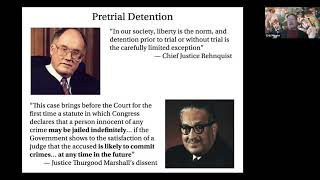
Transparency in Algorithms for Risk Assessment, Housing, and Pretrial Detention
Explore the impact of algorithms on risk assessment, housing, and pretrial detention, focusing on transparency issues and their societal implications.

Epistemic Uncertainty - The AI Problem Understanding Gap and Structured Societal Context Knowledge
Exploring the AI Problem Understanding Gap and the need for structured societal context knowledge to develop safe, robust AI systems in high-stakes domains like healthcare.
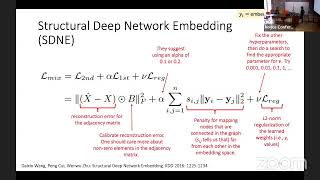
Trustworthy Network Science - Measuring Instability and Reliability in Data Algorithms
Explore network science methodologies, focusing on measuring instability, data algorithms, embedding methods, and reliability metrics for robust analysis and insights.

The Dynamics of Computation and the Computational Power of Dynamics
Explore the intersection of computation and dynamics, examining computational models, physical systems, and mathematical concepts to understand the nature of computation and its manifestation in various forms.
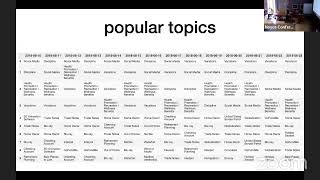
Scaling of Information Costs in Firms
Explore the scaling dynamics of information costs within organizations, examining how firms manage and process data as they grow and evolve in size and complexity.
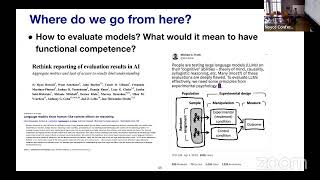
Formal and Functional Competence in Large Language Models - A Cognitive Perspective
Explore cognitive perspectives on large language models, examining formal and functional competence, linguistic confidence, and implications for AI development and evaluation.
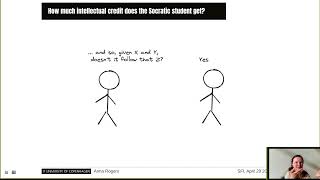
Writing Assistance or Plagiarism - How Language Models Are Changing Our View of Knowledge
Explore how language models are reshaping our understanding of knowledge, writing assistance, and plagiarism with insights from Anna Rogers in this thought-provoking discussion.
Is Mathematics Obsolete?
Explore the evolving role of mathematics in the age of AI and computational power, examining its relevance and potential obsolescence in modern scientific inquiry.
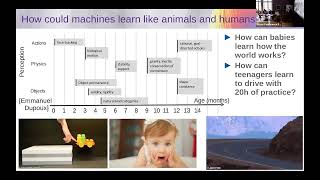
Towards Machines That Can Understand, Reason, and Plan
Explore AI's future with Yann LeCun as he discusses advancements in machine understanding, reasoning, and planning, offering insights into the potential of artificial intelligence.
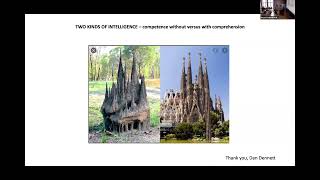
What Understanding Adds to Cambrian Intelligence - A Taxonomy
Explore the intersection of understanding and intelligence with John Krakauer, delving into a taxonomy that enhances our perspective on cognitive processes and artificial intelligence.
Scaling AI the Human Way - Building Machines That Understand the World
Explore innovative approaches to AI development, focusing on human-like understanding and reasoning to create more intelligent and adaptable machines for real-world applications.

Dimensions of Meaning and Understanding - Raphaël Millière
Explore dimensions of meaning and understanding, from lexical semantics to complex reasoning, with insights on knowledge acquisition and cognitive pitfalls.
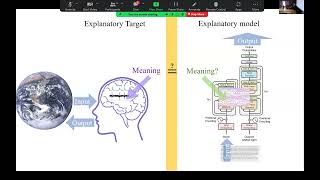
Do AI Systems Model Meaning and Understanding?
Explore the philosophical question of whether AI systems truly model meaning and understanding, delving into the nature of intelligence and consciousness in artificial systems.
Decoding the Law - What Will Large Language Models Mean Under the Law?
Explore the legal implications of large language models and their impact on law interpretation, enforcement, and societal norms with Professor Sonia Gipson Rankin's insightful analysis.
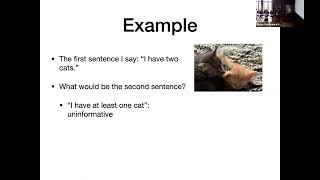
Language Models Could Learn Semantics - No Matter How You Define It
Explore how language models can acquire semantic understanding through form, entailment, and Gricean principles, with insights on practical limitations and future possibilities.
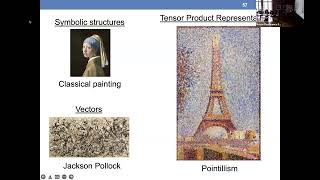
Bridging the Divide Between Vectors and Symbols in Language Processing
Explore the intersection of vectors and symbols in language processing, focusing on innovative approaches to bridge computational and cognitive models of meaning.