Euler's and Fermat's Last Theorems, the Simpsons and CDC6600
Explore Fermat's last theorem, Euler's conjecture, and their connections to pop culture and computing history. Delve into mathematical proofs and historical insights.
Causal Inference for Earth System Sciences - Jakob Runge
Exploring causal inference techniques for Earth system sciences, focusing on advanced methods to uncover complex relationships in climate data and improve understanding of multi-scale processes.
Nonparametric Bayesian Methods - Models, Algorithms, and Applications IV
Explore probabilistic models for graphs, edge exchangeability, and graph paintbox representations in this advanced machine learning lecture on nonparametric Bayesian methods.
Machine Learning Inside MIP Solvers - IPAM at UCLA
Explore machine learning applications in MIP solvers, focusing on cutting planes and numerical stability. Gain insights into enhancing solver performance for general MIP benchmarks.
Integer Optimization for Predictive & Prescriptive Analytics in High Stakes Domains
Explore integer optimization techniques for developing interpretable, robust, and fair decision-tree models to assist high-stakes decision-making in social services and healthcare domains.
Learning for Decision-Making Under Uncertainty - IPAM at UCLA
Explore data-driven methods for uncertainty in decision-making, including mean robust optimization and techniques to reshape uncertainty sets, with applications in portfolio optimization and inventory management.
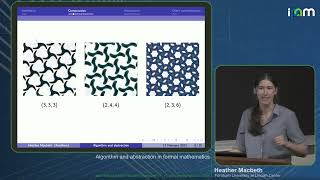
Algorithm and Abstraction in Formal Mathematics - IPAM at UCLA
Explore the paradox of formalized proofs, blending abstraction and computation in mathematics. Discover a new aesthetic that embraces algorithms and cross-referencing in formal mathematical discourse.
Computing with or Despite the Computer - IPAM at UCLA
Explore the interplay between manual, computer-assisted, and formally verified computations in number theory, examining challenges and opportunities in mathematical research.
What Can the Working Mathematician Expect From Deep Learning? - IPAM at UCLA
Explore deep learning's impact on mathematics, its potential applications, and insights from a pure mathematician's perspective on this emerging field's role in mathematical research.
Learning-Based Low-Rank Approximations - IPAM at UCLA
Explores learning-based algorithms for low-rank matrix approximation, focusing on optimizing sketching matrices using training data to significantly reduce approximation errors in efficient computational methods.
Probability Theory for Random Groups Arising in Number Theory
Explores probability theory for random groups in number theory, topology, and combinatorics. Covers moment problems, universality theorems, and distributions of class groups and Selmer groups.
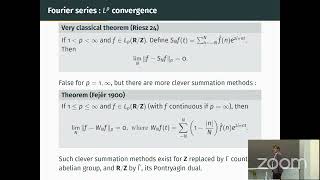
Analysis with Simple Lie Groups and Lattices
Explore advanced mathematical concepts focusing on simple Lie groups and lattices, delving into their analytical properties and applications in modern algebra and geometry.
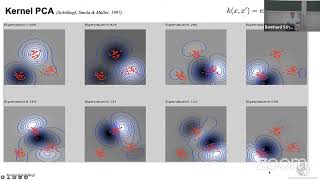
Bernhard Schölkopf- From Statistical to Causal Learning
Explore the evolution of AI systems, from symbolic to statistical and causal approaches, examining key challenges in machine learning and the role of causality in advancing AI understanding and modeling.
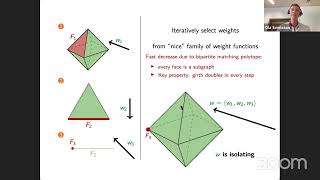
Polyhedral Techniques in Combinatorial Optimization: Matchings and Tours
Explore recent advancements in combinatorial optimization, focusing on matching and traveling salesman problems. Learn about polyhedral techniques and linear programming formulations for designing efficient algorithms.
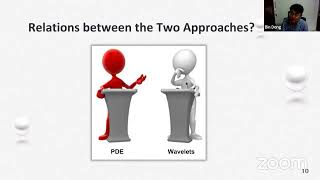
On Mathematical Modeling in Image Reconstruction and Beyond
Explores connections between wavelet frame-based and PDE-based approaches in image reconstruction, linking to deep learning and computational imaging advancements.
Vin de Silva - Functors and Cosheaves for Topological Persistence
Explore functors and cosheaves in topological persistence, delving into advanced concepts of applied algebraic topology and their applications in data analysis.
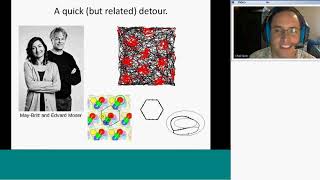
Chad Giusti - Topology and Neural Computation
Explore the intersection of topology and neural computation, examining how mathematical concepts can enhance our understanding of brain function and artificial intelligence.
Entropy in Mean Curvature Flow
Explore entropy in hypersurfaces and its role in mean curvature flow. Survey recent progress on conjectures about sharp lower bounds and extensions in geometric complexity.
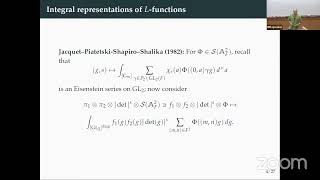
Yiannis Sakellaridis- Spherical Varieties, Functoriality, and Quantization
Explore spherical varieties, functoriality, and quantization in algebraic geometry and representation theory with Yiannis Sakellaridis' advanced mathematical lecture.
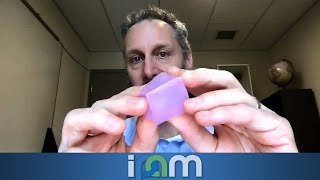
A Xither of Xenobots - Demolishing Dichotomous Thinking With Synthetic Proto-Organisms
Explore synthetic proto-organisms and challenge dichotomous thinking in this presentation on xenobots, offering insights into collective intelligence and biological engineering.
Regularization by Noise for the Stochastic Transport Equation
Explore regularization by noise for stochastic transport equations, focusing on uniqueness and regularity of solutions under different drift conditions and the impact of Brownian motion.