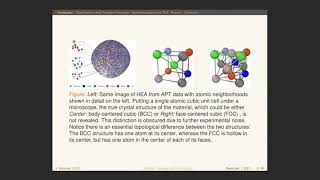
Statistics, Topology and Data Analysis
Explore the synergy between statistics and topological data analysis for solving real-world problems, with a focus on supervised learning and applications in materials science.
Topological Data Analysis Based Machine Learning Models for Drug Design
Explores TDA-based models for effective molecular representation in drug design, combining persistent homology, spectral models, and Ricci curvature with machine learning for improved performance.
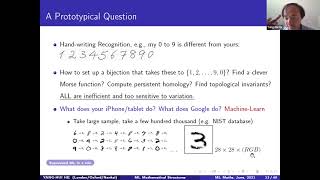
Universes as Bigdata- From Geometry, to Physics, to Machine-Learning
Explore the intersection of string theory, geometry, and machine learning in physics, examining how AI aids mathematical research across various fields.
Practical Clustering and Topological Data Analysis
Explore clustering algorithms and topological data analysis from a data science perspective, covering techniques from k-means to DBSCAN and dimensionality reduction methods like UMAP.
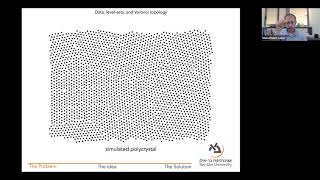
High-Dimensional Data, Level-Set Geometry, and Voronoi Analysis of Point Sets
Explore spatial point sets, high-dimensional data analysis, and Voronoi cell topology to understand complex physical systems and classify data structures in innovative ways.
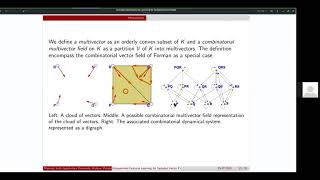
Unsupervised Features Learning for Sampled Vector Fields
Explore innovative techniques for analyzing sampled vector fields using graph structures and unsupervised learning, revealing hidden features correlated with known dynamics in analytical models.
Modern Regularization Methods in Inverse Problems and Data Science
Explores recent developments in variational methods for inverse problems and machine learning, discussing convergent regularization schemes, quantitative estimates, and connections between classical regularization theory and risk minimization.
Building and Maintaining High-Performance AI
Learn strategies for developing and maintaining high-performance AI models, including testing methods, drift detection, and systematic debugging. Gain insights on model monitoring and iteration for optimal performance.

CLIP, T-SNE, and UMAP - Master Image Embeddings and Vector Analysis
Master image embeddings and vector analysis techniques like CLIP, T-SNE, and UMAP. Learn to cluster MNIST images, detect duplicates, and explore essential concepts in computer vision and data science through hands-on practice.

Excel 2021 Full Course Tutorial
Comprehensive tutorial covering Excel 2021 basics to advanced features. Learn calculations, functions, data manipulation, pivot tables, macros, and automation techniques to enhance spreadsheet skills and efficiency.

Competitive Analysis of Online Algorithms
Explore advanced techniques in competitive analysis for online algorithms, focusing on decision-making under uncertainty and performance comparison with hindsight-based strategies.
Online Reinforcement Learning and Regret
Explore online learning in reinforcement learning, focusing on regret analysis under Markovian dynamics, function approximation, and structural challenges in unknown model scenarios.
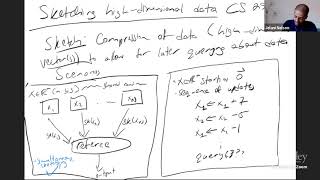
Sketching High-Dimensional Data
Explore techniques for efficiently summarizing and analyzing large datasets in high-dimensional spaces, focusing on probability, geometry, and computational methods.
Sperm Whale Communication - What We Know So Far - Understanding Whale Communication: First Steps
Explore the latest discoveries in sperm whale communication, combining insights from machine learning, signal processing, and marine biology to decode and understand these fascinating underwater conversations.
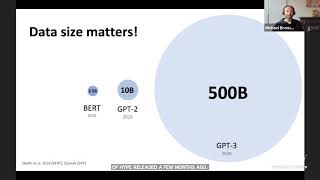
Project CETI Next Steps - Industrial-Scale Whale Bioacoustic Data Collection and Analysis
Exploring industrial-scale whale bioacoustic data collection and analysis for decoding sperm whale communication, leveraging machine learning and interdisciplinary expertise to understand and protect marine life.
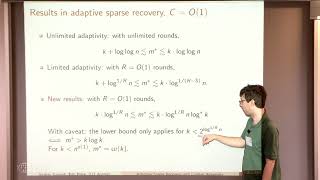
Adaptive Sparse Recovery with Limited Adaptivity
Explore techniques for efficient sparse signal recovery using limited adaptive measurements, with applications in sublinear algorithms and nearest-neighbor search.
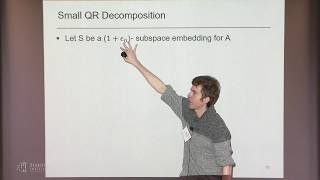
Sketching for Linear Algebra - Basics of Dimensionality Reduction and CountSketch II
Explore dimensionality reduction and CountSketch techniques in linear algebra, focusing on advanced applications and theoretical foundations for data science.
Justifiable Quantum Advantage for Stylized Learning Challenges
Explore quantum advantage in learning tasks, demonstrating how quantum machines can predict physical properties and model dynamics with exponentially fewer experiments than conventional methods.
Helmut Bölcskei - Lossy Compression on General Data Structures
Explore lossy compression for data on manifolds and fractals, with bounds on rate-distortion function and quantization error. Applications in data science and image processing.
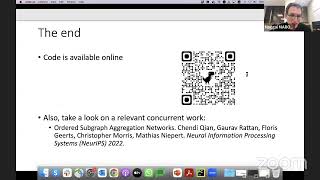
Subgraph-Based Networks for Expressive, Efficient, and Domain-Independent Graph Learning
Explore advanced graph learning techniques using subgraph-based networks for expressive, efficient, and domain-independent applications in data science and signal processing.
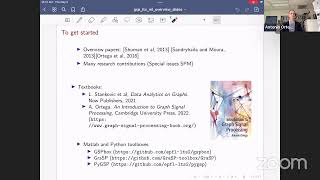
Graph Constructions for Machine Learning Applications - New Insights and Algorithms
Explore graph constructions for machine learning, covering signal variation, sampling, and semisupervised learning. Gain insights into theoretical analysis and applications in deep learning geometry.