Python for Data Science - Data Science Tutorial - Python Tutorial
Learn Python for data science: versatile programming, complex problem-solving, and real-world applications. Covers key concepts, tools, and techniques with hands-on examples and expert guidance.
Microsoft Excel Tutorial for Beginners - Excel Training
Comprehensive tutorial covering Excel basics to advanced functions. Learn data manipulation, formulas, conditional formatting, and practical applications for business and analysis.
Solving Coding Interview Problems from Top MNCs - How to Crack Coding Interview
Learn strategies to solve coding problems from top companies, improve algorithm efficiency, and master time and space complexity analysis for successful technical interviews.
Amazon SageMaker Tutorial - How to Use Amazon SageMaker for Machine Learning
Learn to build, train, and deploy machine learning models using Amazon SageMaker. Explore its architecture, features, and hands-on implementation for streamlined ML development and production.

Classification Algorithm Tutorial - Machine Learning Tutorial
Comprehensive tutorial on classification algorithms in machine learning, covering techniques for categorizing new observations based on training data. Explores supervised learning methods and practical applications.
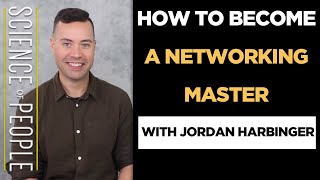
How to Become a Networking Master with Jordan Harbinger
Discover effective networking strategies with Jordan Harbinger. Learn to build meaningful connections, reverse engineer your approach, and create scalable relationships that enhance your career and personal growth.
Probability and Its Interpretation - Foundations of Humanities Analytics
Explore probability theory, its historical development, and interpretations in this humanities analytics lecture, focusing on frequency and subjective approaches to understanding uncertainty.
Asking Good Research Questions in Humanities Analytics
Explore effective research question formulation in humanities analytics, focusing on clarity, relevance, and avoiding common pitfalls. Learn to craft questions that drive meaningful digital humanities scholarship.
Data Mining with Python - Data Mining for Beginners
Learn data mining techniques using Python, covering classification, regression, and prediction. Gain practical skills to extract valuable insights from data for business and scientific applications.
Transformations in FMCG Through Data Science
Explore how data science transforms FMCG industry through market evolution, digital manufacturing optimization, and key roadmap development. Gain insights from real-world scenarios and industry experts.
Learning from Simulations - Marc Huertas Company
Explore astrostatistics and machine learning in galaxy formation, comparing models with observations and discussing innovative data analysis techniques for advancing astrophysical understanding.
The CAMELS Project - Paco Villaescusa Navarro
Exploring the CAMELS project: a large-scale simulation suite for galaxy formation and cosmology, combining hydrodynamics and machine learning to advance our understanding of the Universe.
Towards Astronomical Search by Image - The Hubble Image Similarity Project - Josh Peek
Exploring astronomical image similarity using machine learning, focusing on the Hubble Image Similarity Project to enhance search capabilities and facilitate new discoveries in astrophysics.
Generating High-Fidelity HI Maps Using Score-Based Diffusion Models - Sultan Hassan
Exploring score-based diffusion models to generate high-fidelity HI maps, discussing applications in astrostatistics and machine learning for galaxy formation and evolution studies.
Learning Representations of Galaxies from Simulations and Observations - Suchetha Cooray
Explore advanced data science techniques for analyzing galaxy formation and evolution, bridging simulations with observations to uncover new insights in astrophysics.
Finding Simple Structures in Complex Datasets - Dalya Baron
Exploring data-driven techniques to uncover simple structures in complex astronomical datasets, focusing on galaxy formation and evolution using advanced statistical and machine learning tools.
FLORAH - Planting Better Merger Trees with Deep Generative Models - Tri Nguyen (MIT)
Explore deep generative models for improved merger tree creation in galaxy formation studies, enhancing our understanding of cosmic structure evolution and linking observations with theoretical models.
Constraining Ωm with Phase-Space Information of Galaxies - Natali Soler Matubaro De Santi
Explore innovative techniques for constraining the matter density parameter using galaxy phase-space data, combining astrostatistics and machine learning to advance our understanding of cosmic structure formation.
Too Hot to Handle - The Role of Supermassive Black Holes in Heating the Low Redshift Intergalactic Medium
Explore the impact of supermassive black holes on intergalactic medium heating at low redshift, focusing on AGN feedback mechanisms and their role in galaxy formation and evolution.
How Supermassive Black Holes Ignite the Intergalactic Medium - Tales from the Low Redshift Lyman-alpha Forest
Explore how supermassive black holes impact the intergalactic medium through the lens of the low redshift Lyman-alpha forest, offering insights into galaxy formation and evolution.
Prospects for Detecting Gaps in GC Streams with Roman - Christian Aganze
Exploring detection of gaps in globular cluster streams using Roman Space Telescope, applying advanced statistical and machine learning techniques to enhance our understanding of galaxy formation and evolution.