Building a Real-Time Feature Store for Machine Learning at iFood
Discover how iFood built a real-time feature store using Databricks and Spark Structured Streaming to process event streams, store data, and develop reliable code for efficient machine learning model predictions.

Fine-Tuning and Enhancing Performance of Apache Spark Jobs
Explore best practices for optimizing Apache Spark jobs, including resource allocation, parameter tuning, and performance enhancement techniques. Learn to identify bottlenecks and implement solutions for improved efficiency.

Productionizing Machine Learning with Apache Spark, MLflow and ONNX - Cloud Deployment Using SQL Server
Explore productionizing machine learning using Apache Spark, MLflow, and ONNX with SQL Server. Learn model management, lifecycle orchestration, and leveraging SQL Server for ML model storage and deployment.

Using Apache Spark for Predicting Degrading and Failing Parts in Aviation
Leveraging Apache Spark for predictive maintenance in aviation, enabling efficient data processing, anomaly detection, and component health scoring to improve fleet readiness and prevent failures.

Care and Feeding of Catalyst Optimizer - Practical Troubleshooting for Spark SQL
Explore Spark's Catalyst Optimizer challenges, including UDF issues, codegen limitations, and JVM tuning. Learn to diagnose and solve complex query problems for improved Spark SQL performance.

Faster Data Integration Pipeline Execution Using Spark-Jobserver
Optimize data integration pipelines using Spark-Jobserver for faster execution, context reuse, and efficient resource management. Learn configuration, security, and API integration for improved performance.

Encryption and Masking for Sensitive Apache Spark Analytics Addressing CCPA and Governance
Practical methods for balancing data encryption and analytics in Apache Spark, addressing CCPA and governance requirements while maintaining analytical value.

Running Apache Spark Jobs Using Kubernetes
Learn to run Apache Spark jobs on Kubernetes, unifying analytics and data science on a cloud-native architecture. Discover how this approach simplifies infrastructure, enables on-demand deployment, and eliminates big data cluster overhead.

Tackling Scaling Challenges of Apache Spark at LinkedIn - Infrastructure Optimization and User Productivity
Explore LinkedIn's journey scaling Apache Spark, addressing infrastructure challenges, optimizing resource management, and enhancing user productivity through automated analysis and efficiency improvements.

Change Seminar - Josh Hug - UC Berkeley
Embedding social impact awareness in CS education: integrating ethics, career reflection, and professional development into technical courses at UC Berkeley.
Three Profiles of OAuth2 for Identity and Access Management - 2016
Explore OAuth2 profiles for identity and access management, covering OpenID Connect, UMA, and Google's approach. Learn strategies for implementing OAuth2 in enterprise security infrastructure.

Securing the Spark Fire Hose - 2016
Learn to secure Apache Spark in big data analytics. Explore code and configuration security, data protection strategies, and integration with common technologies to safeguard critical information throughout its lifecycle.
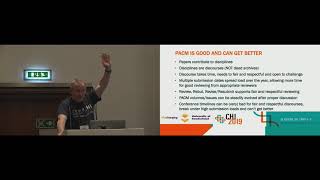
Moving Towards a Journal-centric Publication Model for CHI - Opportunities and Risks
Exploring alternative publication models for CHI, examining journal-centric approaches, and discussing opportunities and risks for the SIGCHI community's scholarly output.

Art of the Possible: Showcasing Data Science Solutions for a Better World
Showcasing data science solutions for social good: challenges, approaches, and impact. Explores ethical AI, civic engagement, and inclusive design for systemic change in humanitarian and environmental sectors.

Global Investing in Tech - Pattern Recognition, Founder Traits, and Momentum
Explore global tech investing with insights on emerging markets, successful founder traits, and AI's worldwide impact. Learn about effective strategies, market expansion, and innovative business models in developing economies.
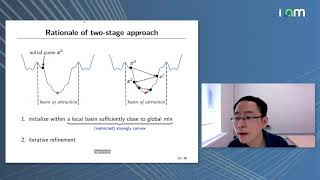
The Effectiveness of Nonconvex Tensor Completion - Fast Convergence and Uncertainty Quantification
Explores nonconvex optimization for tensor completion, proposing a two-stage algorithm with guaranteed success, linear convergence, and statistical accuracy. Discusses distribution characterization and confidence interval construction.
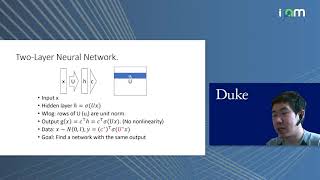
Beyond Lazy Training for Over-parameterized Tensor Decomposition
Explore tensor decomposition in over-parameterized settings, analyzing gradient descent variants and their performance beyond lazy training regimes for improved optimization in neural networks.
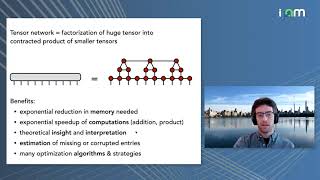
Tensor Networks for Machine Learning and Applications
Explore tensor networks in machine learning, their benefits, and applications. Learn about model functions, optimization algorithms, and potential insights for matching architectures to data types.
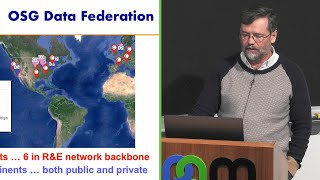
Global Cyberinfrastructure for LIGO, Virgo, Kagra, IceCube, and Others
Explore global cyberinfrastructure supporting multi-messenger astrophysics experiments, including data management, compute clusters, and modular software stacks for collaborative research.

Machine Learning and Neural Networks: K-Nearest Neighbors - Day 9
Explore K-Nearest Neighbors algorithm for machine learning and neural networks, covering its principles, implementation, and applications in classification and regression tasks.
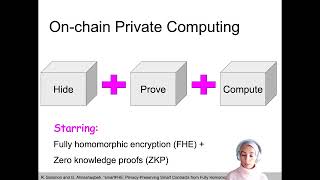
Privacy in the Age of Blockchains - Challenges and Solutions
Explore blockchain privacy challenges, current solutions, and future directions for secure, private computations in cryptocurrencies and smart contracts.