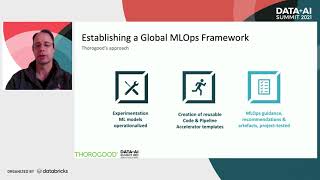
Implementing MLOps - From Experimentation to Industrialization
Learn best practices for implementing MLOps in global organizations, covering key challenges, engagement models, team structures, and tool requirements for successful productionization of machine learning solutions.
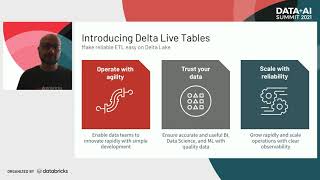
Make Reliable ETL Easy on Delta Lake
Learn to simplify ETL development on Delta Lake, improving data quality and scaling operations. Discover how Databricks streamlines the ETL lifecycle for efficient data engineering and management.
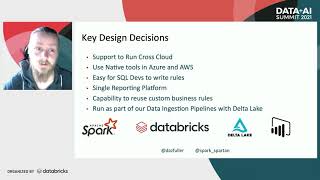
Building Data Quality Pipelines with Apache Spark and Delta Lake
Learn to build robust data quality pipelines using Apache Spark and Delta Lake. Explore rule templates, reporting models, and PowerBI integration for effective data remediation and self-healing in enterprise environments.

Why Lakehouse Architecture Now - Exploring Enterprise Data Warehouse Failures and the Need for Lakehouse Paradigm
Explore the shift from enterprise data warehouses to lakehouse architecture, focusing on benefits, challenges, and Starburst's role in powering SQL-based analytics on Delta Lake.
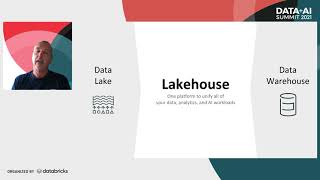
Creating a Lakehouse on AWS
Learn to build a Lakehouse on AWS, combining data lake affordability with data warehouse performance. Discover integration with AWS services and real-world examples of high-performance, cost-effective analytics solutions.
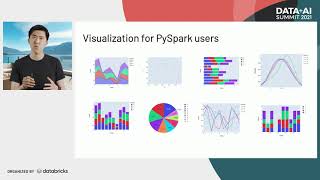
Apache Spark, Data Science, and Machine Learning Advances - Data + AI Summit 2021 Keynote
Explore AI advancements, data science, MLOps, and Databricks Lakehouse Platform innovations. Featuring industry leaders and Bill Nye, this keynote covers MLFlow updates, AutoML, and practical machine learning solutions.
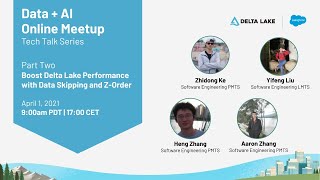
Boost Delta Lake Performance with Data Skipping and Z-Order
Explore data skipping and Z-ordering techniques to enhance Delta Lake performance, focusing on optimized partitioning strategies for improved read and write efficiency in large-scale data lakes.
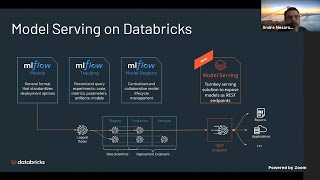
MLflow Model Serving - From Training to Production
Comprehensive overview of MLflow Model Serving, covering offline and online scoring, deployment options, and integration with Databricks, with practical examples and recent features.
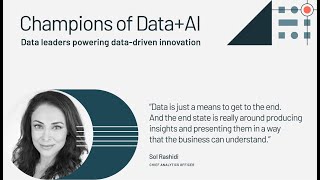
The Evolving Data Leader - Increasing Business Value with Data and AI
Sol Rashidi, CAO of Estée Lauder, discusses updating data leadership strategies to increase business value through AI, product development, and overcoming organizational challenges.
Developing Scalable Machine Learning Pipelines for Gaming Industry
Explore scalable ML pipelines in gaming, leveraging Apache Spark for data-driven product development and improved user acquisition through advanced LTV modeling.
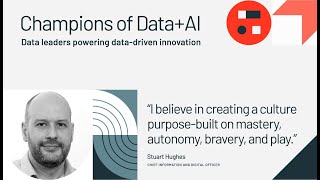
Democratizing Data - Leadership Insights from Rolls-Royce's CIDO - Episode 1
Explore data democratization with Rolls-Royce's CIDO Stuart Hughes. Learn about disruptive leadership, simplified data architecture, and empowering data teams to unlock the true potential of data.

Accelerating MLOps with Apache Spark and SingleStore
Learn to accelerate MLOps using Apache Spark and SingleStore. Discover how to build fast analytical applications, manage supervised learning models, and scale AI/ML operations for data science success.

Cost Efficiency Strategies for Managed Apache Spark Service with Databricks
Explore cost-efficient strategies for Azure Databricks, including resource management, tier selection, and best practices for optimizing Apache Spark workloads in a managed cloud environment.

Migrating Airflow-Based Apache Spark Jobs to Kubernetes - The Native Way
Learn to migrate Airflow-based Apache Spark jobs to Kubernetes, reducing costs and improving stability. Explore challenges, best practices, and native Airflow integration for seamless transition from AWS EMR to K8s.

Scaling Machine Learning Feature Engineering in Apache Spark at Facebook
Explore advanced techniques for scaling ML feature engineering in Apache Spark, including Feature Injection and Feature Reaping, with optimizations for improved performance and efficiency at Facebook's scale.

Getting Started with Apache Spark on Kubernetes
Learn to deploy and optimize Apache Spark on Kubernetes with hands-on demos, covering environment setup, application sizing, performance tuning, and monitoring for efficient data pipeline management.
Delta Lake: Optimizing Merge Operations
Explore Delta Lake merge optimization techniques, including inner and full outer joins, partition pruning, and file pruning. Learn tips for handling large merges efficiently.

DBT Using Databricks and Delta
Learn to leverage Data Build Tool (DBT) with Databricks and Delta for efficient data lake management, including SQL-first approach, upsert capabilities, and Azure integration for enhanced observability.
Building an MLOps Platform with MLflow for Rapid Model Productionalization
Discover how DataSentics built an MLOps platform around MLflow to streamline model productionalization, reducing deployment time to minutes. Learn about real-life experiences, platform demo, and lessons learned.
Diving into Delta Lake: Understanding the Transaction Log
Explore Delta Lake's transaction log: its structure, functionality, and role in ACID transactions, metadata handling, time travel, and concurrent operations. Gain insights into this core component.
SQL Analytics and the Lakehouse Architecture - Data + AI Summit EU 2020 Keynote
Explore lakehouse architecture, Delta Lake, and SQL Analytics for unified data management. Learn how this approach combines data warehouse capabilities with data lake flexibility, enabling faster analytics and decision-making.