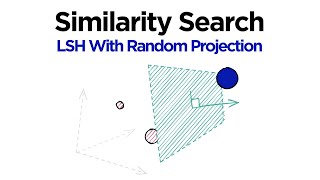
How LSH Random Projection Works in Search - Python
Explore efficient similarity search using Locality Sensitive Hashing (LSH) and Random Projection. Learn how to handle large-scale data and implement approximate search techniques in Python.
How to Learn Data Science, ML, Programming
Explore effective strategies for mastering data science, machine learning, and programming, including balancing theory and practice, project-based learning, open-source contributions, and following personal interests.
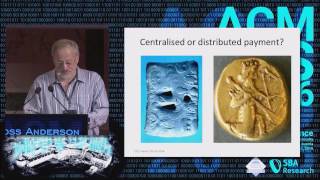
Is It Practical to Build a Truly Distributed Payment System? - Keynote
Explore distributed payment systems, mobile money revolution, and the DigiTally project with Ross Anderson. Insights on challenges, field trials, and lessons learned in building truly decentralized financial solutions.
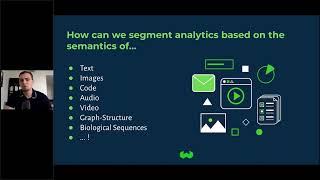
Vector Search for Data Scientists - Connor Shorten
Explore vector search in data science with Connor Shorten, covering Weaviate Vector Search Engine, healthcare applications, and content performance analytics. Gain insights into vector representations and segmentation.
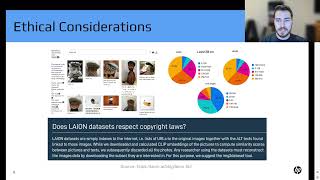
Introduction to Generative Art with Stable Diffusion
Explore stable diffusion for generative art with Hunter Kempf. Learn model architecture, ethical considerations, practical applications, query optimization, and future developments in AI-driven visual creativity.

Storytelling for a More Equitable Open Science Enterprise
Exploring storytelling's role in open science communication, emphasizing trust-building, public engagement, and addressing ethical implications of emerging technologies for more equitable scientific practices.

Microsoft PowerPoint Course for Beginners - Presentations Tutorial
Comprehensive tutorial covering PowerPoint basics to advanced techniques, including interface navigation, object creation, design elements, animations, and photo editing for impactful presentations.
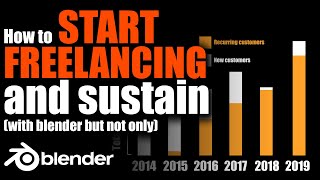
How to Start as a Freelancer with Blender
Practical guide for aspiring Blender freelancers, covering essential topics like getting started, finding clients, pricing, project selection, and client management in the CG industry.
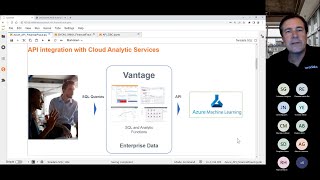
Accelerating AI and ML Insights with Azure ML and Teradata VantageCloud
Discover how Teradata VantageCloud and Azure ML integration accelerates AI and ML insights at scale, overcoming deployment challenges and unlocking data-driven value for organizations.
Qlik Data Integration for Microsoft Azure Synapse and Power BI
Accelerate BI & ML initiatives with Qlik's high-performance data integration for Azure Synapse and Power BI. Learn about automated pipelines, self-service catalog, and real-time data integration to drive agility in analytics.
Science Communication in a Virtual World
Enhance science communication skills for diverse audiences in digital settings. Learn to identify your audience, eliminate jargon, and craft impactful messages for effective virtual interactions.
Jupyter for First-Time Users - Introduction to Notebooks and Code Execution
Learn to use Jupyter notebooks for coding projects, including markdown, LaTeX, code execution, and debugging. Ideal for beginners in scientific computing and data analysis.
Advanced Emerging Technologies, Research and Practical Applications
Explore emerging technologies' practical applications in healthcare, AI, cloud computing, and more. Gain insights from industry expert on latest advancements and their real-world impact.

How Do Computers Work?
Explore computer basics, from hardware components to programming languages, and create your first program and simple game in this beginner-friendly introduction to computing.
Chai Time Kaggle Talks With Anjum Sayed - Datasaurus
Explore Anjum Sayed's 4th place solution in the CommonLit Kaggle competition, including problem analysis, data exploration, and codebase walkthrough, with insights on using Weights & Biases for competition workflows.
Dual Boot Workstation - Windows 11 & Ubuntu 22.04
Step-by-step guide for creating a dual-boot workstation with Ubuntu 22.04 and Windows 11, covering installation, configuration, and practical usage tips for developers and enthusiasts.
Synthetic Petri Dish - A Novel Surrogate Model for Rapid Architecture Search
Explore a novel approach to Neural Architecture Search using a Synthetic Petri Dish model, which evaluates architectural motifs in small networks with synthetic data to accelerate performance prediction and optimization.
Underspecification Presents Challenges for Credibility in Modern Machine Learning - Paper Explained
Explores underspecification in ML pipelines, where models with similar training performance behave differently in real-world deployment, leading to instability and poor outcomes across various domains.
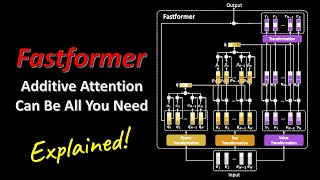
Fastformer - Additive Attention Can Be All You Need
Explore Fastformer, a linear-complexity Transformer variant for efficient long text modeling. Learn about additive attention, global context interactions, and its performance compared to traditional Transformers.

LAION-5B - 5 Billion Image-Text-Pairs Dataset - With the Authors
Explore LAION-5B, a massive open dataset of 5 billion image-text pairs. Learn about its creation, challenges, applications, and implications for AI research and development.
Author Interview - Transformer Memory as a Differentiable Search Index
Explore a novel approach to information retrieval using a single Transformer model that encodes corpus information in its parameters, enabling direct query-to-document mapping without external indices.