Deleting Data at Organizational Scale
Explore strategies for large-scale data deletion, addressing challenges of data sprawl, architectural complexity, and privacy rights while maintaining legitimate data usage in organizational settings.
Utility Analysis for Differentially-Private Pipelines
Explore a methodology for estimating differential privacy's impact on data quality, aiding informed decision-making in implementing privacy-preserving pipelines.
Governing Identity Respectfully - User-Centric Approaches and Multistakeholder Governance
Exploring user-centric identity governance, balancing individual agency with ecosystem needs. Discusses multistakeholder approaches, lessons from past efforts, and privacy implications in identity systems.

How to Build a Wall Drawing Robot - Part 1: Building Scrawly Wally
Step-by-step guide to building a wall-drawing robot, covering hardware assembly, electronics, Raspberry Pi setup, and drawing mechanics. Includes live demo and code walkthrough.

Building and Using a BrachioGraph: The Cheapest Robot Drawing Arm
Learn to build and operate a BrachioGraph, the cheapest robot drawing arm. Covers assembly, wiring, software setup, and creating art using Raspberry Pi and Python. Ideal for DIY enthusiasts and aspiring roboticists.
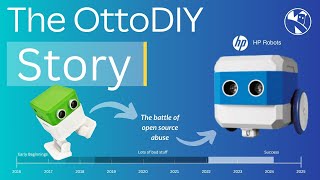
The OttoDIY Story - From Hobby to HP
Explore OttoDIY's evolution from a hobby project to HP partnership, covering challenges, open-source impact, and the innovative HP Robot Auto's features and programming.
A New Model for International, Privacy-Preserving Data Science
Explore a groundbreaking approach to international data analysis using privacy-preserving technologies, enabling secure collaboration between statistical organizations without direct data access.
Empowered User Control: Learnings from Building Event Level Deletion
Explore Meta's new privacy initiative enabling users to delete ad interaction history, impacting data infrastructure and feature representation in Facebook's ad ranking system.

Approaches and Challenges to Purpose Limitation across Diverse Data Uses
Explore Meta's innovative solutions for purpose limitation in data privacy, addressing challenges of scale, granularity, and conditional flows through annotation-based policy checks.

Empirical Privacy Metrics in Synthetic Data Generation - The Bad, the Ugly, and the Good
Explore synthetic data generation, empirical privacy metrics, and their implications for data privacy. Uncover myths, assess usefulness, and learn requirements for effective privacy protection in data analysis and sharing.
Navigating the Privacy Landscape of AI on Devices - Challenges and Best Practices
Explore challenges and best practices for balancing AI advancements with user privacy on personal devices, focusing on responsible data handling and transparent AI development.
LLM Privacy Paradox: Balancing Data Utility with Security - BSidesSF 2024
Explore the balance between data utility and security in LLM fine-tuning, addressing concerns about potential sensitive data leaks and privacy risks in specialized AI models.
Infrastructure as Code, Automation, and Testing in Detection Engineering
Explore detection-as-code for security teams: automate, test, and deploy robust detection systems using Azure DevOps, Microsoft Sentinel, and Defender suite. Improve effectiveness and maintain control across environments.
Navigating the Intersection: AI's Role in Shaping the Secure Open Source Software Ecosystem
Explore AI's impact on open-source software security, covering OSS in AI systems, open-sourcing AI components, AI-driven security automation, and AI's evolving role in OSS development and usage.

Creating On-Call Heroes: Strategies for Effective On-Call Practices
Aprenda estratégias eficazes para práticas de plantão, desde prevenção e triagem até mitigação e liderança. Desenvolva uma cultura de suporte e evite o esgotamento da equipe.
Thread-Level Attack-Surface Reduction for Enhanced Security
Explore thread-level attack-surface reduction, a dynamic approach to eliminate unused code on a thread level, significantly reducing ROP gadgets and enhancing security in multi-threaded applications.
Secure Calling Conventions for CHERI Capability Machines in Practice - Work in Progress
Explore secure calling conventions for CHERI capability machines, focusing on temporal memory safety and stack frame encapsulation. Evaluate performance impact and compatibility.

Understanding, Replicating, and Generating PCAP for OpenSSH XZ Utils Backdoor Issue (CVE-2024-3094)
Explore CVE-2024-3094: Understand the xz library vulnerability, replicate it in a controlled environment, and generate PCAPs for analysis. Enhance your cybersecurity skills.
The Hunt for CVE-2023-0286 - Replicating OpenSSL's Latest Vulnerability
Replicate CVE-2023-0286 in OpenSSL, learn to write a libfuzzer harness, and explore vulnerability research techniques for enhanced security awareness and threat prevention.

Using Vulhub for Dockerized Vulnerability Replication
Explore Vulhub for hands-on vulnerability replication. Learn to set up Docker environments, simulate Heartbleed and Log4j vulnerabilities, and gain practical cybersecurity experience.

Securing Mobile App Secrets: Preventing Credential Leaks in Android Applications
Explore how mobile apps leak sensitive credentials, analyze real-life breaches, and learn actionable steps to prevent secrets from being exposed in source code and compiled applications.