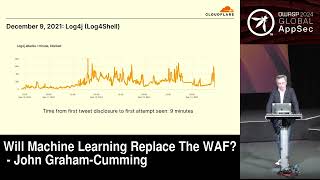
Will Machine Learning Replace the WAF?
Explore the potential of machine learning to revolutionize web application firewalls, examining its capabilities, limitations, and impact on cybersecurity.
AI Package Hallucination - Spreading Malicious Packages Using Generative AI
Explore how generative AI can be exploited to create and spread malicious software packages, highlighting potential cybersecurity risks and defense strategies.

CrowdStrike IT Outage Explained - Kernel Mode Driver Analysis
Detailed analysis of CrowdStrike's IT outage from a Windows developer's perspective, focusing on kernel mode drivers and system vulnerabilities.

Complete CyberSecurity Roadmap 2024 - Beginner's Guide to Ethical Hacking
Comprehensive guide to becoming an ethical hacker, covering essential steps, skills, and resources for beginners entering the cybersecurity field in 2024.

Code Red: Navigating the Minefield of Security Programming Blunders
Explore infamous security breaches, learn from programming mishaps, and gain practical strategies to enhance cybersecurity in this dynamic session on secure coding practices.

Creating Better Computer Systems by Focusing on Sustainability
Explore practices to increase sustainability in software development, focusing on simple changes to create better, more environmentally-friendly products while improving system performance.

Deciding Regular Games - A Playground for Exponential Time Algorithms
Explore exponential time algorithms for deciding regular games, examining their applications and implications in system design and analysis.
Subgame Perfection in Infinite Duration Graph Games
Explore algorithms for manipulating subgame perfect equilibria in infinite duration graph games, with insights on recent developments and applications in system design and analysis.

Stochastic Games with Neural Perception Mechanisms
Explore strategic reasoning in multi-agent systems using partially-observable stochastic games and neural perception mechanisms for optimal strategy synthesis in complex environments.

New Models of Games with Imperfect Information
Explores innovative approaches to modeling imperfect information in infinite games using finite-state automata, comparing observation-based and indistinguishability-relation models for enhanced expressiveness and strategy synthesis.
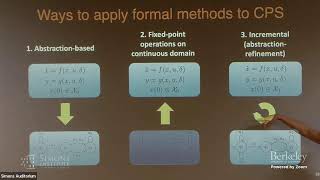
Lifting as an Abstraction for Control Synthesis in Cyber-Physical Systems
Explore control synthesis for cyber-physical systems through discrete abstractions and dynamic simplification via lifting, with insights on Koopman embeddings and potential applications.

Understanding Multiple Intelligences Across Evolution and Development - There Is No Such Thing as AGI
Explore multiple intelligences across evolution and development, challenging the concept of AGI and examining diverse cognitive abilities in various species.

The Development of Sociality in Language and Thought
Explore the interplay between sociality, language, and cognition, examining how social interactions shape our linguistic and cognitive development.

Educability - Understanding Higher-Level Intelligence
Exploring human educability: synthesizing learning from experience, others, and chaining knowledge. Proposes a computational approach to understanding and replicating broader human capabilities beyond example-based learning.

Cultural Evolution - Understanding Higher-Level Intelligence
Explore higher-level intelligence through AI, psychology, and neuroscience perspectives, focusing on cultural evolution and its impact on human cognition.
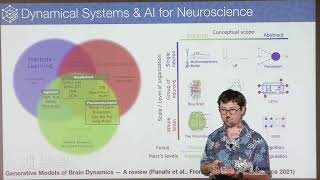
Emerging Interactions in Humans and Machines: From Social Physiology to Social Neuro-AI
Explore social cognition through multi-brain neuroscience and neuro-inspired AI, bridging intra-personal mechanisms and inter-personal dynamics to understand higher-level intelligence in humans and machines.
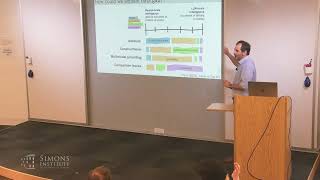
Bridging the Data Gap Between LLMs and Children - Understanding Higher-Level Intelligence
Explores the disparity in data requirements between AI models and human learning, examining potential explanations and presenting new insights on multimodal input and evaluation methods.
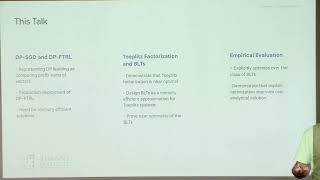
Large Scale Private Learning on Data Streams and the Buffered Linear Toeplitz Operators
Innovative algorithm for privacy-preserving machine learning on data streams, introducing Buffered Linear Toeplitz operators for efficient noise generation in differentially private training.

Locally Private Histograms in All Privacy Regimes
Explore frequency estimation in data analysis, focusing on local differential privacy. Learn about algorithms, error bounds, and the intriguing low-privacy regime in histogram computation.
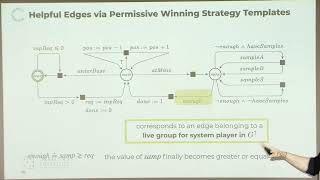
Localized Attractor Computations for Infinite-State Games
Explore symbolic methods for solving infinite-state games, focusing on localized attractor computations in sub-games to enhance efficiency and tackle complex problem instances.
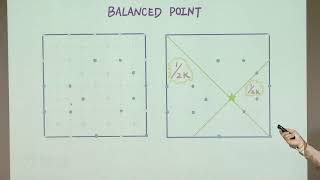
Computing a Fixed Point of Contraction Maps in Polynomial Queries
Efficient algorithm for computing fixed points of contraction maps, with potential implications for solving simple stochastic games and related computational problems.