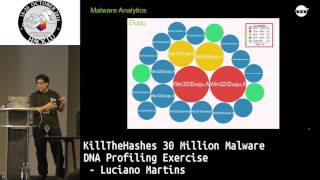
KillTheHashes - 30 Million Malware DNA Profiling Exercise - Hack.lu 2016
Explore malware profiling techniques and tools for identifying unique digital fingerprints, enabling early detection and categorization of new threats through characteristic family analysis.
Exploiting and Attacking Seismological Networks Remotely
Exploiting vulnerabilities in seismological networks to gain remote control and manipulate critical research data. Step-by-step demonstration of attack scenarios and recommendations for securing these systems.
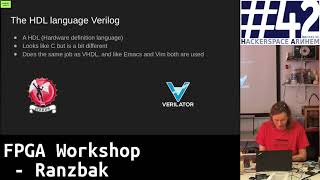
Hack42 FPGA Workshop
Learn to program FPGAs, exploring hardware design principles and practical applications in this hands-on workshop. Gain skills in digital logic and reconfigurable computing.
Practical and Affordable Side-Channel Attacks
Explore affordable side-channel attacks with practical demonstrations, learning techniques to exploit vulnerabilities in cryptographic implementations and secure systems.
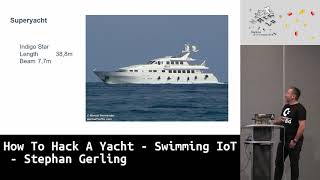
How to Hack a Yacht - Swimming IoT
Explore vulnerabilities in yacht systems and IoT devices on boats. Learn about maritime cybersecurity risks and potential attack vectors in this eye-opening presentation.
Pretty Easy Privacy for Everyone - Hack.lu 2018
Explore p≡p (Pretty Easy Privacy), a user-friendly encryption solution for secure communication. Learn its features, implementation, and potential impact on digital privacy.
The Path Towards Automated Heap Exploitation
Explore automated heap exploitation techniques and strategies for enhancing cybersecurity defenses in this insightful conference talk by Thaís Moreira Hamasaki.
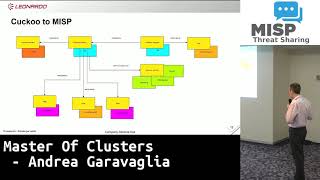
Master of Clusters - MISP Summit 2018
Explore advanced clustering techniques for threat intelligence data analysis and visualization in MISP, enhancing cybersecurity insights and decision-making processes.
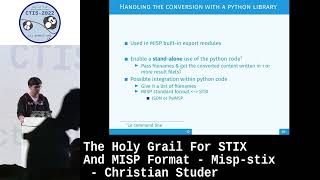
The Holy Grail for STIX and MISP Format - MISP-STIX
Explore MISP-STIX integration for enhanced threat intelligence sharing, focusing on data conversion and interoperability between MISP and STIX formats.
Some Aspects of the Mean-Field Stochastic Target Problem - Boualem Djehiche, KTH, Stockholm
Explores mean-field stochastic target problems, focusing on theoretical aspects and potential applications in high-dimensional distributed optimization for energy and environmental challenges.
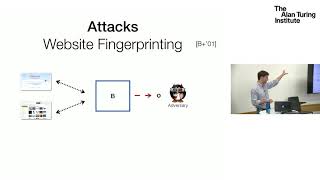
Measuring the Leakage of a Black-Box Using Machine Learning - Giovanni Cherubin
Explore machine learning techniques for measuring information leakage in black-box systems, focusing on privacy and anonymity protocols in website fingerprinting attacks.
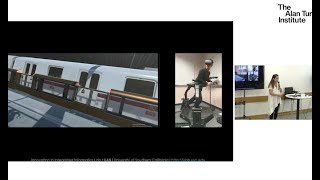
People-Centric AI for the Built Environment - Burcin Becerik-Gerber, USC
Exploring AI-driven interactive environments that adapt to user needs, enhancing sustainability, health, and comfort in buildings. Focuses on machine learning and data science for personalized, context-aware spaces.
Spatial Causal Inference and Neighborhood Effects
Explore spatial causal inference, interference problems from social interactions, and neighborhood effects in multilevel analyses. Examine agent-based models to question area-level effects and their causal interpretations.
Meltdown and Spectre - Professor Mark Handley, UCL
Comprehensive explanation of Meltdown and Spectre vulnerabilities in modern CPUs, their impact on computer systems, and mitigation strategies. Explores CPU architecture, speculative execution, and side-channel attacks.
There Is No AI Ethics - The Human Origins of Machine Prejudice - Dr Joanna Bryson
Exploring the human roots of machine bias and challenging the concept of AI ethics. Dr. Bryson discusses the societal implications of AI and the importance of interdisciplinary approaches in addressing ethical concerns.
Operationalizing Creativity - The Data Science of Innovation from Elites to Vox Pop - Dr Simon Dedeo
Explore data-driven approaches to creativity and innovation, from elite to popular levels. Learn about operationalizing creativity, quantifying development, and analyzing innovation dynamics.
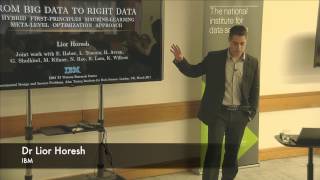
From Big Data to Right Data - Dr. Lior Horesh, IBM
Explore a hybrid approach combining first-principles and machine learning for meta-level optimization, shifting focus from big data to right data in experimental design and inverse problems.
Social Data Science Masterclass - Dr Suzy Moat and Dr Tobias Preis, University of Warwick
Explore how online data from sources like Google and Twitter can measure and predict real-world human behavior, with insights from leading researchers in behavioral science and data analysis.
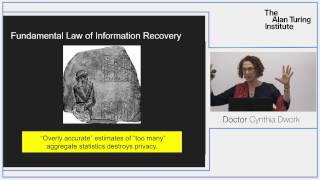
Turing Lecture - Dr Cynthia Dwork, Privacy-Preserving Data Analysis
Explore differential privacy and its role in protecting data during complex analysis. Learn about the risks of data accumulation and solutions for privacy-preserving statistical analysis of large datasets.
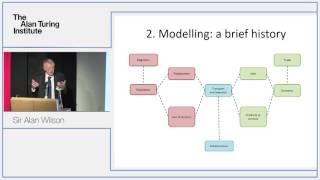
Turing Lecture - Smarter Cities - Sir Alan Wilson, Turing CEO
Explore urban evolution, innovative techniques, and data-driven approaches shaping smarter cities, with insights on modeling, sustainability, and the future of urban living.

Building Dynamic Robots - Marc Raibert, Boston Dynamics
Exploring the future of dynamic robots with Marc Raibert, discussing advancements in hardware, control systems, and real-world applications. Includes insights on Boston Dynamics' innovations and a live robot demonstration.