
Everything I've Learnt About LEDs
Explore LED technology with expert Mike Harrison, covering RGB, dimming, PWM techniques, and practical applications for custom lighting installations and hardware projects.
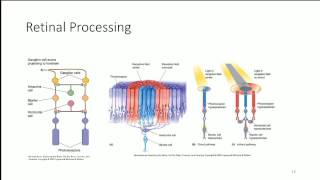
Bio-Inspired Sensing
Explore bio-inspired sensing and its applications in robotics, focusing on how biological systems like the human eye inform edge detection, noise rejection, and data processing in artificial sensors.

Inductance in PCB Layout - The Good, the Bad, and the Fugly
Explore PCB layout inductance: its impacts, mitigation strategies, and real-world applications. Learn to optimize designs for better performance and reliability.

Reverse Engineering with Ghidra - Class 4
Explore advanced Ghidra features: external libraries, patch diffing, checksums, memory management, PCODE, SLEIGH, extensions, and scripting for enhanced reverse engineering capabilities.
Code Forensics - Analyzing High-Level Languages and Compilers
Explore code forensics techniques for analyzing high-level languages, compilers, and architectures. Learn debugging and tracing methods to uncover hidden software behaviors and vulnerabilities.
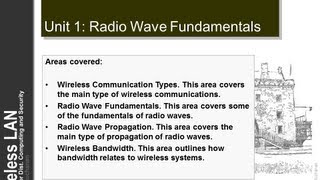
Wireless RF Fundamentals and Spectrum Communications
Explore RF wireless fundamentals, issues, types, and spectrum communications. Learn about challenges and methods in this comprehensive overview.

CeH Unit 3: Footprinting and Scanning - Information Gathering and Network Mapping
Explore footprinting and scanning techniques for ethical hacking, including passive information gathering, DNS analysis, port scanning, and network mapping tools.
Introduction to Security and Network Forensics: Web Infrastructures - Chapter 11
Explore web infrastructure essentials: HTTP, LDAP, authentication methods, federated identity, and access control. Gain insights into security principles for robust online systems.
Data Hiding and Obfuscation in Security and Network Forensics - Lecture 10
Learn data hiding techniques including encryption, hashing, encoding, and steganography. Explore file allocation tables, naming conventions, and signatures for forensic analysis.
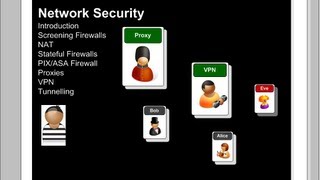
Introduction to Security and Network Forensics - Network Security Elements
Comprehensive overview of network security elements, covering firewalls, NAT, VPNs, and IPSec. Ideal for those seeking to understand fundamental security concepts and technologies.
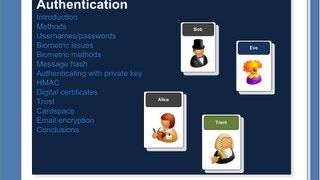
Introduction to Security and Network Forensics: Authentication - Lecture 4
Explore authentication methods, biometrics, digital certificates, and encryption in network security. Learn key principles and practical applications for secure communication and identity verification.
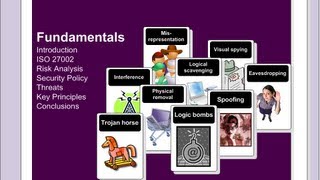
Introduction to Security and Network Forensics - Lecture 1
Comprehensive overview of security fundamentals, covering threats, defense strategies, and network models for a solid foundation in cybersecurity principles.
Introduction to e-Security
Comprehensive overview of e-security fundamentals, covering operating systems, key exchange, trust infrastructure, and tunneling. Ideal for those seeking a solid foundation in cybersecurity concepts.
Tokenization
Learn about tokenization techniques for data protection, including surrogate identifiers, currency tokenization, and pseudonymization. Explore best practices and advanced concepts like Feistel structures and honey encryption.
Hash Cracking
Learn essential hash cracking techniques, from basic methods to advanced tools like Hashcat. Explore salting, Windows hashes, benchmarks, and analysis for improved cybersecurity skills.
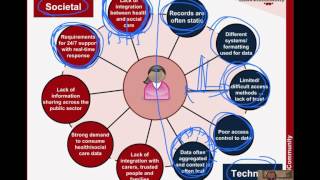
Health and Social Care Transformation - Integrated Models and Information Sharing
Explore integrated approaches to health and social care, focusing on risk assessment, information sharing, and stakeholder collaboration for improved outcomes in child welfare.

BBC Scotland Brainwaves: Cyber Security Overview - January 19, 2015
Explore cyber security essentials: stalking, passwords, identity theft, VPNs, authentication, and industry trends. Gain insights into protecting yourself in the digital age.

How Public WIFI Can Be Sniffed
Explore public WiFi vulnerabilities, packet sniffing techniques, and man-in-the-middle attacks. Learn about IP addressing, NAT, and the OSI model to understand network security risks and protection methods.

Denial of Service Attacks Explained
Explore three types of Denial of Service attacks: bandwidth-based, max connections-based, and vulnerability-based. Learn their mechanisms and impacts on server availability.

Remoticon 2021 - Colin O'Flynn Zaps Chips and They Talk
Explore power analysis and chip glitching techniques with Colin O'Flynn, including practical demonstrations and insights into hardware vulnerabilities and security testing methods.
Network Attack Traffic and Data Mining - Lab 6
Explore network attack traffic and data mining techniques, including statistics, Nmap, Hydra, and crosscorrelation analysis for enhanced cybersecurity understanding.