Fourier Analysis of Boolean Functions - Lecture 8a of CS Theory Toolkit
Explore Fourier analysis of Boolean functions, focusing on real-valued functions and their Fourier transforms in this graduate-level theoretical computer science lecture.
Fast Fourier Transform - Lecture 7c of CS Theory Toolkit
Explore the Fast Fourier Transform algorithm and its application in efficient integer multiplication, with insights from a CMU graduate-level computer science theory course.
Big Data in Cybersecurity
Explore big data's role in cybersecurity, covering classification, feature extraction, and cheat detection. Learn innovative frameworks and future trends in this field.
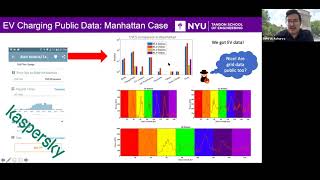
Demand Side Cybersecurity of Smart Grids
Explore smart grid cybersecurity, focusing on demand-side challenges, EV charging, and innovative solutions like cyber insurance for power grids and microgrids.

Wireless and Mobile Softwarization Security and Privacy - Pandora's Box
Explore security challenges in wireless and mobile systems, focusing on jamming, tracking, and softwarization. Learn about emerging threats and potential solutions in this evolving field.
Secure by Design: Insights and Pitfalls
Explore secure software design principles, their benefits, and potential pitfalls. Learn from real-world examples and gain insights on crafting more secure code through thoughtful design choices.
Expected Float Entropy Minimisation: A Relationship Content Theory of Consciousness
Explores a mathematical theory of consciousness called Expected Float Entropy minimization, proposing how the brain defines conscious content through relationships and information processing.
Generalised Integrated Information Theories
Exploring generalizations of Integrated Information Theory to address technical issues and extend applicability beyond classical systems, using category theory and process theories.
How Morphological Computation Shapes Integrated Information in Embodied Agents
Exploring the relationship between morphological computation and integrated information in embodied agents, highlighting their antagonistic nature and impact on brain-body-environment interactions.
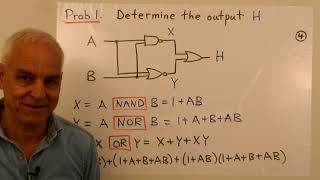
How the Algebra of Boole Simplifies Circuit Analysis - MathFoundations - N J Wildberger
Exploring Boole's algebra for circuit analysis, covering logic gates, negations, and practical examples. Provides a unique approach to understanding and simplifying complex circuits.

Autonomous Manipulator Solutions for Mobile Robotics
Explore autonomous manipulator solutions for mobile robotics, focusing on challenges in remote environments, machine perception, and object interaction. Learn about building blocks for advanced robotic control and human-robot collaboration.

Whitfield Diffie - Pioneering Cryptographer and 2015 ACM Turing Award Recipient
Explore cryptography pioneer Whitfield Diffie's life, influences, and contributions to computer security in this insightful interview covering his childhood, education, and career milestones.

AI and Cyber Security - Mark Menzies, Check Point
Explore AI's impact on cybersecurity, including advancements in threat detection, campaign hunting, and context-aware systems. Learn how AI is revolutionizing the field and enhancing accuracy.
How Big Data Makes a Safer Place to Exchange Digital Information - Simon Edwards, Trend Micro
Explore advanced cybersecurity strategies, including zero-day initiatives, machine learning, and threat analysis, to enhance digital information exchange safety and combat evolving cyber threats.

Practical Side-Channel Attacks on Embedded Device Cryptography - Dr Owen Lo and Doug Carson
Explore side-channel attacks on embedded devices, including techniques, history, and real-life examples. Learn about power analysis methods and their implications for cryptography.

Using EEPROM on ATMega328P
Learn to utilize EEPROM on ATMega328P microcontrollers, covering memory types, programming techniques, and practical applications, with guidance on avoiding common errors and issues.
Privacy-Preserving AI - Andrew Trask, University of Oxford
Explore privacy-preserving AI techniques with Andrew Trask, covering differential privacy, federated learning, and shared governance for ethical and secure AI development.
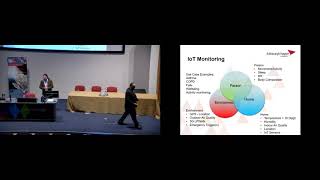
Shifting Concepts of Frailty, Adrian Smales
Explore evolving frailty concepts, telemetry cycles, and domains like sleep and exercise. Learn about medical networks and device integration for comprehensive health monitoring.
SSL-TLS and Why It Keeps Your Lake Empty - Andy Shepherd, Symantec
Explore SSL/TLS encryption, its impact on network visibility, and the evolution to TLS 1.3. Learn about security implications and strategies for maintaining network oversight.
Formalizing Data Deletion in the Context of the Right to be Forgotten
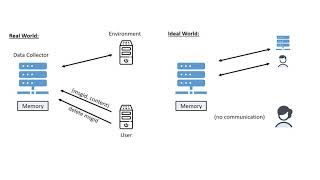
Explore the formalization of data deletion in machine learning, addressing regulatory challenges and implications for the Right to be Forgotten in this research presentation from Eurocrypt 2020.
Unleashing the Power of Convolutional Neural Networks for Profiled Side-Channel Attacks
Explore cutting-edge applications of convolutional neural networks in profiled side-channel attacks, covering design principles, architecture, and data augmentation techniques.