
Random Matrices and Dynamics of Optimization in Very High Dimensions - Lecture 3
Explorez les dynamiques d'optimisation en très haute dimension et leur application en apprentissage automatique, en mettant l'accent sur les matrices aléatoires et les statistiques résumées.
Random Matrices and Dynamics of Optimization in Very High Dimensions - Lecture 4
Explore random matrices and optimization dynamics in high dimensions, focusing on effective dynamics, spectral transitions, and applications in machine learning algorithms.

Entangleability of Cones
Explore tensor products of finite-dimensional proper cones, solving Barker's conjecture using convex geometry and algebraic topology, with applications to entanglement in non-classical systems.
The Perceptron as a Roadmap - From Neuron Structure to Artificial Neural Networks
Explore the evolution of neural networks from biological neurons to machine learning, using the perceptron as a guide. Uncover connections to associative memories, function approximation, and surprising mathematical links.
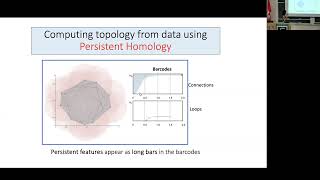
Applications of Topological Data Analysis in Cancer - Lecture 2
Explore applications of topological data analysis in cancer research, focusing on mathematical modeling of treatments, resistance, and optimization.
Logic for Explainable AI - Tutorial
Explore a comprehensive theory of explainable AI using symbolic logic, covering necessary and sufficient conditions for decisions, minimal perturbations, and applications to various classifier types.
Quantum Simulation: Perspectives and Applications - Panel Discussion
Explore quantum simulation's multidisciplinary frontiers, from theoretical capabilities to experimental progress in trapped-atom and solid-state platforms, with leading researchers in the field.
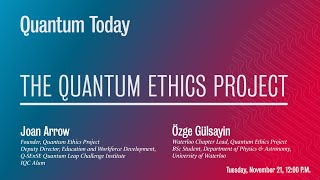
The Quantum Ethics Project - Responsible Development of Quantum Technologies
Explore the intersection of quantum technology and ethics with researchers from the Quantum Ethics Project, discussing responsible development and societal impact.

Open Problems in European Artificial Intelligence
Explore open challenges in European AI with Prof. Schölkopf, delving into cutting-edge research and future directions in the field.

The Atomic Human - Understanding Ourselves in the Age of AI
Explore the impact of AI on human understanding and society through Professor Neil Lawrence's insightful keynote at the ELLIS Community Event in Helsinki.

Understanding and Mitigating Loss of Control in AI Systems
Explore AI control challenges and mitigation strategies with Professor Yoshua Bengio's keynote on understanding and addressing potential loss of control in artificial intelligence.
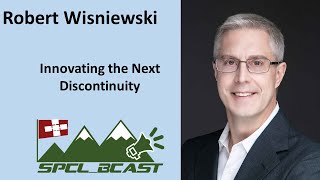
Innovating the Next Discontinuity in HPC and AI Computing
Explore innovative solutions for HPC and AI bottlenecks through Memory Coupled Compute architecture, addressing bandwidth limitations and accelerator efficiency for post-exascale computing.
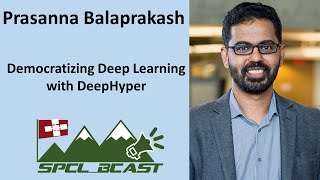
Democratizing Deep Learning with DeepHyper
Explore DeepHyper: Automate DNN design for scientific data using scalable neural architecture and hyperparameter search. Learn to generate DNN ensembles for uncertainty estimation in various applications.
Follow the Data: Memory-Centric Designs for Modern Datacenters
Explore data-driven approaches for memory architecture in exascale supercomputing and cloud memory disaggregation. Gain insights into system-level memory problems and their solutions.
A Chiplet-Based Generative Inference Architecture with Block Floating Point Datatypes
Explore a chiplet-based architecture for generative inference, featuring block floating point datatypes and optimizations for large language models in AI accelerated computing.
HPVM: Performance, Programmability and Retargetability for Heterogeneous Parallel Systems
Explore HPVM's approach to programming heterogeneous parallel systems, focusing on performance, ease of use, and retargetability across diverse hardware targets.
ML for High-Performance Climate: Data Post Processing, Compression, and Earth Virtualization Engines
Explore advanced ML techniques for climate data processing, compression, and Earth virtualization, enhancing high-performance computing in climate science.
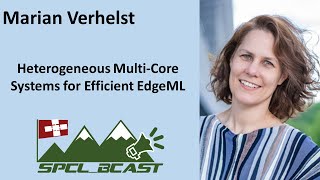
Heterogeneous Multi-Core Systems for Efficient Edge Machine Learning
Explore heterogeneous multi-core systems for efficient embedded ML, addressing challenges in core optimization, workload mapping, and data sharing. Gain insights from KULeuven MICAS research.

Can I Cook a 5 o'clock Compiler Cake and Eat It at 2? - Optimizing Compilers for High-Performance Computing
Explore ML-enhanced compilers and domain-specific code generators in high-performance computing. Examine the programmability/performance dilemma and potential solutions for future compiler development.
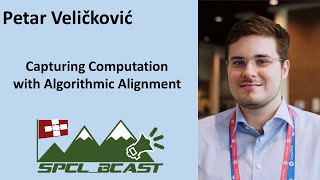
Capturing Computation with Algorithmic Alignment
Explore algorithmic alignment in neural networks, its implications for architecture design, and its potential for building future intelligent systems.
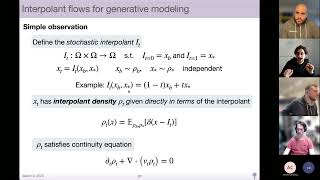
Building Normalizing Flows with Stochastic Interpolants
Explore advanced techniques for constructing normalizing flows using stochastic interpolants, enhancing generative modeling capabilities.