
Towards Meaning: The Tectogrammatical Sentence Representation - 2001
Explore tectogrammatical sentence representation, a linguistic approach for analyzing sentence structure and meaning, presented by Jan Hajic in 2001.
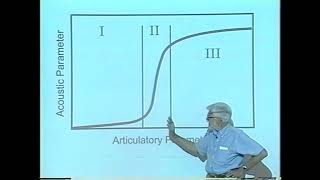
A Feature-Based Model of Human Lexical Access - 2004
Explore a feature-based model of human lexical access, delving into the intricacies of language processing and speech recognition.
OLMo: Accelerating the Science of Open Language Models
Explore OLMo, an open-source language model initiative, and its impact on accelerating research in natural language processing and machine learning.
Extension is All You Need - But Sometimes Good Intentions Help Too
Explore innovative approaches to language extension and their impact on linguistic analysis, with insights on balancing intentions and outcomes.
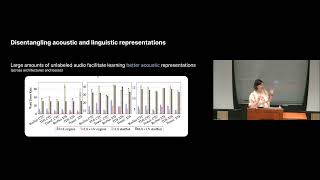
Efficient Speech Processing
Explore cutting-edge research in speech recognition, generation, and privacy. Learn about self-training algorithms, error correction models, joint text-to-speech modeling, and privacy-preserving techniques in speech processing.
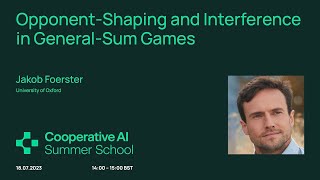
Opponent-Shaping and Interference in General-Sum Games
Explore opponent-shaping and interference in general-sum games, delving into multi-agent reinforcement learning and its applications in AI research.
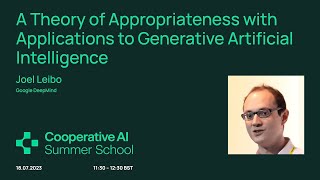
A Theory of Appropriateness with Applications to Generative Artificial Intelligence
Explore a theory of appropriateness in AI, focusing on complex cognitive behaviors, evaluation methods, and modeling processes like cumulative culture in human intelligence.
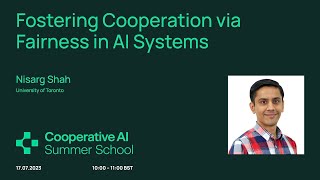
Fostering Cooperation via Fairness in AI Systems
Explore fairness in AI decision-making, addressing efficiency, elicitation, and incentives. Learn theoretical foundations for fairness in voting, resource allocation, and machine learning.
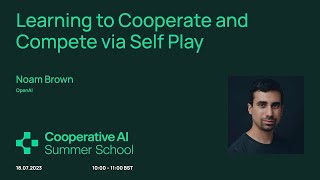
Learning to Cooperate and Compete via Self Play
Explore AI strategies for cooperation and competition through self-play, featuring insights from poker AI breakthroughs and their broader implications.
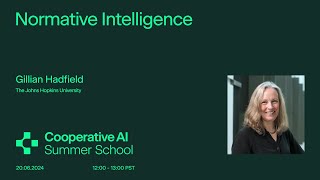
Normative Intelligence - Cooperative AI Summer School 2024
Explore normative intelligence and its implications for AI governance, safety, and societal impact with insights from law, economics, and technology.
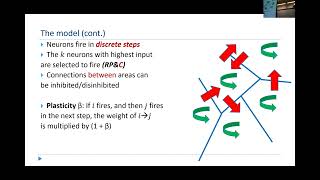
Emergent Computation and Learning from Assemblies of Neurons
Explore emergent computation and learning in neural assemblies with Dr. Santosh Vempala's insightful seminar on cutting-edge neuroscience research.

In Search of Invariance in Brains and Machines
Explore mathematical frameworks for robust AI perception, focusing on Lie theory to model hierarchical structures and transformations in real-world object recognition.
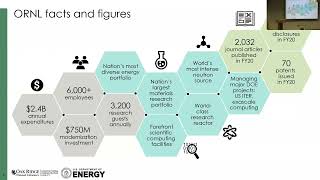
Data-Driven Scalable Composites Manufacturing Processes
Explore data-driven approaches revolutionizing composite manufacturing, transforming traditional methods into adaptable, efficient, and scalable systems.
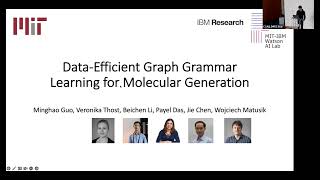
Data-Efficient Graph Grammar Learning for Molecular Generation
Explore data-efficient neurosymbolic generative models for molecular generation using learnable graph grammars, optimized for small datasets and physically synthesizable molecules.
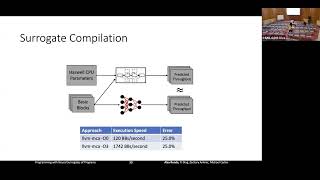
Programming with Neural Surrogates of Programs
Explore neural surrogates for program optimization, including case studies on CPU simulators and techniques like the Renamer and Turaco for constructing efficient program surrogates.
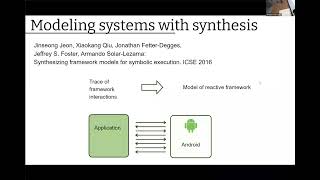
Better Learning Through Programming Languages: Neurosymbolic Synthesis and Learning
Explore program synthesis evolution as a learning tool, from early data-driven models to modern neurosymbolic algorithms.
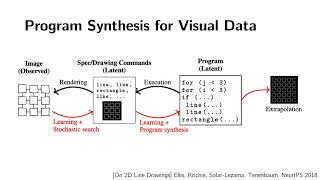
Understanding the Visual World Through Naturally Supervised Code
Explore symbolic structure inference from visual data using neuro-symbolic methods. Learn to leverage natural supervision for discovering repetitive patterns, object intrinsics, and grounded visual concepts.
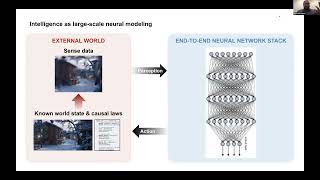
Probabilistic Programming Tutorial - Part 1
Explore probabilistic programming fundamentals and applications with MIT expert Vikash Mansinghka in this comprehensive tutorial.
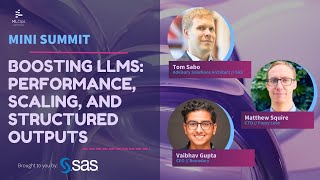
Boosting LLMs: Performance, Scaling, and Structured Outputs - MLOps Mini Summit 8
Explore techniques to enhance LLM performance, scale models in production, and improve structured outputs. Learn from experts about information extraction, scaling challenges, and innovative programming approaches for better AI results.

Robust Optimization and Generalization
Explore robust optimization's history and its modern machine learning applications, focusing on performance certification and practical challenges in ML systems.

Lightning Talks - EuroPython 2024
Explore diverse Python topics in rapid-fire talks, from matrix arithmetic and 3D modeling to garbage collection and presentation skills. Gain insights from experts in this engaging lightning talk session.