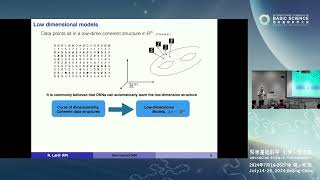
Learning Manifold-Structured Data Using Deep Neural Networks - Theory and Applications
Explore deep neural networks' ability to learn geometric data structures using multi-chart latent spaces and Chart Auto-Encoders, with theoretical foundations and practical applications.
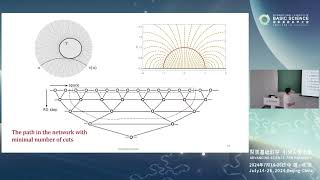
Partial Entanglement Network and Geometry Reconstruction in AdS/CFT
Explore partial entanglement entropy geometrization in AdS/CFT, examining PEE threads, network formation, and bulk geometry reconstruction using novel approaches.
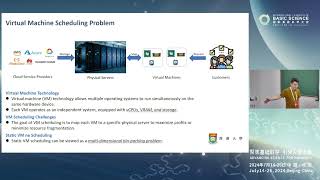
How Optimization Helps Industry: Real Applications in the Era of AI and Cloud Computing
Explore real-world optimization challenges in AI and cloud computing industries, from live streaming to AI-chip design. Gain insights into mathematical representations and recent advancements.
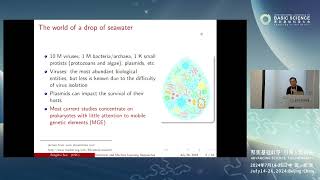
Statistical and Machine Learning Approaches for Investigating Viruses and Virus-Host Interactions
Explore statistical and machine learning methods for identifying novel viruses and virus-host interactions in metagenomic studies, enhancing understanding of microbial communities.
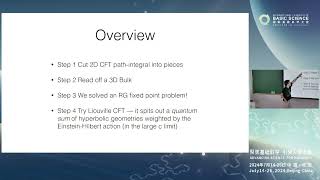
Building Space-time with BCFT Legos - ICBS 2024
Explore quantum gravity duals of CFTs through conformal bootstrap, topological symmetries, and tensor networks. Discover how 2D Liouville theory illustrates building quantum gravitational path integrals using BCFT correlations.
Reverse Engineering Structural Connectivity in Brain Networks
Explore the relationship between causal and structural connectivity in brain networks. Learn techniques for reconstructing neural circuitry using pulse outputs and various causality measures.
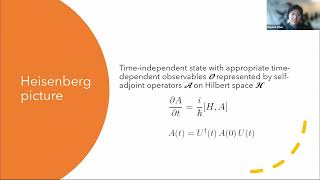
The Time in Thermal Time - Exploring Timelessness in Quantum Gravity
Explore the 'problem of time' in quantum gravity and critically examine the thermal time hypothesis as a potential solution, delving into concepts of equilibrium and statistical states in timeless contexts.
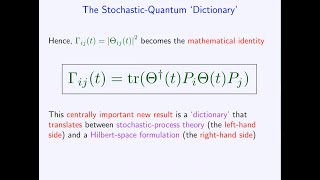
A New Formulation of Quantum Theory
Explore a novel correspondence between stochastic processes and quantum theory, offering new insights into quantum mechanics and potential applications for quantum computing.
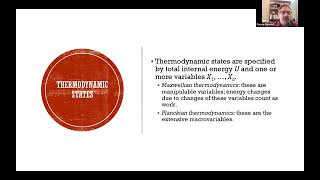
A Tale of Two Sciences: Contrasting Views on Thermodynamics
Explore the distinction between two approaches to thermodynamics: the Maxwellian view as a resource theory and the Planckian view as a theory of macroscopic matter properties. Examine their implications for statistical mechanics.
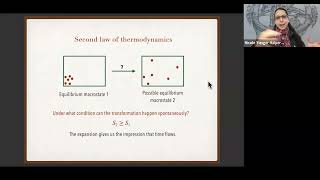
Updates to the Second Law from Quantum Thermodynamics
Explore quantum thermodynamics' impact on the second law of thermodynamics, examining its evolution and implications for small systems and quantum phenomena.
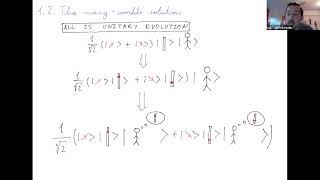
On Playing Gods: The Fallacy of the Many-Worlds Interpretation
Explore the methodological argument refuting the many-worlds interpretation of quantum theory, examining its problematic aspects and incompatibility with fundamental scientific principles.
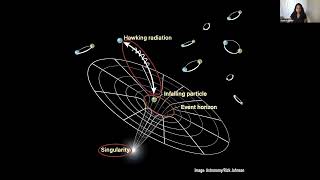
Not the Measurement Problem's Problem: Black Hole Information and Schrödinger's Cat
Explore the relationship between black hole information loss and quantum measurement, challenging unitarity's dominance and proposing interpretation-neutral solutions to these fundamental physics puzzles.
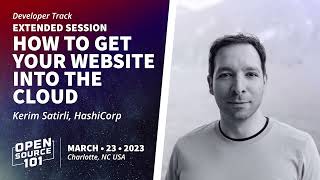
How to Get Your Website Into the Cloud
Deploy your GitHub portfolio to cloud hosting using Infrastructure as Code. Learn Terraform, avoid pitfalls, and follow best practices in this interactive workshop on cloud deployment.
AI on the Edge - Advancing Edge Computing and Next-Generation Networks
Explore AI's role in advancing edge computing and next-gen networks. Discover opportunities for AI on the edge in DOD Microelectronics Commons Program.
Self-Play Fine-Tuning Converts Weak Language Models to Strong Language Models
Explore a novel fine-tuning method for Large Language Models that improves performance without additional human-annotated data, using self-play mechanisms and theoretical guarantees.
Multimodal Machine Intelligence and Health
Explore multimodal machine intelligence applications in medical sciences and health research, addressing challenges in creating trustworthy, inclusive AI for clinical and quality of life domains.
Functional Tokens for On-device Multimodal Models - Nexa AI
Explore innovative functional tokens for on-device multimodal AI models, enhancing accuracy and efficiency in function calling tasks while achieving remarkable performance across languages and modalities.
AI Automation in the Digital World - Current Progress and Challenges
Explore the current state and limitations of AI agents in automating digital tasks. Examine challenges in tool use, reasoning, and knowledge, and discover potential solutions for achieving true AI autonomy.
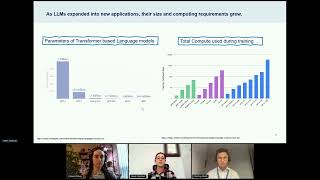
Building an End-to-End Web Application with Microsoft's Semantic Kernel
Develop a web app using Microsoft's Semantic Kernel to integrate LLMs, enhancing their capabilities with structured responses and external data sources.
An Open Source Approach to Build Guardrails for Deploying ML Models in Healthcare
Explore an open-source framework for responsible ML deployment in healthcare, focusing on evaluation and monitoring across patient sub-populations.
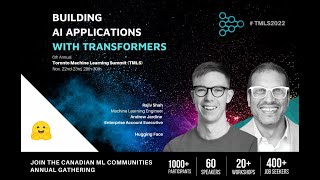
Building AI Applications with Transformers
Learn to leverage transformers for AI applications like auto-completion, semantic search, and document AI using open-source tools and models. Explore embeddings, Generative AI, and emerging trends in multimodal and large language models.