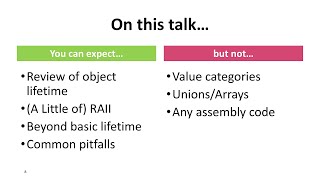
C++ Object Lifetime: From Start to Finish - CppCon 2023
Explore C++ object lifetime fundamentals, rules for extension, and pitfalls with temporary objects. Gain insights to write correct and efficient code, suitable for all skill levels.
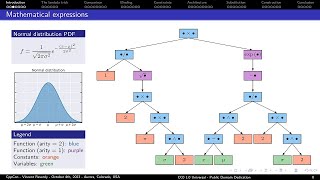
Symbolic Calculus for High-performance Computing From Scratch Using C++23
Explore symbolic calculus implementation in C++23 for high-performance computing. Learn techniques for compile-time derivatives, integrals, and optimized linear algebra computations.
How to Build Your First C++ Automated Refactoring Tool - Lecture
Learn to create C++ automated refactoring tools using Clang, scaling expert knowledge and ensuring best practices across large codebases. Discover practical applications for improving code quality efficiently.
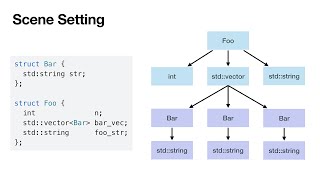
Object Introspection: A C++ Memory Profiler - Lecture
Explore a new open-source Linux technology for precise C++ object memory profiling, enabling efficiency improvements without code modification. Learn two approaches for object introspection with practical examples.
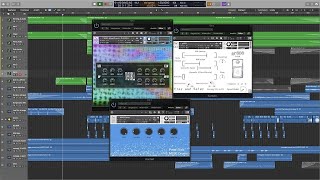
Exploration of Strongly-typed Units in C++ - A Case Study from Digital Audio
Explore strongly-typed units in C++ for digital audio processing. Learn to prevent API and math mistakes using user-defined types, conversion operators, and operator overloading. Examine the mp-units library proposal.
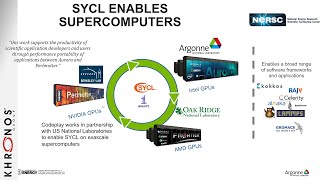
Concurrency TS2: Improved C++ Concurrency and Lock-free Programming - Lecture
Explore advanced C++ concurrency features in Concurrency TS2, including Synchronized Value, Safe Reclamation, Bytewise Atomic Memcpy, and Asymmetric Fence. Learn their applications in lock-free and low-latency programming.

Linkers, Loaders and Shared Libraries in Windows, Linux, and C++ - CppCon 2023
Explore linkers, loaders, and shared libraries in Windows and Linux. Gain insights into binary layouts, symbol visibility, and C++ build differences across platforms.
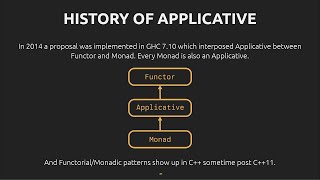
Applicative - The Forgotten C++ Functional Pattern
Explore the powerful applicative pattern in C++, learning its uses in optionals, ranges, futures, and more. Gain insights to write simpler, composable code beyond monads and functors.
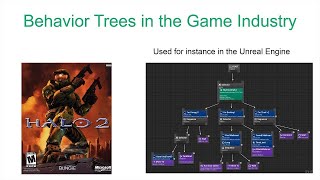
BehaviorTree.CPP - Task Planning for Robots and Virtual Agents - Lecture
Explore BehaviorTree.CPP for task planning in robotics. Learn advantages over finite state machines, implementation details, and unique features of this popular library for robots and virtual agents.
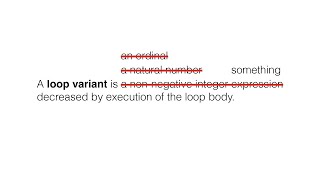
Why Loops End in C++
Explore the principles behind loop termination in C++, learning to express and communicate reasons for loop endings formally within source code.
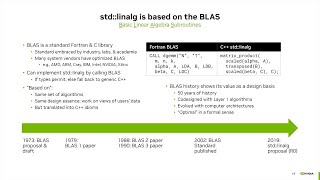
Linear Algebra Coming to Standard C++ - std::linalg
Explore std::linalg, a new C++ library for efficient linear algebra computations using modern C++ idioms. Learn its benefits, implementation, and potential impact on C++ development.
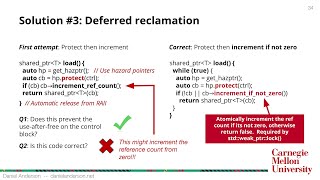
Lock-free Atomic Shared Pointers Without a Split Reference Count - Implementation Strategies
Explore lock-free atomic shared pointers implementation without split reference count. Learn an elegant solution using hazard pointers for improved performance in concurrent C++ programming.
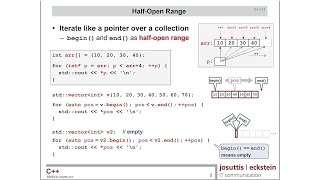
Back to Basics: Iterators in C++
Explore C++ iterators: design, consequences, corner cases, and their role in ranges and views introduced in C++20. Master a key component of the Standard Template Library.
The Au C++ Units Library: Handling Physical Units Safely, Quickly, and Broadly - Lecture 1
Explore Au, a new C++ units library offering fast compilation, simple errors, and wide compatibility. Learn its unique features and how it compares to other libraries for efficient physical quantity handling.
Expressing Implementation Sameness and Similarity - Polymorphism in Modern C++ - Lecture
Explore advanced C++ polymorphism techniques, from inheritance to templates and metaprogramming. Analyze trade-offs in code reuse, maintainability, and performance for better software design.
Back to Basics: Range Algorithms in C++ - Lecture 1
Explore C++ algorithms' power in boosting productivity, reducing bugs, and enhancing maintainability. Learn why they're essential for efficient, extensible software design.
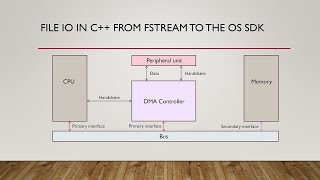
File I/O for Game Developers: Past, Present, and Future with C++ - CppCon 2023
Explore the evolution of file I/O in game development, from loading screens to future C++ innovations. Gain insights on optimizing data handling for improved player experience.

Exceptionally Bad: The Misuse of Exceptions in C++ and How to Do Better
Explore common misuses of exceptions in C++ and learn better alternatives for error handling, resource management, and control flow. Gain insights into proper exception usage.
Cache-friendly Design in Robot Path Planning with C++ - Lecture
Optimize robot path planning algorithms using cache-friendly design in C++. Learn to enhance performance of Dijkstra's and A-star algorithms through efficient memory layouts and STL facilities.
Can We Predict the Future of Brazilian Reefs? - QEco Program Seminar
Explore Brazilian reef ecosystems, their future predictions, and conservation strategies through expert insights and quantitative ecological approaches.
From Trajectories to Models: Data-Driven Approaches to Decipher the Dynamics of Living Systems
Explore data-driven methods for deciphering living systems' dynamics, focusing on transforming trajectories into models for deeper biological insights.