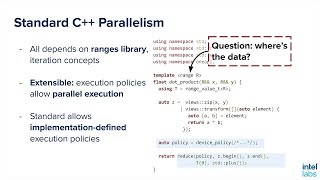
Distributed Ranges: A Model for Building Distributed Data Structures, Algorithms, and Views
Explore distributed ranges for building scalable data structures and algorithms across clusters. Learn to implement generic, interoperable distributed computing solutions using modern C++ features.

A Fast, Compliant JSON Pull Parser for Writing Robust Applications - CppCon 2023
Explore a fast, compliant JSON pull parser for robust C++ applications. Learn API design, semantic constraints, and error handling techniques to enhance JSON parsing efficiency and reliability.
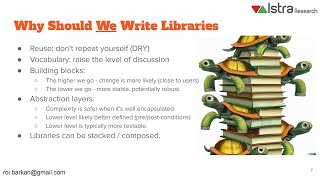
More C++ Ranges Please - Exploring Advanced Algorithms and Applications
Explore advanced C++20/23 range algorithms, including sorted ranges, range-of-ranges operations, and permutations. Gain insights into potential STL additions for enhanced expressiveness and performance.

A Journey Into Non-Virtual Polymorphism in C++ - Lecture
Explore non-virtual polymorphism in C++, covering std::any, std::variant, std::tuple, and CRTP. Discover code examples and modern techniques for handling diverse types without inheritance.
Is C++23 std::mdspan a Zero-overhead Abstraction? - Lecture
Explore C++23 std::mdspan's efficiency as a zero-overhead abstraction for multi-dimensional arrays through matrix and image operations, comparing assembly output to low-level implementations.
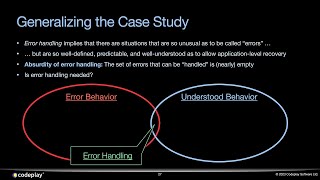
The Absurdity of Error Handling: Finding a Purpose for Errors in Safety-Critical SYCL
Explore error handling challenges in safety-critical SYCL, examining the concept of safety and rethinking error scenarios in C++ software development for critical systems.
Can C++ Data-Oriented Design Be Improved?
Explore innovative techniques to enhance data-oriented design in C++, focusing on optimal transformations and improved code organization for greater flexibility and maintainability.
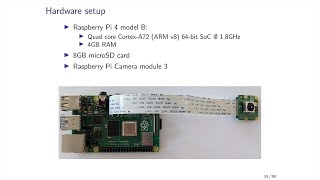
Leveraging the Power of C++ for Efficient Machine Learning on Embedded Devices
Explore practical C++ and TensorFlow Lite integration for efficient machine learning on embedded devices. Includes image classification and hand gesture recognition demonstrations on Raspberry Pi.
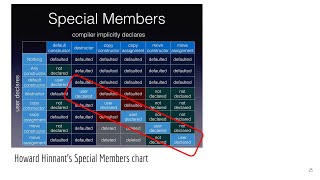
Back to Basics: The Rule of Five in C++ - Lecture
Explore the Rule of Five in C++, its origins, and potential improvements. Learn to design classes for correct copying and moving behavior, guided by Core Guidelines.

Optimizing Away C++ Virtual Functions May Be Pointless
Explore the performance impact of C++ virtual functions, challenging common optimization practices and examining alternatives through modern CPU architecture insights.
Building Consensus on a Set of Rules for Massive C++ Codebases
Explore strategies for building consensus on C++ coding rules across large engineering teams, drawing insights from Bloomberg's experience with naming conventions and infrastructure changes.
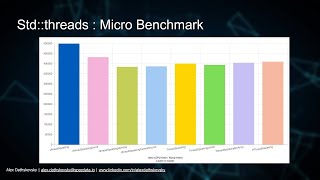
C++ Memory Model: From C++11 to C++23
Explore C++ memory model evolution from C++11 to C++23. Learn CPU and compiler optimizations, threading tools, and best practices for robust, thread-safe code development.
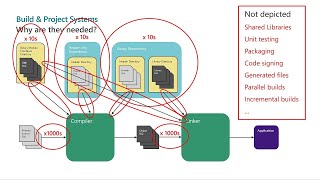
Getting Started with C++ - CppCon 2023
Learn essential steps for starting your C++ journey, from setting up tools to finding resources. Gain insights on compiler toolchains, libraries, and best practices for efficient learning and development.
Great C++ is_trivial - Understanding Trivial Type Traits - Lecture 2023
Explore trivial type traits in C++, their impact on efficiency, and benefits for performance optimization. Gain insights into object initialization and move semantics.

Actors with Tokio - A Lesson in Ownership
Explore actors in Rust: their elegance for shared resources, compatibility with ownership rules, and insights into borrow checker-friendly code. Gain deeper understanding of Rust's core concepts.
Integrating Rust with Other Languages - Get the Best of Both Worlds
Explore integrating Rust with C, C++, and Java to leverage its strengths in existing applications. Learn practical examples and techniques for seamless language interoperability.
Tracing the Linux Kernel with eBPF and Rust
Explore eBPF for Linux kernel instrumentation, learn to write eBPF code in Rust, and discover Exein Pulsar, an eBPF-based security observability tool for Linux.
Building a Kubernetes Monitoring Dashboard in Rust - Why Not?
Explore the development of KDash, a Kubernetes monitoring dashboard built in Rust. Discover the motivations, challenges, and unique features of this project compared to existing tools.
Extending Redis with Rust
Learn to extend Redis with custom data structures and commands using Rust. Discover how to bring data and computation together by creating new modules for this in-memory database.
Dockerising and Deploying a Full Stack Rust and WASM Web App
Learn to build and deploy a full-stack Rust web app with WASM, Docker, and Kubernetes. Explore the journey from development to live deployment, ideal for Rust developers new to DevOps.
Ergonomic APIs for Hard Problems - Five Techniques for Improved Design
Explore five techniques for designing ergonomic Rust APIs, focusing on GUI architecture but applicable to other domains. Learn to create clean, powerful interfaces for complex problems.