The Continuous Language of Protein Structure
Explore a novel approach to protein structure generation using continuous autoregressive language models. Learn about innovative techniques for in silico protein design and their potential applications.
Integrating -omic Data Across Datasets and Layers
Explore techniques for integrating -omic data across datasets and layers, focusing on redundancy, neural networks, and genetic associations in cancer research.
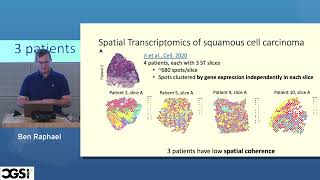
Alignment, Integration, and Modeling of Spatial Transcriptomics Data
Explore alignment, integration, and modeling techniques for spatial transcriptomics data, focusing on innovative approaches to analyze gene expression patterns in tissue samples.
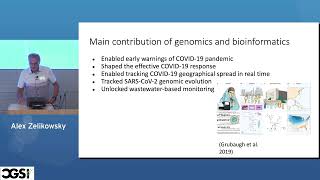
Analysis of SARS-CoV-2 Sequencing Data
Explore advanced techniques for analyzing SARS-CoV-2 sequencing data, including haplotype assembly, phylogeny reconstruction, variant identification, and network representation of genomic information.
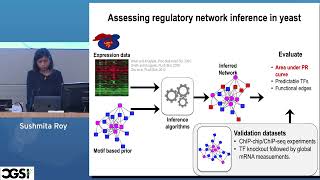
Inference of Gene Regulatory Networks from Bulk and Single Cell Omic Datasets
Explore gene regulatory network inference techniques using bulk and single-cell omic datasets. Learn about integrative approaches, predictive models, and applications in cellular reprogramming and single-cell genomics.
Large Language Models for Computational Biology - A Primer
Explore large language models in computational biology, covering transformers, pretraining, and applications in genomics and single-cell analysis.
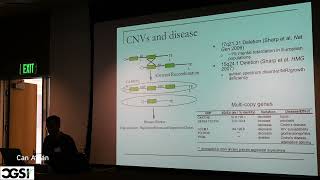
Characterization of Genomic Structural Variation Using Various Sequencing Technologies
Explore genomic structural variation analysis using diverse sequencing technologies. Learn about copy number variation genotyping and deep learning applications in exome sequencing.
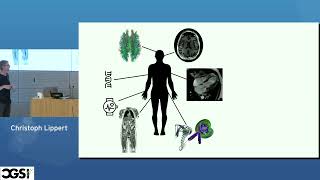
Performing GWAS of Images by Combining Deep Transfer Learning with Statistical Testing
Explore innovative techniques for genome-wide association studies of images, combining deep transfer learning with statistical testing for advanced computational genomics research.
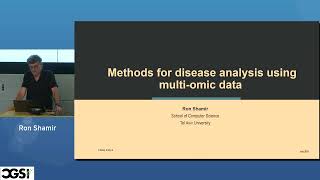
Methods for Disease Analysis Using Multiomic Data
Explore advanced methods for analyzing diseases using multiomic data, focusing on clustering algorithms, cancer subtyping, and driver gene prioritization.
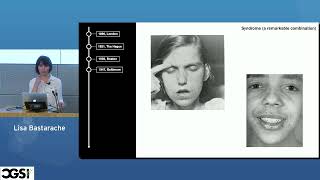
From Population to Person - How to Help a Single, Actual Person with Data Science
Discover how data science can be applied to help individual patients, bridging the gap between population-level insights and personalized healthcare interventions.
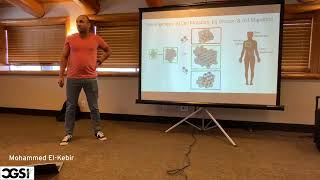
Inferring Parsimonious Migration Histories for Metastatic Cancers
Explore computational methods for inferring cancer metastasis patterns, focusing on parsimonious migration histories and multi-strain infections in tumor evolution.
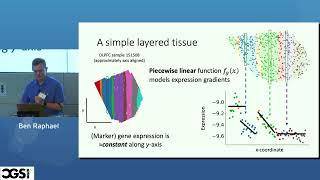
Models and Methods for Spatial Transcriptomics - CGSI 2023
Explore models and methods for spatial transcriptomics, focusing on alignment, integration, and modeling of gene expression variation in spatially resolved data.
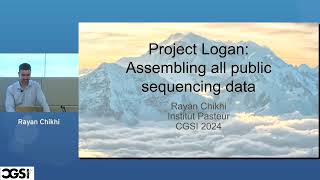
Project Logan: Assembling All Public Sequencing Data
Explore Project Logan's ambitious goal of assembling all public sequencing data. Learn about innovative techniques and challenges in large-scale genomic data processing and analysis.
Working with Relational Databases in the Wolfram Language
Explore relational databases using Wolfram Language's Entity framework. Learn key concepts, querying techniques, and advanced features for efficient data management.
Mathematical Games - Collection of Points and Lines - Episode 1
Explore games and puzzles using points and lines with Ed Pegg Jr., leveraging Wolfram Language to uncover mathematical insights and problem-solving techniques.
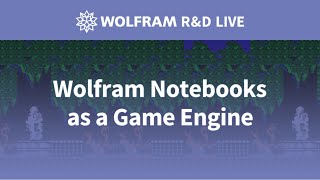
Wolfram Notebooks as a Game Engine - Creating a 2D Side-Scrolling Platformer
Create a 2D side-scrolling platformer game using Wolfram Notebooks, exploring its potential as a game engine for interactive development.
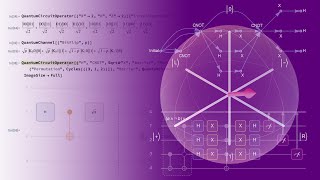
Introduction to the Wolfram Quantum Computation Framework
Explore the Wolfram Quantum Computation Framework, covering quantum states, transformations, algorithms, and circuits using Wolfram Language for quantum hardware implementation.
Understanding Graphics in Wolfram - Features for Creating and Refining Plots
Explore key features for creating and refining plots, including coordinate systems, padding, axes, frames, image sizes, and aspect ratios in this comprehensive graphics tutorial.
What's New in Wolfram Video: Advanced Editing and Generation Capabilities
Explore latest Wolfram Language video functions: subtitle support, editing, and programmatic generation. Discover advanced capabilities for video manipulation and creation.

From Rock-Paper-Scissors to BabyAGI - Harnessing LLMs with the Wolfram Language
Explore LLMs through rock-paper-scissors, then implement BabyAGI in Wolfram Language. Discover AI's decision-making and autonomous agent capabilities.

CUDA and the Wolfram Language: Latest Developments and Future Directions
Explore CUDA integration in Wolfram Language, covering latest developments and future directions for massively parallel GPU computation.