Bilevel Optimization Problems: Algorithms and Theory
Explore recent developments in bilevel optimization algorithms, their theoretical analysis, and challenges in machine learning and data science applications.
Optimization of Functions with Low Effective Dimensionality
Explore optimization techniques for functions with low effective dimensionality, focusing on random and deterministic subspace methods for nonconvex problems and efficient subspace learning.
The First Optimal Distributed SGD in the Presence of Data, Compute and Communication Heterogeneity
Explore optimal time complexities for parallel optimization methods with heterogeneous data, compute, and communication. Gain insights into efficient distributed SGD algorithms.
Strong Convergence of Inertial Algorithms via Tikhonov Regularization
Explore inertial algorithms with Tikhonov regularization for optimization problems, examining strong convergence to minimum norm solutions and fast convergence rates for objective function values.
Revisiting Inexact Fixed-Point Iterations for Min-Max Problems - Stochasticity and Cohypomonotonicity
Explore advanced optimization techniques for constrained min-max problems, focusing on inexact fixed-point iterations and stochastic algorithms for nonconvex-nonconcave scenarios.

Sum-of-Minimum Model: Joint Optimization of Specialized Models for Heterogeneous Data
Explore joint optimization of specialized models for heterogeneous data using the sum-of-minimum approach. Learn algorithm design, performance bounds, and applications in various machine learning tasks.
A Fresh Look at Algorithms for Solving Smooth Multiobjective Optimization Problems
Explore new algorithms for smooth multiobjective optimization using linear programming to find decreasing directions, applicable to various constraint types and yielding substationary points.
On the Origin of Species Thermodynamics and the Black Hole - Tower Correspondence
Explore species thermodynamics and black hole-tower correspondence, delving into advanced concepts in theoretical physics and cosmology.
Direct Confocal Imaging of Fracture Precursors in Casein Gel
Explore direct confocal imaging of fracture precursors in casein gel under shear stress, using advanced microscopy techniques to observe microstructural changes before failure.
Deploying a SurrealDB Cluster on Kubernetes - A Scalable, Multi-Model Database Solution
Deploy SurrealDB cluster on Kubernetes. Learn to set up kubectl, Helm, TiKV for persistence, and access the database locally. Ideal for scalable, multi-model database solutions.
Build an AI Social Media Content Generator with LangGraph and Llama 3.1 - Tutorial
Transform technical content into engaging social media posts using LangChain and Groq. Build a multi-agent AI system, generate and refine content, implement AI-driven critiques, and visualize workflows with LangGraph.
Putting AI to Work for Finance
Discover how generative AI empowers finance teams to tackle complex challenges, allocate resources efficiently, and drive operational success.
Comparing Kernel System Calls Across Runtimes - Performance Analysis
Explore system call usage across runtimes using strace. Compare file reading performance in Node.js, Bun, Python, and C. Analyze kernel mode switches and their impact.
Quantum Algorithms Recap: Grover's Algorithm and SAT - Lesson 98
Recap geometric and rotational aspects of quantum computing, focusing on Grover's Algorithm for SAT in this advanced quantum programming lesson.
Quantum Algorithms Recap: Factoring - Lesson 99
Explore quantum algorithms for factoring and rotation estimation, understanding their efficiency in quantum computing.
Why Study Quantum Computing? - Lesson 100 of Quantum Computer Programming in 100 Easy Lessons
Explore the significance and potential of quantum computing in this thought-provoking conclusion to a comprehensive series on quantum programming.

ell: A Powerful, Robust Framework for Prompt Engineering
Explore ell, a robust framework for prompt engineering. Learn versioning, visualization, and advanced techniques to craft perfect prompts without boilerplate code.
Cyber-Physical Metaverse: Bridging Real and Virtual Worlds
Explore the Cyber-Physical Metaverse concept, bridging real and virtual worlds through Digital Twins. Learn about evolving technologies, standardized interfaces, and their impact on intelligent systems and automated driving.
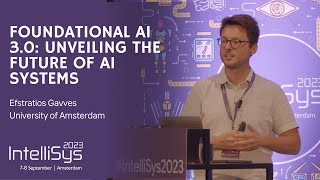
Foundational AI 3.0: Unveiling the Future of AI Systems
Explore AI's evolution from models to systems, focusing on dynamic environments and Foundational Causal Models. Gain insights into the future of AI in robotics, VR/AR, and healthcare.
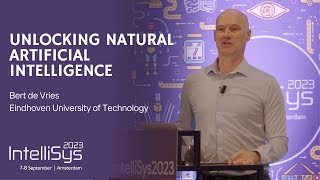
Unlocking Natural Artificial Intelligence - Bridging AI and Natural Skill Acquisition
Explore natural AI's potential beyond language models. Discover efficient skill learning through environmental interactions and the Free Energy Principle's role in brain computation.
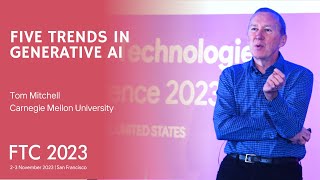
Five Trends in Generative AI - Insights from Tom Mitchell
Explore five key trends in generative AI with Tom Mitchell, including advancements in language models, multimodal systems, and open-source development. Gain insights into AI's future applications and implications.