
Echinoderms - Invertebrate Paleontology - Crinoids, Starfish, Sand Dollars, & More
Comprehensive exploration of echinoderms: diversity, anatomy, evolution, and classification. Focuses on crinoids and echinoids, their morphology, ecology, and evolutionary history. Includes identification practice and comparisons to vertebrates.
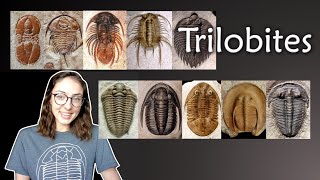
Arthropoda - Trilobites- Invertebrate Paleontology
Comprehensive exploration of trilobite morphology, classification, and evolution. Covers 12 orders, key features, and ecological significance of these ancient marine arthropods from the Paleozoic Era.
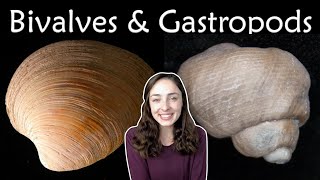
Mollusca - Bivalves & Gastropods- Invertebrate Paleontology
Explore bivalve and gastropod mollusks: anatomy, morphology, classification, ecology, and evolution. Learn key characteristics for identification and understand their evolutionary history.

Bryozoa - Invertebrate Paleontology - GEO GIRL
Explore the fascinating world of Bryozoa, from their unique anatomy and reproduction to diverse morphology and classification. Gain insights into fossil identification and evolutionary history of these invertebrate animals.

Porifera - Morphology, Classification, & Evolution - Invertebrate Paleontology
Comprehensive exploration of Porifera, covering anatomy, classification, evolution, and ecology. Delves into spicule types, morphological complexity, and the debate surrounding archaeocyathids' classification.
Scaling AI at Autodesk with Ray and Metaflow
Explore a 15-minute conference talk from Ray Summit 2024 where Thomas Gale and Peter Meltzer from Autodesk, alongside Savin Goyal from Outerbounds, demonstrate how Autodesk leverages Ray and Metaflow for large-scale 3D generative AI operations. Learn abo…
Scaling Ray to 10,000 NPUs - Huawei's Hyperscale Journey
Dive into Huawei's groundbreaking journey of integrating 10,000 Ascend NPUs with Ray, exploring technical innovations, observability solutions, and strategies for hyperscale AI infrastructure deployment.
Evolving Ray Core - Scalability, Reliability, and Compiled Graphs
Discover the latest advancements in Ray Core's architecture, including streaming generators, weekly releases, and the new Compiled Graphs backend for enhanced performance in accelerator-driven computing environments.

How the AI Institute is Revolutionizing Robotics Machine Learning Training
Discover how Boston Dynamics AI Institute revolutionizes robotics ML with an innovative training platform that integrates multimodal data, extensive simulations, and scalable infrastructure using Ray.
Overview of CloudKitchens's Ray-Powered Machine Learning Platform
Discover how CloudKitchens leverages Ray and Kubernetes to build a state-of-the-art ML platform, featuring seamless integration of Metaflow, Daft, and Argo Workflows for enhanced development efficiency.
Streamlining AI Workflows with Apache Airflow and Ray
Discover how to build a unified AI infrastructure by integrating Apache Airflow and Ray for seamless orchestration of data processing, model training, and inference workflows, including LLM fine-tuning and LoRA deployments.
Building an Agentic Framework for Generative AI Applications
Discover how to build an agentic framework for GenAI applications, focusing on RAG-centric approaches, multilingual queries, and real-time data processing for enhanced customer assistance.

Dynamic Scheduling for Large Language Model Serving
Discover how Llumnix optimizes large language model serving through dynamic request scheduling, cross-instance defragmentation, and innovative KV cache migration techniques for improved performance.

Scaling Ray Train to 10,000 Kubernetes Nodes on GKE
Discover how to scale distributed machine learning workloads across 10,000 Kubernetes nodes using Ray Train and GKE, featuring architectural insights and practical solutions for massive AI model training.
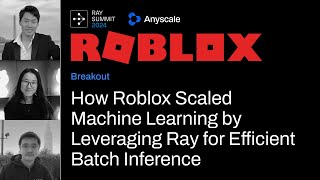
How Roblox Scaled Machine Learning by Leveraging Ray for Efficient Batch Inference
Discover how Roblox leverages Ray to scale machine learning infrastructure, focusing on multimodal language models integration, batch inference optimization, and practical implementation strategies.
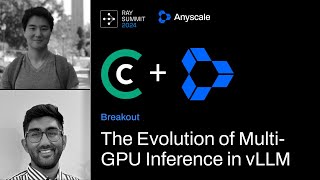
The Evolution of Multi-GPU Inference in vLLM
Dive into advanced parallelism strategies for distributed LLM inference, exploring tensor, pipeline, and expert parallelism techniques through vLLM's architecture and optimization approaches.
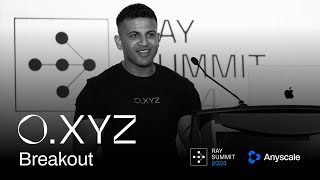
Building Intelligent AI Infrastructure with ORI - Dynamic Query Routing and Model Management
Discover how ORI dynamically routes AI queries to optimal language models, featuring chain atomic queries, benchmark matching, and ethical frameworks integrated with Ray Serve and vLLM for high-speed inference.
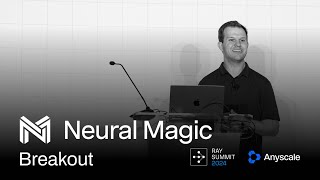
Optimizing vLLM Performance Through Quantization - Model Compression Techniques
Discover practical techniques for model quantization in vLLM deployments, exploring FP8, INT8, and INT4 methods to enhance performance and reduce memory usage while maintaining efficiency.
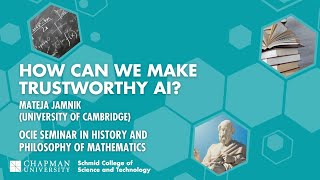
Making AI Systems Trustworthy Through Intuitive Design and Human Interaction
Explore key technical approaches for building trustworthy AI systems, focusing on intuitiveness, interaction, explainability, and human domain knowledge integration for more reliable and transparent artificial intelligence.

System Design: Scaling Applications for Global Deployment
Master the fundamentals of scaling applications globally through system design concepts, from multiple servers to CDNs, geolocation routing, and multi-region deployment strategies.
Ultimate Machine Learning Projects with Python for Beginners - 2024
Master Python-based machine learning through hands-on projects, from basic algorithms to advanced applications like fake news detection, predictive maintenance, and emotion recognition. Build a portfolio with real-world implementations.