Structure from Motion - Depth by Triangulation - Lecture 3
Explore depth estimation through triangulation in Structure from Motion techniques, enhancing 3D reconstruction skills.
Factorization Methods in Structure from Motion (SFM)
Explore factorization techniques in Structure from Motion (SFM) to enhance 3D reconstruction and computer vision skills.
Two-View Stereo: Algebraic Representation of Epipolar Geometry - Lecture 3
Explore algebraic representation of epipolar geometry and homogeneous representation of points and lines in two-view stereo.
Mid-Level Vision - Lecture 2
Explore advanced concepts in mid-level computer vision, building on foundational knowledge to enhance understanding of visual perception and processing techniques.
Deepnets for Stereo and Structure from Motion - Part 2
Explore semi-supervised depth prediction, wide context learning networks, and unsupervised monocular depth estimation techniques for advanced computer vision applications.
Introduction to Deep Learning: Deep Learning Success Stories - Lecture 3
Explore deep learning success stories and their impact across various fields, gaining insights from Prof. A.N. Rajagopalan of IIT Madras.
Training a Neural Network: Underfitting and Overfitting
Learn techniques for training neural networks, including strategies to prevent underfitting and overfitting, enhancing model performance and generalization.
Course Introduction: Semantic and Metric Information in Point Cloud Measurement - Lecture 1
Explore semantic and metric information in computer vision, covering key concepts like point clouds and measurement techniques.
Introduction to Neuron and Perceptron: Working Principle - Lecture 1
Explore the working principle of perceptrons in neural networks, laying the foundation for understanding artificial neurons and their role in machine learning.
Introduction to Deep Learning - Traditional Approaches vs Deep Learning - Lecture 2
Explore deep learning fundamentals, comparing traditional and modern approaches in machine learning and NLP.
D-H Parameters in Robotics
Explore Denavit-Hartenberg parameters for robotic arm kinematics, understanding their role in describing spatial relationships between adjacent links.
Cell Arrays and Structures in MATLAB
Explore cell arrays and structures in MATLAB for handling non-rectangular data and complex data structures. Learn practical applications and use cases.

Artificial Intelligence: Knowledge Representation and Reasoning - Introduction
Explore the foundations of Artificial Intelligence, focusing on Knowledge Representation and Reasoning with Prof. Deepak Khemani from IIT Madras.

A New Test of Intelligence? - Lecture 1.4
Explore a potential new test for intelligence, examining its implications and validity in assessing cognitive capabilities.

Symbols and Thought in Artificial Intelligence - Lecture 2.1
Explore the relationship between symbols and thought in artificial intelligence, focusing on knowledge representation and reasoning techniques.
Quantum Generative Adversarial Networks (QGANs) - Lecture 22
Explore quantum generative adversarial networks (QGANs), from theoretical foundations to practical implementations and simulations.
Fast Adder: Carry Select Adder
Explore the carry select adder, a fast addition technique, and understand its principles and implementation in digital circuit design.
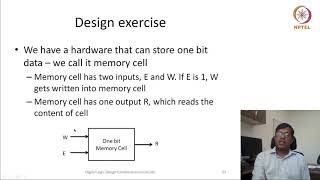
Decoders and Demultiplexers - Part 1
Explore decoder and demultiplexer concepts in digital logic, enhancing understanding of fundamental circuit components.
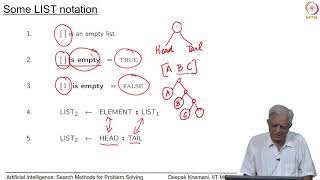
Deterministic Search Algorithms in Computer Science
Explore deterministic search algorithms and their applications in problem-solving and optimization techniques.
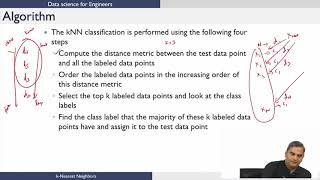
K-Nearest Neighbors (KNN) Algorithm - Introduction and Applications
Explore k-Nearest Neighbors algorithm: concepts, applications, assumptions, implementation, and optimization techniques for effective machine learning.
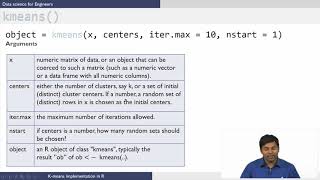
K-Means Implementation in R
Implement K-means clustering algorithm in R programming language. Learn data preprocessing, algorithm application, and result interpretation for effective data analysis.