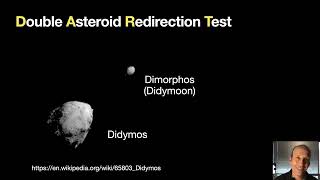
Modeling the DART-Dimorphos Collision in Python
Model the DART-Dimorphos collision using Python, exploring binary orbits, elastic and inelastic collisions, and conservation of momentum. Experiment with different parameters to understand asteroid redirection techniques.
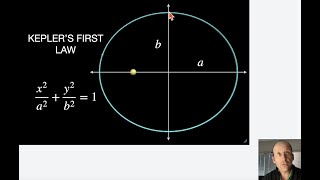
Modeling Kepler's First Law with Python
Model Kepler's first law of planetary motion using Python, demonstrating elliptical orbits through code implementation and visual plotting.
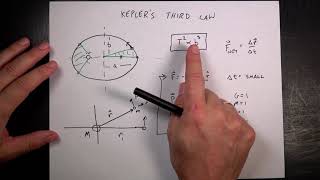
Demonstration of Kepler's Third Law Using Python
Explore Kepler's Third Law through Python modeling, calculating orbital periods and semi-major axes for various orbits to verify the law's validity.
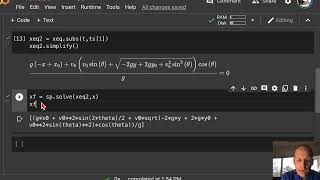
Solving Projectile Motion Problems with Python and SymPy
Explore projectile motion problem-solving using Python and SYMPY, focusing on range calculation and launch velocity determination.
Can ChatGPT Make a VPython Program for Orbital Motion?
Explore ChatGPT's ability to create a VPython program simulating ISS orbital motion, examining code output and discussing limitations.
Modeling the Earth-Moon System with Python
Model the Earth-Moon system using Python to simulate orbital dynamics and explore celestial mechanics.
Conservation of Momentum in Python Collisions
Explore momentum conservation in collisions using Python modeling. Build and analyze a two-object collision simulation.
Visualizing Tides in 3D with Python
Explore 3D tide modeling using Python, combining calculation and visualization techniques for a comprehensive understanding of tidal patterns.
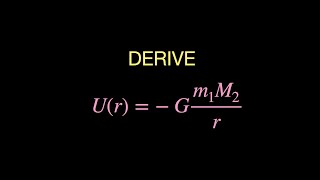
Derivation of the Gravitational Potential Energy - Plus Numerical Integrals with Python
Derive gravitational potential energy through work calculations and explore numerical integration using Python for practical applications.
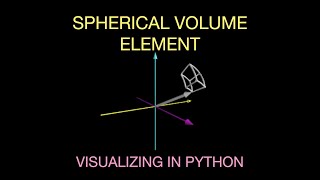
Drawing the Spherical Volume Element in Python
Visualize spherical volume elements using Python and VPython, enhancing understanding of sphere geometry and moment of inertia calculations.
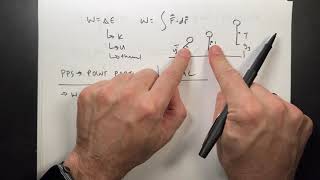
Matter and Interactions Physics - Translation, Rotational, and Vibrational Energy - Chapter 9
Explore center of mass, momentum, kinetic energy types, angular velocity, and moment of inertia in particle systems. Gain insights into translational, rotational, and vibrational energy concepts.
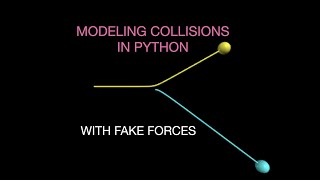
Modeling 2D Collisions in Python with Fake Forces
Simulate 2D collisions using Python and fake forces. Learn a simplified approach to modeling object interactions in programming.
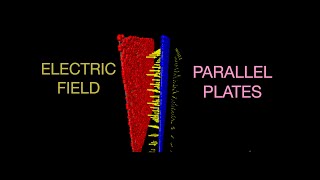
Modeling the Electric Field Due to Parallel Plates Using Python
Model electric fields between parallel plates using Python and 20,000 points, avoiding calculus for a clear visualization.
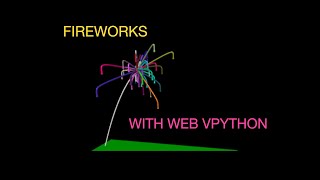
Make a Fireworks Display with Web VPython
Create a dazzling fireworks display using Web VPython, exploring numerical calculations, resistance, and drag effects for realistic simulations.
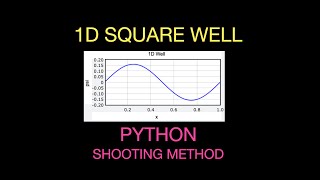
Quantum Mechanics: Using the Shooting Method and Python to Solve the 1D Square Well
Solve the 1D infinite square well numerically using Python and the shooting method, exploring an alternative approach to quantum mechanics problem-solving.
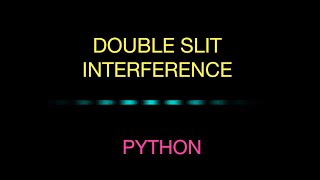
Double Slit Intensity Pattern with Python
Model the intensity pattern of two slits using Web VPython and explore phasors for finding intensity in this hands-on coding tutorial.
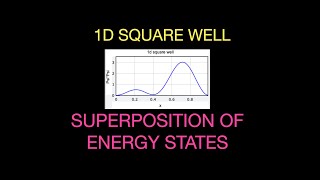
Superposition of Energy States in a 1D Infinite Square Well
Explore superposition of energy eigenstates in a 1D infinite square well through calculations and Python modeling.
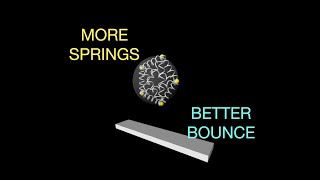
A Better Spring-Ball Model for Bouncing - Now with More Springs
Explore an improved spring-ball model for bouncing, featuring multiple interconnected balls and springs for enhanced simulation accuracy.
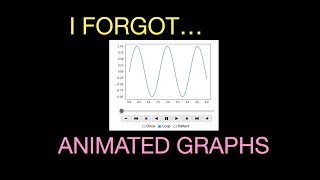
Three Ways to Make Animated Graphs in Python
Learn three simple techniques for creating animated graphs in Python using matplotlib and vpython, from basic to advanced methods.
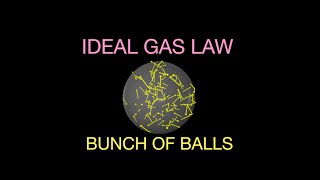
Using a Bunch of Balls to Model the Ideal Gas Law in Python
Model the ideal gas law with bouncing balls in Python and calculate pressure and temperature.
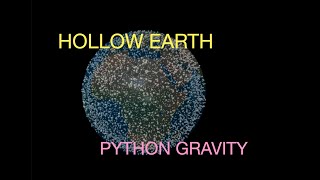
Using Python to Calculate the Gravitational Field for a Hollow Earth
Calculate the gravitational field of a hollow Earth using Python, exploring its effects on surface gravity and comparing to real-world experiments.