
Ultimate RunPod Tutorial for Stable Diffusion - Data Transfers, Extensions, CivitAI
Comprehensive guide to using RunPod for Stable Diffusion, covering setup, deployment, file transfers, extensions, and advanced techniques like DreamBooth and ControlNet.
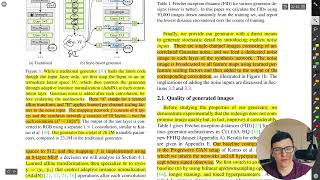
StyleGAN Paper Explained
Comprehensive explanation of StyleGAN paper, covering architecture, image quality techniques, style properties, mixing, disentanglement, and training details for advanced AI image generation.
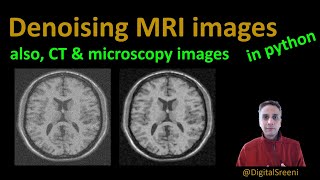
Denoising MRI Images - Also CT & Microscopy Images
Learn effective techniques for denoising MRI, CT, and microscopy images using traditional methods like Gaussian smoothing, bilateral filtering, anisotropic diffusion, non-local means, and BM3D algorithms.
Introduction to Transfer Learning
Explore transfer learning to adapt pre-trained networks for microscopy applications, enhancing accuracy with limited labeled data and reducing training time.
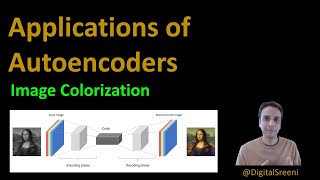
Application of Autoencoders - Image Colorization
Learn to artificially colorize black and white images using autoencoders in Python. Explore the process, implementation, and practical application of this advanced image processing technique.
An Introduction to Autoencoders - In Python
Learn to build and implement autoencoders in Python for image compression, reconstruction, and various applications like denoising and anomaly detection.
How to Build a Docker With Your Code and Run It on APEER
Learn to create and deploy a Docker module on APEER for microscopy and image processing applications, enabling cloud-based workflows and easy integration with other modules.
Malarial Cell Classification Using CNN
Learn to classify malarial cells using CNN in Python. Covers dataset acquisition, TensorFlow setup, network design, and result analysis for detecting parasitized and healthy cells.
An Overview of Deep Learning and Neural Networks
Comprehensive introduction to deep learning concepts, covering neural networks, convolution, pooling, normalization, and more. Includes code examples for practical implementation.
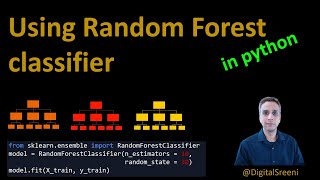
How to Use Random Forest in Python
Learn to implement Random Forest in Python for data analysis, including data importing, feature engineering, and model fitting techniques.
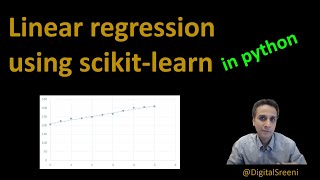
Linear Regression Using Sci-Kit Learn in Python
Learn to implement linear regression using Sci-Kit Learn in Python, from data import to model creation, evaluation, and prediction. Hands-on coding with real-world data.
What Is Machine Learning Anyway?
Explore the fundamentals of machine learning, its applications in microscopy, and different types including supervised and unsupervised learning.

Grain Size Analysis in Python Using Watershed
Watershed-assisted segmentation in Python for analyzing grain size in microscope images, overcoming limitations of threshold-based methods for improved accuracy in feature separation.
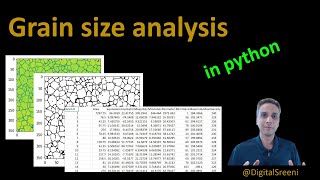
Grain Size Analysis in Python Using a Microscope Image
Automate grain analysis in metal alloys using Python and microscope images. Learn image processing techniques to generate summaries and CSV files for quality control and research.
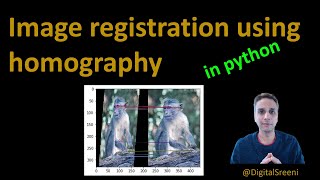
Image Registration Using Homography in OpenCV
Learn image registration using homography in OpenCV. Explore keypoint descriptors, matching techniques, and practical implementation for aligning distorted images with reference images.
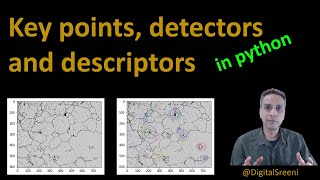
Key Points, Detectors and Descriptors in OpenCV
Learn to detect and describe key points in images using OpenCV algorithms like SIFT, SURF, and ORB for tasks such as image comparison and alignment.
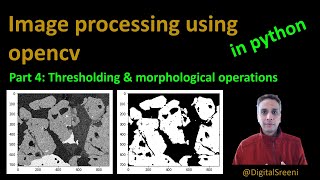
Thresholding and Morphological Operations Using OpenCV in Python
Learn to enhance image quality using OpenCV's thresholding and morphological operations for noise reduction and feature extraction in Python.

Denoising and Edge Detection Using OpenCV in Python
Learn OpenCV techniques for denoising microscope images and performing edge detection, with practical code examples for enhancing image quality without losing crucial information.
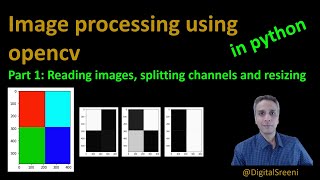
Reading Images, Splitting Channels, Resizing Using OpenCV in Python
Learn essential OpenCV operations for image processing: reading, resizing, and channel manipulation. Gain practical skills for computer vision and microscopy image analysis.
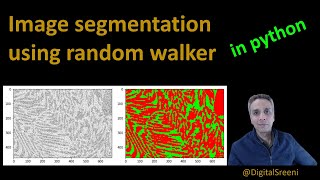
Random Walker Segmentation in Python
Explore Random Walker segmentation in Python for noisy BSE images, using markers and combining segments for effective alloy analysis.
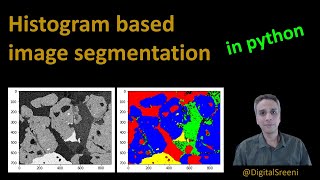
Histogram Based Image Segmentation in Python
Learn histogram-based image segmentation in Python for microscopy, covering thresholding techniques, feature extraction, and basic image processing operations to clean segmented regions.