
Functional Techniques for C#
Explore functional programming techniques in C# to write clearer, more maintainable code. Learn about immutability, recursion, higher-order functions, and refactoring for improved readability and consistency.

Accessibility for UX - Don't Worry, It's Much Worse Than You Think
Discover five powerful techniques to integrate accessibility into UX design, enhancing usability for all users while navigating complex guidelines and assistive technologies.
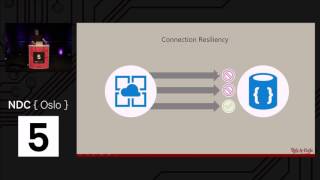
Building Resilient Applications in Microsoft Azure
Learn to build resilient Azure applications using patterns and features like Traffic Manager and Service Bus. Explore redundancy, load balancing, and monitoring for fault-tolerant distributed systems.

Keynote - Are There Any Questions?
Exploring the evolution of human inquiry and its intersection with technology, from mechanical calculators to AI, and the implications for our future relationship with machines.
Using EEG and Machine Learning to Perform Lie Detection
Explore lie detection using EEG and machine learning. Learn about data collection, Azure ML model building, and result analysis. Gain insights into brain-computer interfaces and their potential applications.
The Technical Debt Prevention Clinic
Practical strategies to identify, measure, and reduce technical debt, empowering developers to improve codebases and enjoy their work through small, manageable steps.
Logic vs. Side Effects - Functional Goodness You Don't Hear About
Explore the separation of logic from side effects in functional programming, enhancing code clarity, maintainability, and testability. Learn techniques to refactor standard idioms for improved software architecture.

Programming Robots – Making Friends with Cozmo
Learn to program Cozmo, the expressive robot, using Python. Explore real-time obstacle tracking, path planning, facial recognition, and third-party APIs while building a simple game and discovering consumer robotics' future.
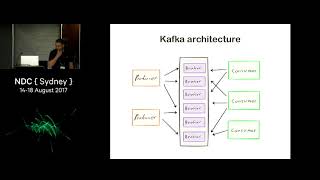
Building Data Intensive Microservices with Apache Kafka
Learn to scale microservices for big data workloads using Apache Kafka's messaging system and ecosystem, enabling high-volume data handling and efficient pub-sub capabilities.
Chatbots - The Next UI
Explore the rise of chatbots as the next user interface, focusing on their potential to enhance customer engagement and provide personalized, intuitive experiences through conversational AI and cognitive services.
Functional Programming Patterns for Mere Mortals
Demystify functional programming concepts like functors, applicatives, and monads through practical examples, enhancing your ability to write clean, composable code and recognize these patterns in everyday languages.

What the Functional - What, How and Why
Explore functional programming concepts and benefits in various languages, focusing on practical applications without delving into complex theory. Learn to simplify and control your codebase.

How One Team Built Their First Microservice
Practical insights on transitioning from monolith to microservices using dotnet core, AWS, Docker, Terraform, and Dynamo. Learn from real-world experiences and avoid common pitfalls.
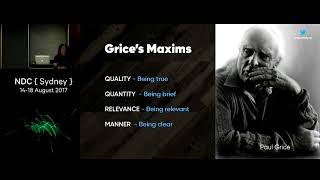
Building for Alexa with Web API
Learn to create Alexa Skills using Web API, integrating existing software for voice-activated interactions. Explore rapid prototyping, deployment, and publishing challenges for Amazon Echo devices.
New Features in TypeScript 2 and Beyond
Explore TypeScript's evolution, new features, and benefits for writing maintainable JavaScript. Learn about AsyncAwait, Generators, and advanced type checking to enhance code quality and productivity.
Algebraic Data Types for C#
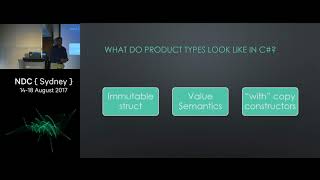
Learn to incorporate immutable algebraic data types in C# projects using DSLs and code generation, enhancing problem modeling and preventing illegal states while integrating functional programming patterns.
Effective Eventual Consistency with Actor Models + Amazon Web Services
Discover how to achieve strong eventual consistency in distributed systems using actor models and AWS. Learn practical techniques to sidestep the CAP theorem and ensure data integrity.
Six Little Lines of Fail
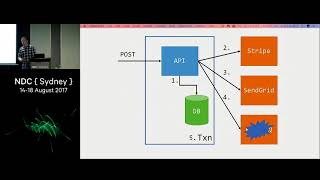
Explore challenges in distributed systems, examining failures in a simple checkout process and refactoring towards resilience while embracing distributed computing fallacies.
Domain Modeling Made Functional
Explore domain modeling in functional programming, using types to represent domains, encode business rules, and ensure code correctness at compile time. Learn practical F# examples for effective domain-driven design.
Continuous Security
Explore integrating security into Agile development, focusing on tools, techniques, and processes for building secure software without compromising velocity or innovation.
Top Ten Worst Repositories to Host on GitHub
Explore GitHub's infrastructure challenges and solutions for hosting diverse projects, including strategies for replication, caching, and quota management to ensure system reliability.