
Rethinking Classical Concurrency Patterns
Explore Go's lightweight goroutines and concurrency primitives, challenging traditional patterns and demonstrating alternative approaches for efficient concurrent programming.

The Scheduler Saga
Explore the inner workings of Go's scheduler, including goroutine management, network IO coordination, and memory management mechanisms for efficient program execution.

Controlling the Go Runtime
Explore techniques to control the Go runtime, including garbage collection, goroutine management, and affinity. Learn new methods for better runtime control and their practical applications.
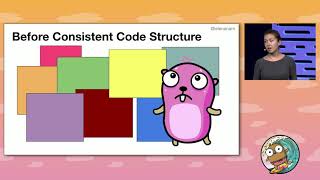
How Uber Goes
Discover Uber's journey with Go: from early adoption challenges to innovative solutions for maintaining a large, efficient codebase for microservices.
On the Path to Go 2
Explore Go 2's development journey, including error handling improvements, generics, and modules, with insights on the language's evolution and future direction.
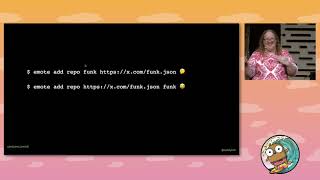
Design Command-Line Tools People Love
Design command-line tools that developers love: structure for reusability, leverage Go libraries, improve testability, and create user-friendly interfaces with natural commands and helpful outputs.
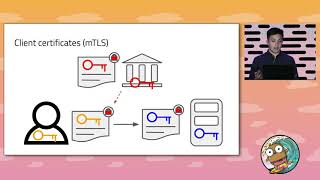
PKI for Gophers
Explore Go primitives for PKI, including certificate hierarchies, mTLS, hardware-backed keys, and public infrastructure. Dive into automated issuance, revocation, and custom PKI implementation.
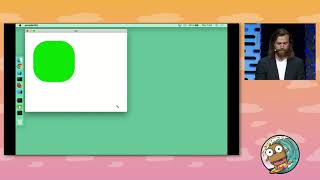
Portable, Immediate Mode GUI Programs for Mobile and Desktop in 100% Go
Explore Gio, a Go library for creating cross-platform GUI programs. Learn about its design, simplicity, portability, and performance advantages for Android, iOS, macOS, Linux, and Windows development.

Socket to Me - Where Do Sockets Live in Go?
Explore socket-level programming in Go, covering fundamentals, configuration, and practical applications for network communication and server functions.
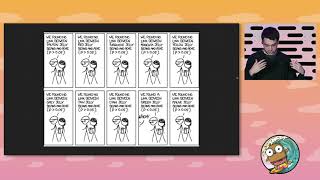
Optimizing Go Code Without a Blindfold
Explore techniques and tools for effective Go code optimization, covering benchmarks, performance analysis, and practical tips for reliable improvements.

Two Go Programs, Three Different Profiling Techniques
Explore three profiling techniques for Go programs to diagnose and improve performance, including CPU and memory profiling, execution tracing, and understanding Amdahl's Law.
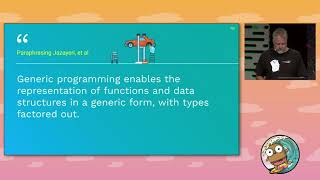
Generics in Go
Explore advantages of generics in Go, including generic functions and data structures. Learn about design guidelines, contracts, and practical implementations like binary trees.
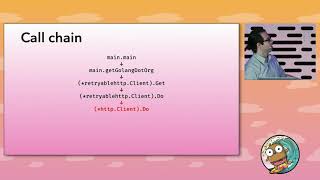
Tracking Inter-process Dependencies
Explore static analysis in Go to detect inter-process dependencies in service-oriented architectures, covering libraries, obstacles, and solutions for effective system tracking.

Small is Going Big - Go on Microcontrollers
Explore TinyGo: Run Go on microcontrollers like Arduino. Learn about this miniature Go version using LLVM compiler, enabling native code on small devices. Includes live coding demos of flying objects!
Pardon the Interruption - Loop Preemption in Go 1.14
Explore Go 1.14's innovative asynchronous preemption, eliminating performance issues in tight loops and enabling efficient goroutine scheduling without overhead.
Reordering 59 Million NYT Publishing Assets Using Go and BadgerDB
Learn how to reorder 59 million NYT publishing assets using Go and BadgerDB. Explore efficient in-memory data processing, handling large-scale datasets, and optimizing performance for complex data operations.
Evolving the Go Memory Manager's RAM and CPU Efficiency
Explore Go memory manager improvements, enhancing runtime responsiveness and allocator scalability. Gain insights into runtime functionality and potential performance impacts on Go applications.
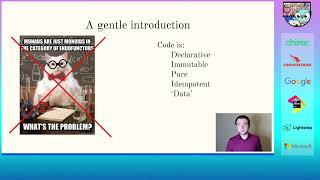
Functional Programming with Go
Explore functional programming concepts in Go, including closures, currying, and recursion. Learn practical applications and compare with traditional approaches for solving real-world problems.
The Quest for the Fastest Deployment Time
Explore strategies to optimize Go code deployment time in Kubernetes, from caching dependencies to binary size reduction and in-place recompilation techniques.

Anyone Can Be A Gopher!
Inspiring journey of a non-traditional programmer mastering Go, featuring practical tips, challenges, and the power of community support in tech career transitions.
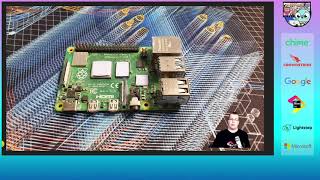
Building an FM Radio Station with Go
Explore building an FM radio station using Go, covering radio wave basics, broadcasting techniques, and system components like Raspberry Pi and FM transmitters.