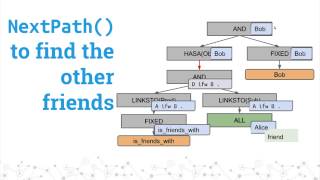
Cayley - Building a Graph Database
Explore the architecture and components of Cayley, a Go-based graph database inspired by Freebase.com, including query languages, storage engines, and iterator trees.

Uptime - Building Resilient Services with Go
Explore resilient Go service development, focusing on concurrency, error handling, memory management, and monitoring techniques for improved performance and reliability.
Inside the Map Implementation
Explore Go's map implementation, including hash functions, buckets, and performance considerations for efficient data storage and retrieval.
The Design of the Go Assembler
Explore the design principles and evolution of Go's assembler, from its Plan 9 roots to modern implementations, with insights from Rob Pike.

Go for Data Science
Explore Go's potential in data science, covering its advantages, ecosystem, and practical applications for data processing and analysis.
Mining the Go Developer Community
Explore Go developer community trends, metrics, and insights using data mining techniques and machine learning to understand adoption patterns and competitive landscape.
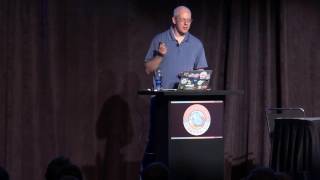
Communicating Sequential Goroutines
Explore communicating sequential goroutines, CSP concepts, and their applications in microservices architecture with Adrian Cockcroft's insightful GopherCon talk.
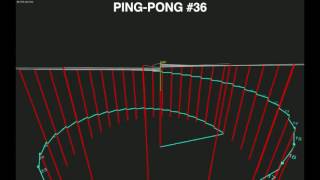
Visualizing Concurrency in Go
Explore Go's concurrency patterns through visual representations, enhancing understanding of goroutines, channels, and parallel execution in Go programming.
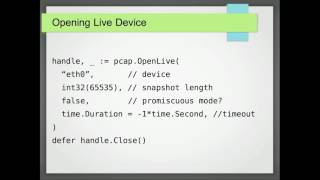
Packet Capture, Analysis, and Injection with Go
Explore packet capture, analysis, and injection in Go. Learn GoPacket library, network protocols, and practical techniques for working with network traffic.
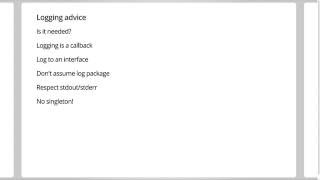
Practical Advice for Go Library Authors
Practical advice for Go library authors, covering naming, construction, zero values, interfaces, goroutines, and design principles for efficient and clean code.
Go for Crypto Developers
Explore Go's cryptography capabilities, focusing on TLS, encryption, block ciphers, hash functions, and password hashing for secure application development.
Building a Custom Kubernetes Scheduler
Learn to build a custom Kubernetes scheduler, exploring advanced container orchestration techniques and enhancing your understanding of Kubernetes internals.
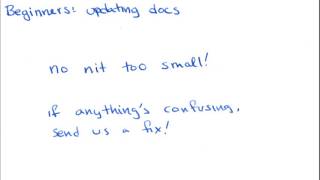
CONTRIBUTING - The Talk
Explore the process of contributing to Go, from reporting bugs to advanced contributions, with insights on tools, guidelines, and best practices for effective collaboration.
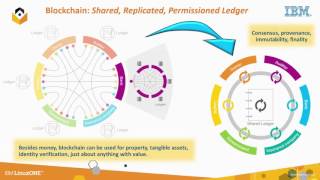
Porting Go to the IBM Z Architecture
Explore porting Go to IBM z Architecture, covering mainframe basics, blockchain applications, and the porting process. Gain insights into optimization techniques and cryptographic implementations.
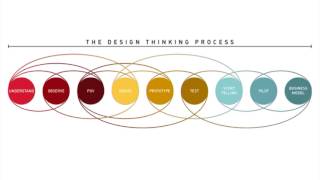
Evolutionary Optimization with Go
Explore the process of prototyping, optimizing, and productionizing a complex distributed system using Go's standard library, profiling tools, and iterative development techniques.
Go Build Modes
Explore Go's diverse build modes beyond static binaries, including c-archive, c-shared, shared, pie, and plugin, with examples and OS-specific considerations.
Generating Better Machine Code with SSA
Explore how SSA representation enables better machine-code generation for Go, including new optimizations and improved compiler performance across different architectures.
Building a High-Performance Key - Value Store in Go
Explore the internals of a high-performance key/value store in Go, learning basic design principles and techniques for efficient data storage and retrieval.
Runtime Generated, Typesafe, and Declarative - Pick Any Three
Explore runtime function generation, reflection, and tags in Go to create efficient, type-safe SQL layers, reducing boilerplate and enhancing code reusability.

Functional Programming in Go
Explore functional programming concepts in Go to create simpler, modular code. Learn higher-order functions, pure functions, and patterns like functors and optionals for improved code design.
Self Deploying Kubernetes Applications
Explore self-deploying Kubernetes applications using Go binaries, treating the world as a global-scale computer. Learn unique properties and application-centric abstractions for efficient deployment.