Designing a Scalable and Distributed Application
Learn to design a scalable, distributed application using consul and uWSGI. Covers automatic service registration, health checking, distributed storage, and multi-datacenter awareness for global scalability.
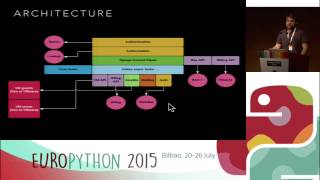
Architecture of a Cloud Hosting Service Using Python Technologies - Django, Ansible, and Celery
Explore the architecture of a cloud hosting service using Django, Ansible, and Celery. Learn about VM management, microservices integration, and University of Cambridge IT services.
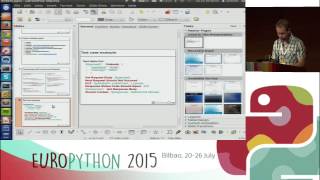
Building a RESTful Real-Time Analytics System with Pyramid
Learn to build a scalable RESTful real-time analytics system using Pyramid, exploring architecture, tools, and deployment strategies for handling billions of page impressions in a Big Data context.
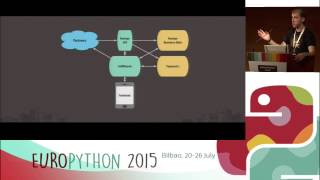
Arrested Development - Surviving the Awkward Adolescence of a Microservices-Based Application
Explore challenges and solutions in evolving microservices architecture, focusing on functional, cultural, and reliability aspects. Learn from real-world experiences and Python-specific tools for graceful growth.

Machine Learning for Dummies with Python
Beginner-friendly introduction to machine learning using Python and open-source libraries. Learn to implement basic ML concepts without advanced math skills.
Efficient Django
Explore Django scalability, performance optimization, and efficient coding techniques. Learn to identify bottlenecks, improve database performance, and implement caching strategies for faster web applications.
Python and Async Programming
Explore Python's async programming approaches, including Futures, asyncio, coroutines, and event loops. Learn best practices for efficient asynchronous code in Python 3.4 and 3.5.

Is That Spam in My Ham?
Learn to build a basic spam classifier using Python and Naive Bayes. Explore key machine learning concepts, implement a model to detect spam emails, and understand how to measure and improve classification performance.
Build and Control a Python-Powered Robot
Learn to build a Python-powered robot using Raspberry Pi, OpenCV, and gpiozero. Explore hardware options, computer vision algorithms, and GPIO control for creating an interactive, people-recognizing robot.

Python as the Keystone of Building and Testing C++ Applications
Explore how Python scripts simplify workflows for building and testing C, C++, and Objective-C code, focusing on a common design that enhances usability, maintainability, and extensibility.
Behind Closed Doors - Managing Passwords in a Dangerous World
Explore password management strategies for modern applications, covering encryption keys, database passwords, and API credentials. Learn about emerging tools to manage, update, and audit secrets securely.
Managing Kubernetes from Python using Kube
Learn to manage Kubernetes clusters using Python with Kube, a wrapper for the Kubernetes API. Explore key concepts, perform operations, and leverage advanced features for efficient cluster management.
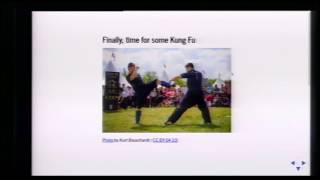
Kung Fu at Dawn with Itertools
Discover advanced Python programming with itertools. Learn elegant iterator algebra for simpler, memory-efficient solutions. Practical examples showcase how to overhaul traditional code using powerful itertools functions.

Fast Async Code with Cython and AsyncIO
Explore async/await in Python and Cython for improved performance. Learn to leverage Cython's low-level features for speed, parallelism, and native C/C++ interfacing in asynchronous applications.
Entendiendo Unicode
Explicación detallada de Unicode, codificaciones y caracteres, con ejemplos prácticos y reglas de oro para su uso efectivo en programación.

Go for Python Programmers
Explore Go's syntax, semantics, and tools compared to Python in this walkthrough for curious developers. Gain a high-level understanding of Go's features and ecosystem.
Making Robots Walk with Python
Learn to program walking robots using Python, exploring remote control, onboard computers, and MicroPython. Discover solutions to common challenges and see real-world examples of custom-built walking robots.
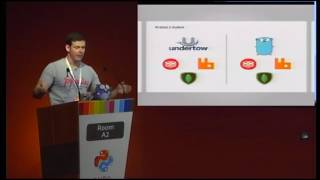
APIs and Microservices With Go
Explore high-performance API development using Go, focusing on concurrency, resilience, and microservices architecture. Learn from real-world case studies and practical implementation strategies.
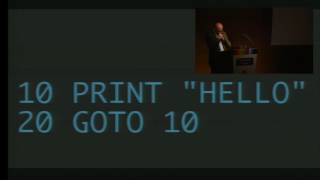
Minds, Machines and Python
Explore AI through logic and language using simple Python programs, focusing on loops, self-reference, and tangled hierarchies as key concepts in understanding intelligence and learning.
Exploring Our Python Interpreter
Dive into CPython's inner workings, from command line to interpreter. Explore project structure, lexing, parsing, bytecode generation, and the virtual machine's main loop for aspiring contributors.
CloudABI - Capability Based Security on Linux/Unix
Explore CloudABI, a capability-based security environment for Unix-like systems. Learn its benefits, trade-offs, and how to implement it in Python for enhanced process isolation and security.