
What Is Wrong with API Wrappers and How Can We Do Better
Explore API wrapper challenges and discover Tapioca, a wrapper generator that simplifies API interactions, promotes consistency, and enhances explorability for developers.
Argus - The Omniscient CI
Explore Argus, a powerful CI framework for scenario-based testing across platforms. Learn to create custom recipes, leverage introspection, and generate in-depth analysis logs for robust project testing.
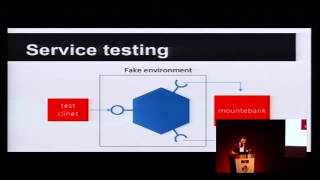
Python Microservices on PaaS Done Right
Learn to design, implement, and deploy robust Python microservices on PaaS platforms. Explore infrastructure setup, real-time metrics, Python's advantages, and performance comparisons.

Lessons Learned with Asyncio - Look Ma, I Wrote a Distributed Hash Table
Explore asyncio for concurrent programming in Python, focusing on event loops, coroutines, futures, and networking. Learn through a distributed hash table implementation example.
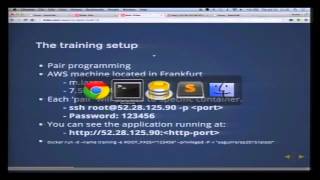
Easy FullStack Deployments
Learn to manage full-stack development lifecycle using Python technologies and Docker, from project creation with Pyramid to consistent deployment infrastructure with Buildout and containers.
Bringing PostgreSQL Towards Zero Downtime Migration with Python
Explore techniques for achieving near-zero downtime PostgreSQL migrations using Python and PostgreSQL 9.4 features like logical replication, suitable for large-scale databases with millions of records.
Machine Learning Under Test
Explore testing strategies for machine learning algorithms, focusing on code quality, domain-specific challenges, and practical implementation techniques for more robust and reliable ML models.

Python & Internet of Things
Explore Python's role in IoT, from powering embedded hardware to building end-to-end products. Learn about the possibilities and practical applications in this emerging field.
Distributed Locks with Python and Redis
Learn to implement distributed locks using Python and Redis for concurrent programming in distributed systems, with insights from building a modern contact center.
What It's Really Like Building RESTful APIs with Django
Explore real-world experiences and lessons learned in building modern RESTful APIs with Django and Django REST framework, focusing on design decisions, best practices, and practical implementation tips.
TDD - The Why, the How and the When Not
Explore the benefits, challenges, and best practices of Test-Driven Development (TDD) in Python, including when it may be ineffective or counterproductive.

12 Years of Pylint - Or How I Learned to Stop Worrying About Bugs
Explore Pylint's powerful static analysis capabilities for Python, from style checking to advanced bug detection and code understanding, with insights on its inner workings and future developments.
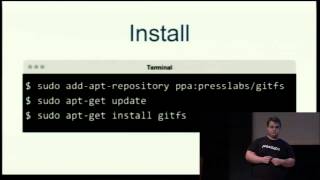
gitfs - Building a Filesystem in Python
Explore building a FUSE filesystem for Git repositories, enabling automatic commits and history snapshots. Learn crucial aspects, implementation steps, and testing methods.
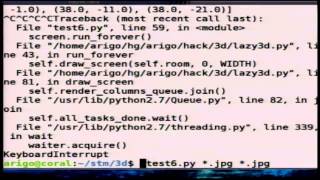
The GIL is Dead - PyPy-STM
Explore PyPy's Software Transactional Memory, enabling GIL-free Python execution on multiple cores. Learn to identify and resolve STM conflicts for improved performance in large codebases.
Metrics-Driven Development
Discover how Spotify's team improved performance through metrics-driven development, focusing on key indicators and establishing feedback loops for continuous improvement.
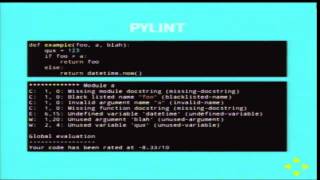
Writing Quality Code
Learn techniques and tools for improving code quality in Python, focusing on readability, design, testing, and documentation for easier maintenance and extension.
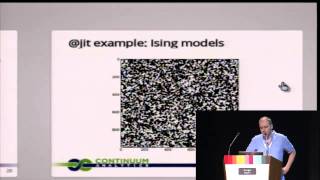
Numba - A JIT Compiler for Fast Numerical Code
Explore Numba, a JIT compiler for Python that accelerates numerical algorithms beyond Numpy capabilities, with CPU and GPU support. Learn its use cases, performance expectations, and inner workings.
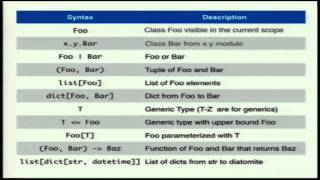
Static Type-Checking Is Dead, Long Live Static Type-Checking in Python
Explore static type-checking in Python, including PEP 484, type hints, and libraries like Hypothesis. Gain insights into type systems and their impact on code robustness.
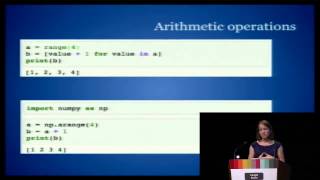
NumPy - Vectorize Your Brain
Learn essential NumPy idioms for efficient scientific computing in Python, covering array creation, broadcasting, universal functions, aggregations, slicing, and indexing to boost numerical computation speed.
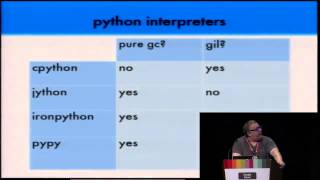
Python's Infamous GIL
Explore Python's Global Interpreter Lock: its history, benefits, drawbacks, and potential removal. Gain insights into multithreading challenges and GIL's impact on Python performance.
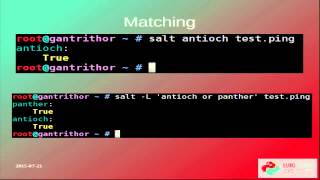
Salting Things Up in the Sysadmin's World
Explore SaltStack, a Python-based configuration management system. Learn its features, deployment, and practical applications for efficient system administration and automation.