
Non-Uniform Memory Architecture - A Nearly Unfathomable Morass of Arcana
Explore NUMA systems' complexities, performance impacts, and troubleshooting techniques. Learn to identify and solve NUMA-related issues for improved enterprise computing efficiency.
Pipeflow - C++ Task-Parallel Pipeline Scheduling Framework
Explore Pipeflow, a C++ task-parallel pipeline framework for efficient scheduling. Learn design, implementation, and real-world applications to enhance your parallel programming skills.
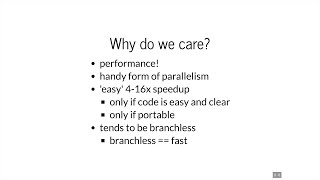
SIMD Libraries in C++
Explore SIMD libraries in C++, including std::simd for C++26. Learn about application-level libraries, developer libraries, and design trade-offs for exploiting SIMD in modern C++ development.
Writing Python Bindings for C++ Libraries for Performance and Ease of Use
Learn to create Python bindings for C++ libraries, enhancing performance and usability. Explore memory management, data conversion, multi-threading, and API design for seamless integration.
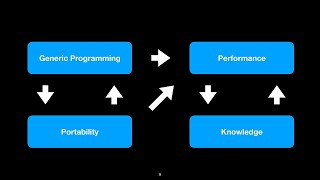
How Generic Programming and C++ Portability Give Great Performance and Knowledge of What Performs Well
Explore how generic programming in C++ enables high performance, adaptability, and insights into hardware capabilities through configurable hash table implementations.
Future of C++ Programming with AI Bots at Hand
Explore the impact of AI on C++ development, examining challenges, opportunities, and future implications. Learn from AI-generated code mistakes and prepare for the evolving landscape of software creation.
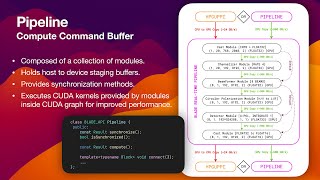
BLADE - The Allen Telescope Array CUDA-Accelerated Real-Time DSP Library
Explore GPU-accelerated real-time DSP for radio astronomy, focusing on BLADE software's innovative techniques for processing massive data streams from the Allen Telescope Array.
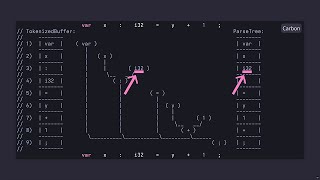
Modernizing Compiler Design for Carbon Toolchain
Explore modern compiler design for Carbon, focusing on data-oriented approaches and innovative techniques to achieve unprecedented compile times for C++-like languages.

What is Low Latency C++? - Part 1
Explore low latency C++ across industries, examining challenges and techniques for efficient programming in time-critical systems like finance, audio, and gaming.
What is Low Latency C++? - Part 2
Explore advanced C++ techniques for low-latency systems, covering CPU caching, data structures, concurrency, and memory management to optimize performance in finance, audio, and gaming.

Implementing Fast Calendar Algorithms - Speeding Date
Optimizing calendar algorithms for modern CPUs: strength reduction, data dependency breaking, and historical insights. Faster implementations for leap year checks and last day of month calculations.
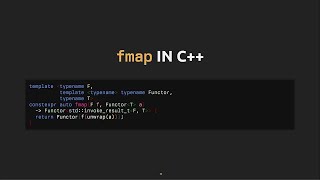
Applicative - The Forgotten Functional Pattern in C++
Explore the powerful applicative pattern in C++, its practical applications, and how it enhances code simplicity and composability across various programming scenarios.
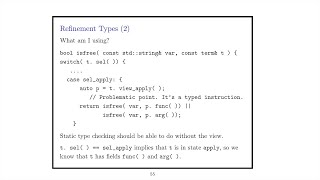
Trees for Logic and Parsing in C++
Explore efficient implementation of recursive tree-types in C++ for logic and parsing, with insights on construction, inspection, and replacement of subtrees.

Exceptions in C++ - Better Design Through Analysis of Real World Usage
Explore C++ exception design, analyzing real-world usage to improve implementation. Learn about proper exception handling, common pitfalls, and best practices for more effective and maintainable code.
Adapting C++20 Ranges Algorithms for Most Metaprogramming Needs in Fewer Than 1,000 Lines of Code
Explore C++20 ranges algorithms for metaprogramming, simplifying complex abstractions in under 1,000 lines. Learn to enhance software engineering with accessible, reusable solutions for common challenges.
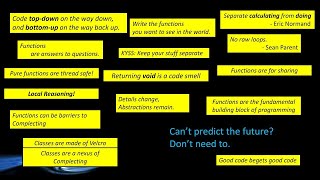
Value Oriented Programming Part 1 - You Say You Want to Write a Function
Explore value semantics in C++ programming, focusing on function design and evolution towards more efficient, value-oriented code practices.
Under the Hood - Assembly, System Calls, and Hardware in C++
Explore assembly, system calls, and hardware in C++. Dive deep into low-level computer operations, covering x86-64/Linux, Arm, and other systems. Gain insights into the underlying mechanics of C++ programming.
East Meets West When Translating Django Apps
Aprenda a traduzir aplicativos Django para vários idiomas, incluindo detecção de idioma, roteamento de URL, arquivos de tradução e marcação de strings. Inclui dicas para traduzir o site de administração do Django.
Demystifying Deep Learning for Data Scientists
Uncover the inner workings of deep learning frameworks and gain foundational knowledge to confidently implement models in any framework of your choice.
Developing With Doctests - Using Xdoctest As A Backend
Explore doctests for embedding examples in docstrings, learn about Xdoctest as an alternative to Python's builtin module, and discover how to enhance test-driven development with interactive code demos.
Ray - A System for High-performance, Distributed Python Applications
Explore Ray, an open-source framework for scaling Python applications from laptops to clusters, focusing on ML/AI performance challenges and its key features for distributed computing.