
Core Slicing - Closing the Gap Between Leaky Confidential VMs and Bare-Metal Cloud
Explores core slicing, a novel approach to enhance cloud security by enabling multiple untrusted guest OSes to run on shared bare-metal hardware, addressing vulnerabilities in confidential VMs.

Effectively Scheduling Computational Graphs of Deep Neural Networks toward Their Domain-Specific Accelerators
Innovative approach for scheduling DNN computational graphs on domain-specific accelerators, optimizing resource utilization and enhancing performance through synergy between network and hardware architectures.

Chardonnay - Fast and General Datacenter Transactions for On-Disk Databases
Innovative approach to optimize distributed on-disk database transactions using fast 2PC and lock-free read protocol, enabling efficient data prefetching and minimizing contention in datacenter environments.
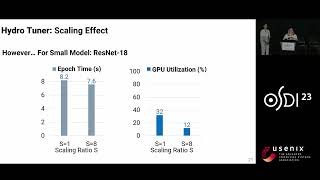
Hydro - Surrogate-Based Hyperparameter Tuning Service in Datacenters
Innovative hyperparameter tuning service for deep learning models, optimizing efficiency and resource utilization in datacenters through surrogate models and adaptive resource management.
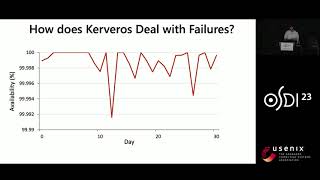
Kerveros - Efficient and Scalable Cloud Admission Control
Explore Kerveros, an innovative admission-control system for cloud computing that ensures high availability, scalability, and efficient resource usage while handling dynamic supply and demand changes.
Free Energy Minimisation for Perception as Inference
Explores predictive processing theory and free energy principle in perception, comparing Helmholtz machine and message passing approaches to neural inference and consciousness.
Learning to Predict Requires Integrated Information
Exploring how Integrated Information Theory quantifies consciousness in neural networks and its relationship with embodied intelligence and predictive learning in AI agents.
Insights from the Conscious Turing Machine - A Machine Model for Consciousness
Explores puzzling phenomena of consciousness using the Conscious Turing Machine model, including pain's impact on sleep, experiences vs. simulations, illusions, dreams, and free will.
Information Structures and Consciousness
Exploring brain dynamics through evolving informational structures, linking to consciousness theories and providing insights into disorders of consciousness with high-precision classification.
Brainish - Formalizing a Multimodal Language for Intelligence and Consciousness
Explores Brainish, a multimodal language for AI consciousness, building on the Conscious Turing Machine. Discusses its syntax, semantics, and implementation for advancing machine intelligence and consciousness models.
Insights from the Conscious Turing Machine - A Machine Model for Consciousness
Explore a substrate-independent model of consciousness inspired by Turing's computation model and Baars' Global Workspace theory, offering insights into conscious experiences across animals and machines.
On the Link Between Conscious Function and General Intelligence in Humans and Machines
Exploring the connection between consciousness and intelligence in humans and AI, examining theories and proposing a unified model for developing more advanced artificial agents.
Consciousness Meets AI for a New Paradigm
Exploring connections between consciousness and AI, combining theories like Global Workspace Theory with deep learning to develop a new paradigm for general-purpose intelligence and brain-to-brain communication.
Towards an NP-Hard Model of Consciousness
Exploring computational complexity of consciousness, analyzing arguments for non-computability, and proposing conditions for implementable conscious systems in artificial intelligence.
Cortex-Like Systems via Range-Dependent Networks of K-Dimensional Clocks
Explore a novel model of human cortex using range-dependent networks of phase-resetting clocks, offering insights into consciousness and cognitive processing with simplified simulations.
To What Extent Are Machines Conscious?
Exploring machine consciousness: challenges, theories, and implications. Analyzes information, computation, and phenomenal experience in AI, discussing strong vs. weak machine consciousness and their achievability.
The Creativity Code - AI - Friend or Foe?
Explore the intersection of AI, creativity, and consciousness with Oxford professor Marcus du Sautoy. Delve into the potential of machines to think, create, and impact our future in this thought-provoking talk.
Can IIT Resolve the Problem of Wigner's Friend?
Exploring superpositions of conscious states through IIT and quantum mechanics, addressing Wigner's thought experiment and its implications for understanding consciousness.
A Theoretical Computer Science Approach to Consciousness and AGI
Explore a theoretical computer science approach to consciousness and AGI through the Conscious Turing Machine model, offering insights into processor utilization and problem-solving.
Holographic Quantum Theory of Consciousness
Explore the quantum nature of consciousness, its connection to brainwaves and Schumann Resonances, and how quantum information theory can illuminate neuroscience and human experience.
Consciousness as a Coherence-Inducing Operator
Exploring consciousness as an operator that induces coherence in biological information processing, examining its properties, function, and potential for computational simulation.