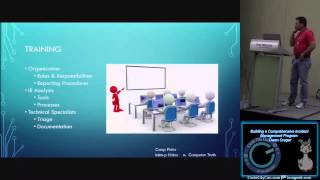
Building a Comprehensive Incident Management Program
Learn to build a comprehensive incident management program, covering roles, processes, tools, and advanced capabilities for effective cybersecurity response and mitigation.
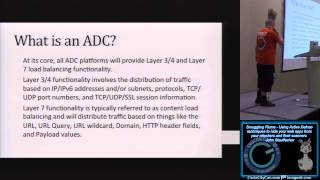
Smuggling Plums - Using Active Defense Techniques to Hide Your Web Apps from Your Attackers
Explore active defense techniques to protect web apps from attackers, including strategic defenses, application delivery control, and automated scripts for enhanced security.

Analyzing the Entropy of Document Hidden Code
Explore techniques for analyzing document hidden code entropy, including methodology, entropy calculation, and strategies to detect and decode malicious VBA in documents.
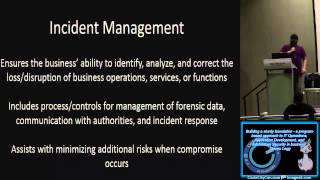
Building a Sturdy Foundation - A Program-Based Approach to IT Operations and Application Development
Learn to build a robust IT operations foundation using a program-based approach, covering essential management areas like asset, change, configuration, and incident management for improved efficiency and resilience.
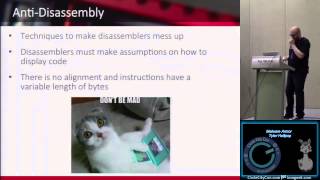
Malware Armor
Explore malware analysis techniques, including dynamic and static analysis, anti-virtualization detection, anti-debugging, and obfuscation methods. Learn to use various tools for effective malware armor analysis.
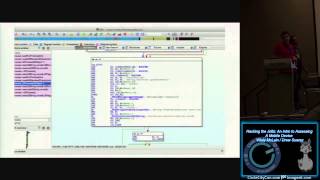
Hacking the Jolla - An Intro to Assessing A Mobile Device
Explore mobile device security through an in-depth analysis of the Jolla smartphone, covering attack surfaces, boot processes, and system vulnerabilities.
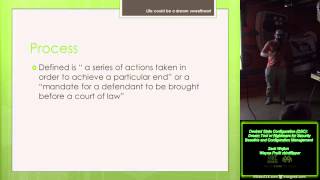
Desired State Configuration DSC - Dream Tool or Nightmare for Security Baseline and Configuration
Explore Desired State Configuration (DSC) for security baselines and configurations, discussing its benefits, challenges, and implementation considerations.
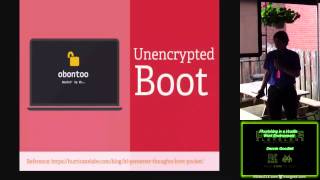
Flourishing in a Hostile Work Environment
Learn strategies for thriving in challenging work environments, including full disk encryption, rooting, and managing distractions. Gain insights from real-world experiences and practical solutions.

The Entropy of Obfuscated Code
Explore code obfuscation techniques, entropy analysis, and malware detection methods. Learn about information theory and its applications in cybersecurity and malware analysis.
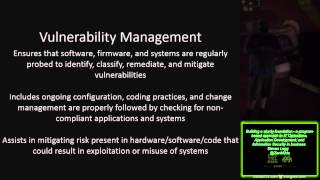
Building a Sturdy Foundation - A Program-Based Approach to IT Operations Application Development
Explore a program-based approach to IT operations and application development, covering key management areas for building a robust foundation in technology infrastructure.
10 Reasons Your Security Education Program Sucks
Discover why security education programs fail and learn strategies to improve them, focusing on engagement, relevance, and effective communication techniques for better results.
Gray Hat PowerShell Ben Ten
Explore advanced PowerShell techniques for ethical hacking and penetration testing, enhancing your cybersecurity skills and understanding of system vulnerabilities.
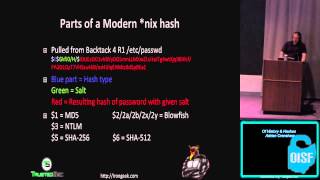
History of Password Hashes
Explore password security evolution, hashing techniques, and cracking methods. Learn about historical approaches, common mistakes, and modern systems for better understanding of digital authentication.
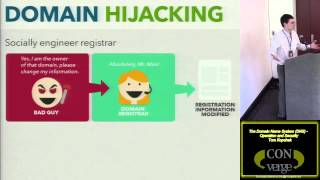
The Domain Name System - DNS Operation and Security
Learn DNS operation, security, and advanced concepts like open resolvers, domain hijacking, and DNSSEC in this comprehensive overview of the Domain Name System.
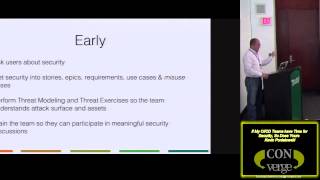
If My CICD Teams Have Time for Security So Does Yours
Learn to integrate security into CI/CD pipelines, automate security processes, and create responsive, centralized security components for efficient development workflows.

Excuse Me While I BURP
Explore web application security testing with BURP Suite, covering its features and practical usage for identifying vulnerabilities and improving application security.
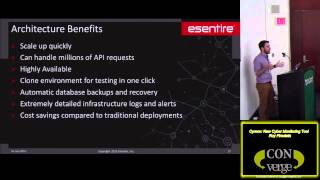
Cymon New Cyber Monitoring Tool
Explore Cymon, a new cyber monitoring tool for threat intelligence, featuring event tracking, visualizations, and machine learning capabilities for enhanced cybersecurity.

Building the Team for a Successful SOC
Strategies for building an effective SOC team: leadership insights on business acumen, trustworthiness, learning capacity, and fostering valuable work and teamwork.

Funny Money - What Payment Systems Teach Us About Security
Explore payment system vulnerabilities and security lessons with Drew Sutter, gaining insights into financial technology risks and protective measures.
Track101 Hacker High - Why We Need To Teach Computer Hacking In Schools
Explore the importance of teaching computer hacking in schools, examining its potential benefits for cybersecurity education and ethical technology use.
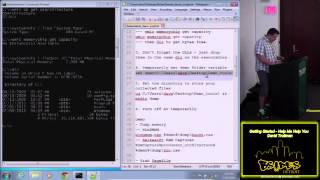
Getting Started - Help Me Help You
Learn essential incident response techniques, from memory analysis to registry examination, with practical tools and real-world scenarios to enhance your cybersecurity skills and preparedness.