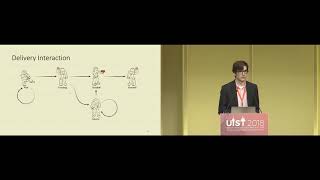
Authoring and Verifying Human-Robot Interactions
Explore an authoring environment using formal-verification methods to design socially appropriate robot behaviors, reducing interaction breakdowns and improving human-robot interactions.
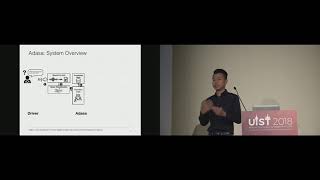
Adasa - A Conversational In-Vehicle Digital Assistant for Advanced Driver Assistance Features
Conversational digital assistant for vehicles that enhances driver understanding and usability of advanced assistance features through natural language interaction and real-time responses.
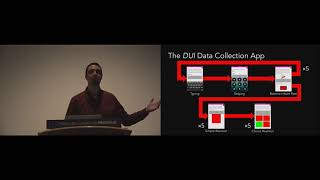
Drunk User Interfaces - Determining Blood Alcohol Level through Everyday Smartphone Tasks
Innovative smartphone interfaces measure blood alcohol levels through user performance, offering a potential alternative to breathalyzers for assessing inebriation in everyday scenarios.
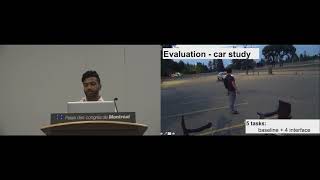
Communicating Awareness and Intent in Autonomous Vehicle-Pedestrian Interaction
Exploring interfaces for autonomous vehicles to communicate awareness and intent to pedestrians at crosswalks, enhancing safety and trust in human-vehicle interactions.
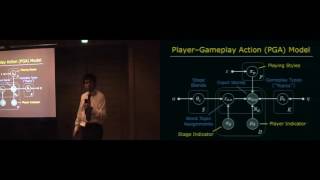
Mining Controller Inputs to Understand Gameplay
Innovative approach using probabilistic topic models to analyze controller inputs, revealing gameplay patterns and player-independent action types in video games.
ViBand - High-Fidelity Bio-Acoustic Sensing Using Commodity Smartwatch Accelerometers
Innovative smartwatch technology enhances bio-acoustic sensing, enabling gesture recognition, object detection, and body-based data transmission, expanding wearable interaction possibilities.
ERICA - Interaction Mining Mobile Apps
Innovative system for capturing app design components, enabling data-driven design through interaction mining. Detects UI changes, records data streams, and creates user interaction traces for improved UX analysis and development.
Interacting with Soli - Exploring Fine-Grained Dynamic Gesture Recognition in the Radio-Frequency Spectrum
Explore novel machine learning for RF-based gesture recognition using Google's Soli sensor. Learn about high-frequency radar sensing and advanced neural network techniques for fine-grained motion detection.
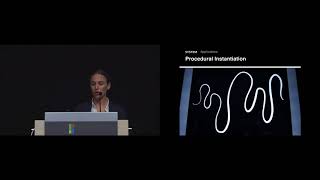
Extending Manual Drawing Practices with Artist-Centric Programming Tools
Explore Dynamic Brushes, a programming environment that blends manual and procedural art creation. Learn how this tool transforms stylus inputs into complex patterns, enhancing traditional drawing practices.
What Else is Revealed by Order Revealing Encryption?
Explores implications of order-revealing encryption, discussing potential security vulnerabilities and unintended information leakage in cryptographic systems.
MEMS Gyroscopes as Physical Unclonable Functions
Explore MEMS gyroscopes as Physical Unclonable Functions for enhanced security in embedded systems, presented at the ACM Conference on Computer and Communications Security.
Frodo - Take off the Ring! Practical, Quantum-Secure Key Exchange from LWE
Explore quantum-secure key exchange using LWE, a practical approach for post-quantum cryptography. Learn about Frodo's implementation and its potential for future secure communications.
Deep Learning with Differential Privacy
Explore deep learning with differential privacy, focusing on techniques to protect data privacy while maintaining model accuracy in machine learning applications.
Amortizing Secure Computation with Penalties
Explore secure computation with penalties, focusing on amortization techniques to enhance efficiency in cryptographic protocols for multi-party computations.
Improvements to Secure Computation
Explore advancements in secure computation techniques, focusing on enhanced privacy and efficiency in multi-party protocols presented at the ACM CCS 2016 conference.
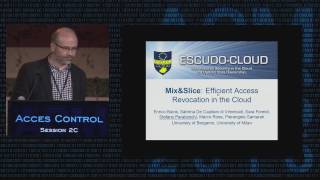
Mix & Slice - Efficient Access Revocation in the Cloud
Efficient cloud access revocation technique using Mix&Slice, balancing security and performance for data outsourcing. Presents novel approach to protect resources while minimizing computational overhead.
Speed + Security – Best Practices for Securing Containers
Explore top container security risks, attack vectors, and best practices for protecting containerized environments in this expert discussion.
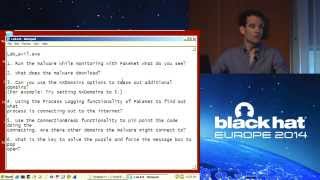
Counterfeiting the Pipes with FakeNet 2.0 - Part 2
Learn to simulate networks for malware analysis using FakeNet 2.0. Capture network signatures, mimic protocols, and defeat malware through hands-on challenges with real-world samples.
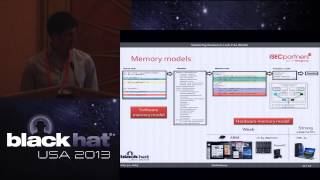
Shattering Illusions in Lock-Free Worlds - Compiler - Hardware Behaviors in OSes - VMs
Explores memory access issues in multi-threaded environments, focusing on compiler/hardware behaviors that can lead to security vulnerabilities in OSes, VMs, and applications.
The UEFI Firmware Rootkits - Myths and Reality
Explore UEFI firmware security, vulnerabilities, and real-world applicability of attacks. Analyze rootkit scenarios and assess practical implications for system compromise at privileged levels.
Real-World Post-Quantum Cryptography - Introducing the OpenQuantumSafe Software Project
Explore OpenQuantumSafe, an open-source library for quantum-safe cryptography, including implementations, benchmarks, integration challenges, and future developments.