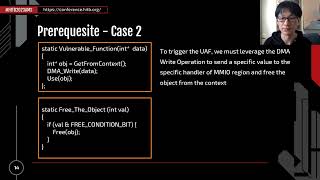
Advanced DMA Reentrancy Techniques to Escape QEMU
Explore advanced DMA reentrancy techniques for QEMU escape, including DMA Reflection/Refraction and DMA Oriented Programming. Learn about vulnerabilities, exploit processes, and future challenges in virtualization security.
Next Generation Virtualization-Based Obfuscators
Explores next-gen virtualization-based code obfuscation techniques, focusing on target-specific instruction sets and intertwined VM components to enhance resilience against deobfuscation attacks.
XRP Raid Protector - Killing A Critical Bug Worth 40 Billion Dollars
Unveiling a critical 8-year-old vulnerability in XRP Ledger that could compromise $40 billion in assets. Explores the RCE exploit, potential profit methods, and network control implications for blockchain security.

How ChatGPT Made My Job as a Teacher Harder
Explore the impact of ChatGPT on teaching, focusing on challenges and opportunities in computer science education. Gain insights into adapting pedagogical approaches for the AI era.

Humanity On-Chain
Exploring the impact of Web 3.0 on human connection and self-understanding, this talk delves into how emerging technologies might reshape our perception of existence and purpose in the digital age.

Secret Hunting
Discover techniques for finding, rotating, and safely managing secrets in applications. Learn best practices for secure secret storage and handling compromised credentials.
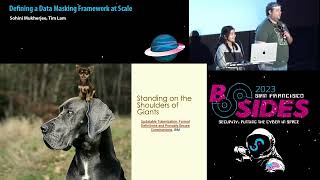
Defining a Data Masking Framework at Scale
Explore tokenization and obfuscation as data security techniques, addressing challenges in implementing large-scale frameworks alongside conventional encryption methods.
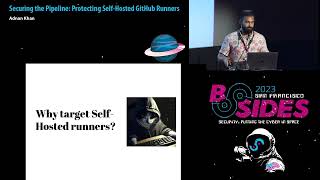
Securing the Pipeline - Protecting Self-Hosted GitHub Runners
Learn to secure self-hosted GitHub runners, mitigate risks of compromised access tokens, and implement key configuration adjustments to protect CI/CD pipelines from potential network breaches.
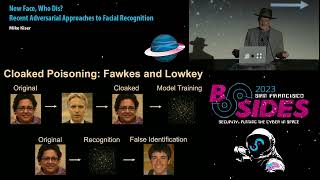
New Face, Who Dis? - Recent Adversarial Approaches to Facial Recognition
Explore recent adversarial techniques to protect facial biometrics, including an open-source mobile app demonstration for real-world privacy preservation against facial recognition.
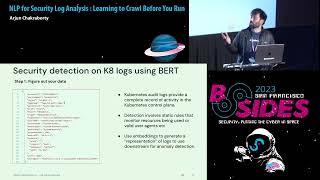
NLP for Security Log Analysis - Learning to Crawl Before You Run
Explore the application of NLP in security analysis, focusing on embeddings for insider threat detection and the impact of large language models on the field.
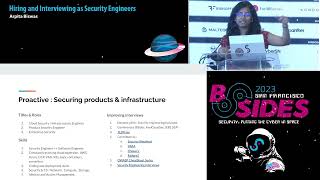
Hiring and Interviewing as Security Engineers
Insights on reducing bias in security hiring and maximizing interviews for various roles, drawing from a decade of global experience across major tech companies and startups.
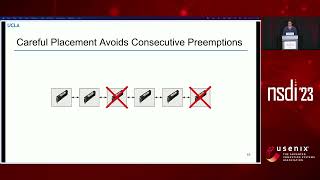
Bamboo - Making Preemptible Instances Resilient for Affordable Training of Large DNNs
Innovative system for cost-effective training of large DNNs using preemptible instances, introducing redundant computations to enhance resilience and efficiency in distributed learning environments.
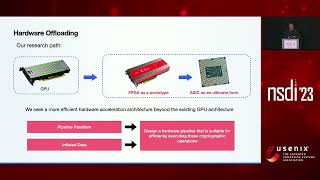
FLASH - Towards a High-performance Hardware Acceleration Architecture for Cross-silo Federated Learning
Innovative hardware acceleration architecture for cross-silo federated learning, enhancing performance and resource utilization of cryptographic operations while preserving data privacy.
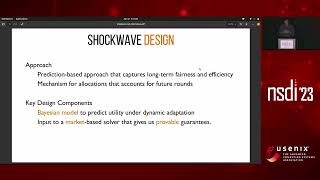
Shockwave - Fair and Efficient Cluster Scheduling for Dynamic Adaptation in Machine Learning
Efficient cluster scheduling system for dynamic adaptation in ML training, optimizing fairness and efficiency through market theory and stochastic dynamic programming.
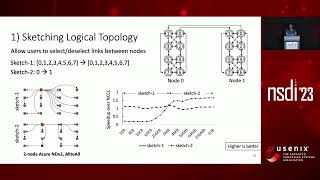
TACCL - Guiding Collective Algorithm Synthesis Using Communication Sketches
Innovative tool for synthesizing efficient communication algorithms in multi-GPU machine learning, outperforming NCCL and accelerating model training across various hardware configurations.
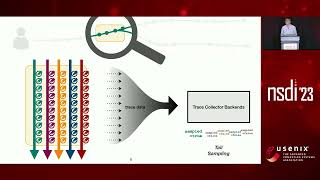
The Benefit of Hindsight - Tracing Edge-Cases in Distributed Systems
Innovative distributed tracing system for efficiently capturing edge-case issues in large-scale systems, offering low-overhead monitoring and retroactive sampling for precise problem diagnosis.
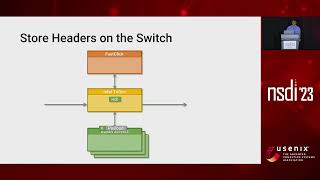
A High-Speed Stateful Packet Processing Approach for Tbps Programmable Switches
Innovative approach for high-speed packet processing using programmable switches, external memory, and processing devices. Enables complex stateful operations at 300G throughput with a single server.
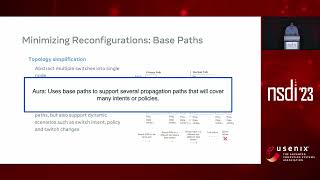
Practical Intent-Driven Routing Configuration Synthesis
Introduces Aura, a system for synthesizing datacenter routing policies, featuring RPL language and a compiler for automatic switch configuration generation, supporting frequent policy changes.
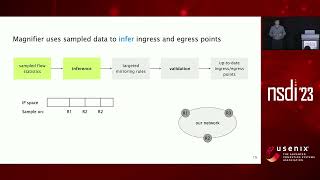
Enhancing Global Network Monitoring with Magnifier
Innovative approach to enhance global network monitoring by combining sampling with mirroring, improving coverage without increasing overhead. Introduces "negative mirroring" for efficient traffic validation.
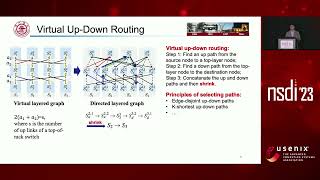
Flattened Clos - Designing High-performance Deadlock-free Expander Data Center Networks Using Graph Contraction
Innovative approach to designing high-performance, deadlock-free expander data center networks using graph contraction, offering improved efficiency and throughput compared to traditional Clos networks.
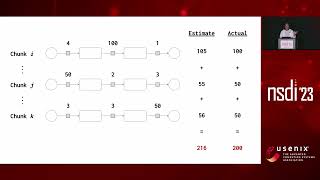
Scalable Tail Latency Estimation for Data Center Networks
Innovative techniques for fast and accurate estimation of flow-level tail latency in large-scale data center networks, overcoming limitations of traditional simulators and recent machine learning approaches.