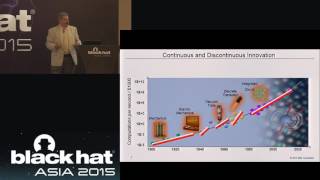
Information Technology Systems in a Post-Silicon World
Explore post-silicon IT systems, emerging architectures, and AI's impact on InfoSec. Discover how innovation addresses Moore's Law limitations and shapes the future of technology and security.
I'm Not a Human - Breaking the Google reCAPTCHA
Explore techniques to bypass Google's reCAPTCHA using risk analysis manipulation, deep learning for image recognition, and automated solving methods. Discusses implications for CAPTCHA security.
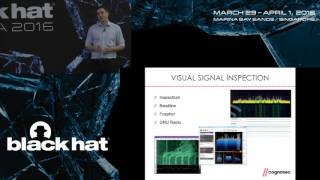
Mapping the Wireless IoT
Explore wireless IoT security challenges, signal identification techniques, and best practices for revealing unknown signals. Includes a demo of a new tool for mapping radio spectrum and identifying devices.
DSCompromised - A Windows DSC Attack Framework
Explore a PowerShell toolkit leveraging Windows Desired State Configuration for command-and-control, malware persistence, and automatic re-infection. Learn attack techniques and defensive strategies.

The Security Wolf of Wall Street - Fighting Crime With High-Frequency Classification
Explore real-time threat detection using machine learning on massive DNS data. Learn about Avalanche stream processing and NLP-Rank for automated phishing detection at scale.
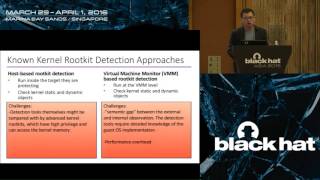
Numchecker - A System Approach for Kernel Rootkit Detection
Explore NumChecker, a VMM-based framework for detecting kernel rootkits using Hardware Performance Counters. Learn about its implementation, effectiveness, and security analysis.
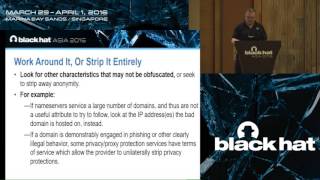
Multivariate Solutions to Emerging Passive DNS Challenges
Explore emerging challenges in passive DNS threat intelligence and learn multivariate solutions to overcome them, enhancing your ability to identify related malicious domains effectively.
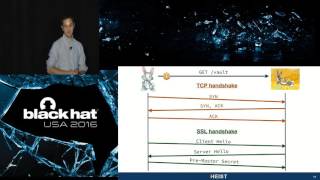
HEIST - HTTP Encrypted Information can be Stolen Through TCP-Windows
Unveils HEIST, a browser-based attack exploiting SSL/TLS vulnerabilities without network access. Demonstrates how to leak cross-origin response sizes, enabling compression-based attacks and sensitive information extraction from popular websites.
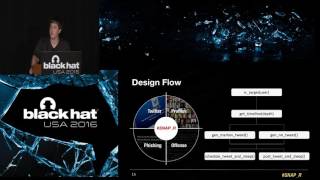
Weaponizing Data Science for Social Engineering - Automated E2E Spear Phishing on Twitter
Automated spear phishing on Twitter using machine learning and social engineering techniques. Explores target profiling, content generation, and high-value target identification for more effective phishing campaigns.
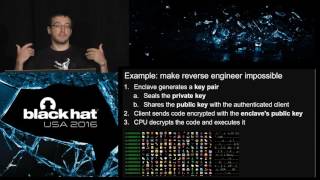
SGX Secure Enclaves in Practice - Security and Crypto Review
Explore Intel's SGX technology for secure remote computation, including its implementation, development environment, cryptographic aspects, and potential applications in secure storage and delegation.
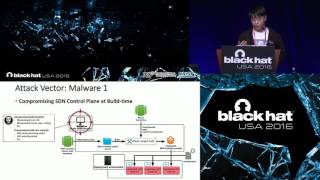
Attacking SDN Infrastructure - Are We Ready for the Next-Gen Networking?
Exploring SDN vulnerabilities through attacks on control plane, channel, and data plane. Demonstrates critical exploits affecting network availability and confidentiality, and introduces SDN security projects.

An Inconvenient Trust - User Attitudes Toward Security and Usability Tradeoffs
Exploring user perspectives on encryption methods, balancing security and usability in digital communications. Insights from a study on key-exchange vs. key-directory models for everyday messaging.
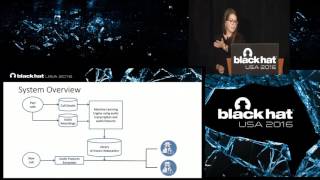
Gathering Threat Intelligence on Telephony Scams to Detect Fraud
Explore techniques for gathering threat intelligence on telephony scams, including robocalling and voice phishing. Learn to detect and fingerprint bad actors using audio features and data analysis.
Slime - Automated Anti-Sandboxing Disarmament System
Automated system to disarm malware with anti-sandbox techniques, focusing on host-fingerprinting and general anti-sandboxing. Analyzes exit reasons and suggests suitable environments for dynamic analysis of evasive malware.
Exploiting Social Navigation
Discover techniques to compromise social navigation systems through fake GPS reports and bot drivers, exploring privacy risks and traffic manipulation in applications like Waze.
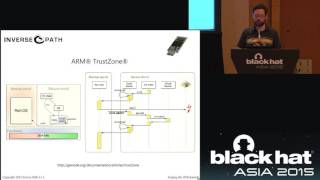
Forging the USB Armory
Explore the development of an open-source USB-sized computer for security applications, featuring advanced SoC technology, secure boot, and ARM TrustZone implementation.
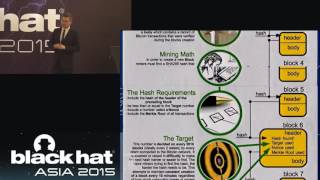
Decentralized Malware on the Blockchain
Explore the potential threat of embedding malware in blockchain transactions, its implications for cybersecurity, and possible solutions to mitigate risks in decentralized systems.
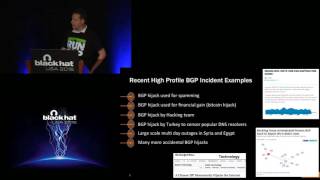
BGP Stream
Explore BGP Stream: real-time detection of potentially malicious BGP/ASN changes for enhanced network security and traffic flow monitoring.
Taxonomic Modeling of Security Threats in Software Defined Networking
Comprehensive analysis of security threats in Software Defined Networking, exploring vulnerabilities, potential attack scenarios, and providing recommendations for effective countermeasures.
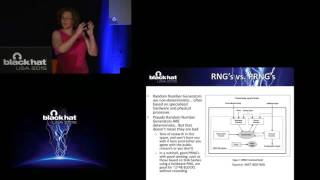
Understanding and Managing Entropy Usage
Explore cryptographic entropy usage, sources, and management across systems. Learn to analyze and improve random number generation for enhanced security in modern IT infrastructures.

Using Static Binary Analysis to Find Vulnerabilities and Backdoors in Firmware
Explore techniques for detecting vulnerabilities and backdoors in embedded device firmware using static binary analysis, focusing on challenges and automated solutions for complex binary blobs.