Harnessing Intelligence From Malware Repositories
Explore techniques for extracting intelligence from malware repositories using program analysis and data mining, with insights on connecting seemingly disparate cyber attacks and tracking malware trends.

Rocking the Pocket Book - Hacking Chemical Plant for Competition and Extortion
Explore techniques for exploiting chemical plant systems to cause economic damage while avoiding detection. Learn about attack stages, cost considerations, and creating misleading forensic evidence.
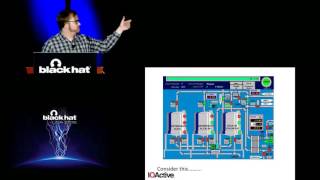
Remote Physical Damage 101 - Bread and Butter Attacks
Explore cyber-physical attacks on industrial systems, including generic "bread and butter" techniques and mitigation strategies beyond network security.
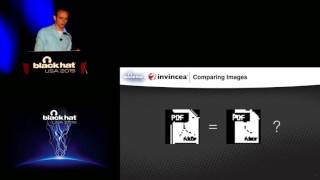
Graphic Content Ahead - Towards Automated Scalable Analysis of Graphical Images Embedded in Malware
Explores automated analysis of images in malware, focusing on identifying visually similar samples and classifying images into categories to enhance malware triage and reveal attacker patterns.
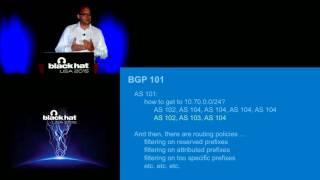
Internet Plumbing for Security Professionals - The State of BGP Security
Explore BGP security, its vulnerabilities, and practical countermeasures to build trust in the Internet's foundation. Learn about routing leaks, hijacking risks, and implementation strategies for a more secure network infrastructure.
Breaking Access Controls With BLEKey
Explore vulnerabilities in RFID access control systems and learn how to exploit them using open-source hardware. Discover techniques for circumventing security, logging access, and cloning cards.
Hidden Risks of Biometric Identifiers and How to Avoid Them
Explore cutting-edge biometric technologies, their advantages, and potential risks. Learn to evaluate security, reliability, privacy, and ethical concerns for informed implementation of future identification systems.
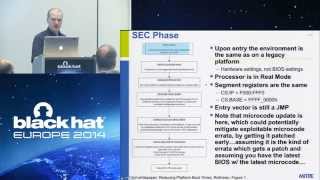
Analyzing UEFI BIOSes from Attacker & Defender Viewpoints
Explore UEFI BIOS analysis from attacker and defender perspectives, covering key concepts like UEFI boot phases, firmware storage, and security implications for effective reverse engineering of modern PC firmware.
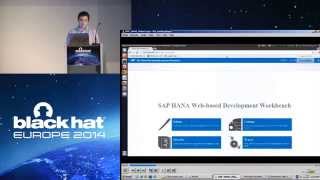
Blended Web and Database Attacks on Real-Time, In-Memory Platforms
Explore innovative attack vectors on real-time, in-memory platforms, blending web and database vulnerabilities. Learn about new SQL injection techniques, server-side JavaScript exploits, and R-based attacks in SAP HANA.

DTM Components - Shadow Keys to the ICS Kingdom
Explore vulnerabilities in industrial control system components, focusing on DTM technology used in critical industries. Learn about security flaws and their implications for field devices.

Hack Your ATM with Friend's Raspberry Pi
Explore ATM vulnerabilities and hacking techniques using Raspberry Pi, focusing on device interfaces and communication protocols. Learn about potential security risks and countermeasures in ATM systems.
Network Attached Shell - N.A.S.ty Systems that Store Network Accessible Shells
Explore critical vulnerabilities in network storage devices, their impact on data security, and potential for network exploitation. Learn about attack techniques and implications for IT professionals and consumers.

Quantum Key Distribution and the Future of Encryption
Explore quantum key distribution and its role in future encryption, covering quantum mechanics basics, algorithms, and real-world experiments to ensure data security in the quantum computing era.

How to Find Bugs in USB Device Drivers
Explore USB device driver vulnerabilities using vUSBf framework. Learn about fuzzing techniques, bug detection, and potential security risks in USB implementations across various operating systems.
Secure Digital Communications for Our Modern Dystopia
Secure communication system for hostile environments, leveraging NASA's Disruption-Tolerant Networking for activists, refugees, and trolls. Embraces high-throughput physical data transfer methods.
Windows Kernel Graphics Driver Attack Surface
Explore the attack surface of Windows graphics drivers, including exposed ioctl's, driver internals, and security implications for researchers and developers.
Abusing Microsoft Kerberos - Sorry You Guys Don't Get It
Explore Kerberos vulnerabilities in Microsoft Active Directory, revealing long-term security risks and challenging assumptions about authentication protocols.
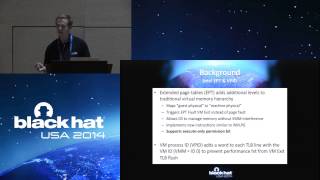
MoRE Shadow Walker - The Progression of TLB-Splitting on x86
Explore TLB-splitting evolution on x86 architecture, from defensive memory protections to offensive rootkit techniques. Learn new methods for modern processors and their implications for cybersecurity.

Poacher Turned Gamekeeper - Lessons Learned from Eight Years of Breaking Hypervisors
Explore hypervisor vulnerabilities, attack surfaces, and security design flaws through real-world examples. Learn key lessons for improving hypervisor security and hardening techniques.
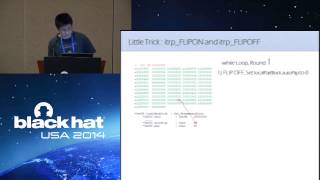
Understanding TOCTTOU in the Windows Kernel Font Scaler Engine
Explore TOCTTOU vulnerabilities in Windows Kernel Font Scaler Engine, covering basic double fetch issues, stealthy design flaws, and their impact on system security. Learn about font file manipulation and exploit techniques.
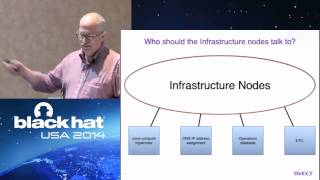
OpenStack Cloud at Yahoo Scale - How to Avoid Disaster
Learn strategies to secure large-scale OpenStack deployments, including hardening techniques, compromise mitigation, and network architecture considerations, based on Yahoo's experience managing massive cloud infrastructure.