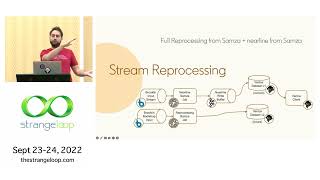
Open-Sourcing Venice
Explore LinkedIn's Venice: a high-throughput, low-latency derived data storage system powering AI workloads. Learn about its architecture, scalability, and real-world applications in online deep learning.

Stop Writing Dead Programs
Explore the future of programming with a critical look at current practices and innovative ideas for live programming environments that could revolutionize problem-solving in technology.

Remember When We Broke the Internet
Exploring unexpected incidents in open source history, their impact on technology, and the complexity of open source ecosystems as sociotechnical systems.
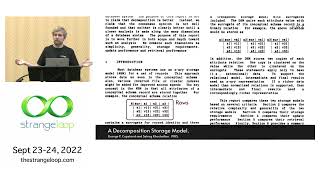
Light and Adaptive Indexing for Immutable Databases
Explore innovative indexing strategies for large-scale immutable databases, including learned and adaptive indexes, addressing engineering challenges in distributed environments.
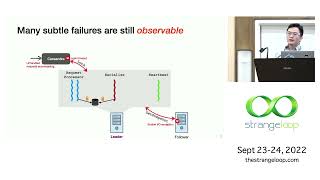
Automatic Generation of Runtime Checkers for Production Distributed Systems
Explore systematic techniques for automatically generating effective runtime checkers to detect and localize failures in complex distributed systems, enhancing reliability and performance.
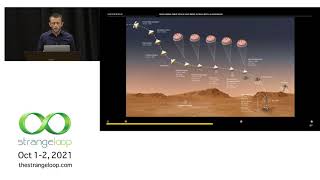
Exploring Deep Space and Deep Ocean with AI Guidance
Discover how AI and ML advance exploration of extreme environments like deep oceans and space, focusing on autonomous decision-making, data collection, and spectroscopy techniques.
Morel - A Functional Query Language
Explore Morel, a hybrid functional/relational language combining Standard ML with query capabilities, optimized for data-intensive systems and relational backends.
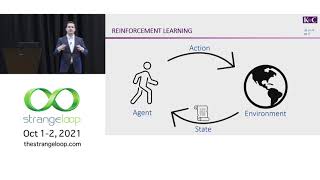
Crowd Dynamics, RL and Unity - A Journey
Explore crowd dynamics modeling using reinforcement learning and Unity. Learn about extended Kalman filters, PPO in Unity-ML, and result validation for simulating diverse crowd behaviors.
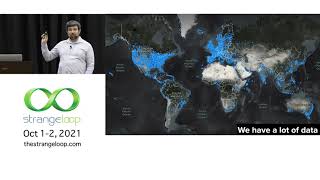
Impacting Global Policy by Understanding Litter Data
Explore how data analysis of global litter can inform policy, influence packaging, and inspire personal responsibility using computer vision and machine learning techniques.
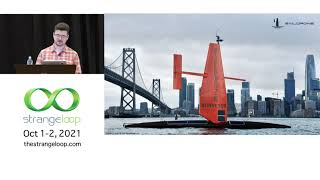
Near-Realtime Monitoring of Drones at Sea
Explore autonomous ocean data collection using wind and solar-powered drones, addressing challenges in remote monitoring and fleet management for long-duration marine missions.
Client Side Deep Learning Optimization with PyTorch
Explore real-time computer vision on mobile devices using PyTorch. Learn model porting, optimization techniques, and performance benchmarking for client-side deep learning applications.
Artisanal, Machine-Generated API Libraries
Explore Stripe's journey in automating API library generation across multiple languages, delving into the custom-built compiler tool and valuable insights gained during development.
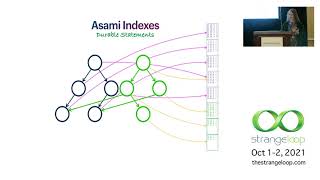
Turn Your JSON into a Graph in 2 Lines
Explore Asami, an open-source graph database with flexible data structures, functional operations, and easy JSON-to-graph conversion. Learn its architecture and novel graph analysis capabilities.
Nim Nuggets - Systems Programming & Metaprogramming Magic
Explore Nim's advanced features for systems programming, metaprogramming, and static introspection through real-world examples and practical applications.
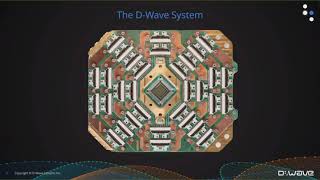
Practical Quantum Computing Today
Explore quantum computing applications and development using D-Wave's cloud-based tools. Learn how to code on live quantum systems and discover real-world use cases across various industries.

Prevent Phishing & Impersonation
Explore innovative approaches to prevent phishing and impersonation attacks in digital systems. Learn about trust-based identity models and a prototype address book that enhances security without compromising usability.
How to Think about Parallel Programming - Not
Explores rethinking parallel programming, advocating for language-level solutions and algorithms based on independence rather than linear problem decomposition.
Functional Composition
Explore music theory through functional programming, building from sine waves to Bach's canon using Clojure and Overtone. Discover how coding and music creation intersect.

Systems That Run Forever - Self-Heal and Scale
Explore architectural principles for building scalable, fault-tolerant systems using isolated parallel components, error detection, and live code upgrades, with insights from Erlang's design.
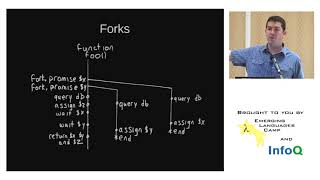
Qbrt Bytecode - Interface Between Code and Execution
Explore Qbrt bytecode's innovative approach to language design, featuring built-in concurrency, asynchronous I/O, and multiple dispatch, aimed at simplifying complex runtime features for developers.
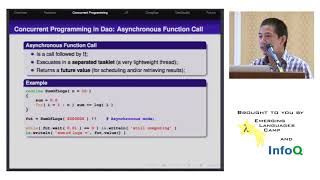
Dao Programming Language for Scripting and Computing
Explore Dao, a lightweight programming language with optional typing, expressive features, and simplified concurrent programming. Learn about its virtual machine, JIT compiler, and C/C++ binding generator.