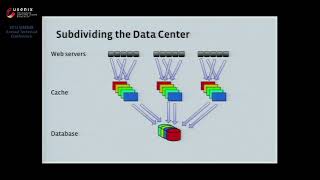
TAO - Facebook’s Distributed Data Store for the Social Graph
Explore Facebook's TAO, a distributed data store designed for efficient social graph access. Learn about its architecture, API, and how it handles billions of reads and millions of writes per second.
In Search of an Understandable Consensus Algorithm
Explore Raft, a consensus algorithm for replicated logs, designed to be more understandable than Paxos while maintaining efficiency and providing a solid foundation for practical systems.
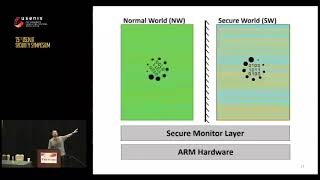
fTPM - A Software-Only Implementation of a TPM Chip
Explore software-based TPM implementation using ARM TrustZone, overcoming hardware limitations to provide robust security features for trusted computing in mobile devices.
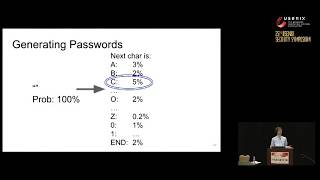
Fast, Lean, and Accurate - Modeling Password Guessability Using Neural Networks
Neural networks for modeling password guessability: faster, smaller, and more accurate than existing methods. Enables real-time, client-side password strength evaluation with sub-second latency.
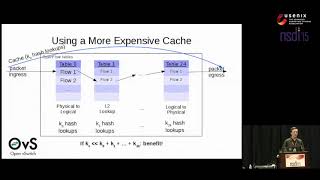
The Design and Implementation of Open vSwitch
Explore the architecture, design, and performance optimizations of Open vSwitch, an open-source virtual switch for hypervisor platforms, focusing on flow classification and caching techniques.
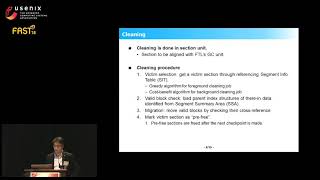
F2FS - A New File System for Flash Storage
Explore F2FS, a Linux file system optimized for flash storage. Learn its design, data structures, and algorithms, and see how it outperforms EXT4 in various scenarios on mobile and server systems.
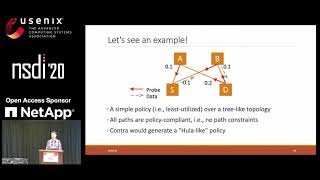
Contra - A Programmable System for Performance Aware Routing
Programmable system for adaptive, performance-aware network routing across various topologies and policies. Compiles network-wide policies into switch-local programs, implementing specialized distance-vector protocols for optimized path selection.
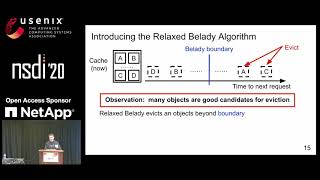
Learning Relaxed Belady for Content Distribution Network Caching
Innovative machine learning approach for CDN caching, approximating Belady MIN algorithm. Reduces WAN traffic, outperforms state-of-the-art methods, with modest overhead for real-world deployment.
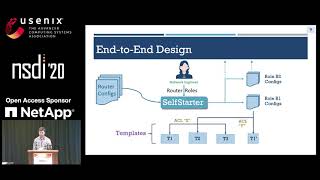
Finding Network Misconfigurations by Automatic Template Inference
Automated outlier detection technique for network configurations, inferring templates to identify likely errors without explicit specifications. Applicable to complex elements like ACLs and route policies.
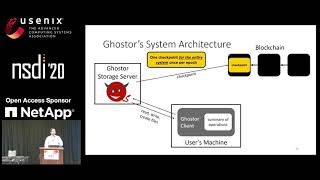
Ghostor - Toward a Secure Data Sharing System from Decentralized Trust
Explore a secure data-sharing system that protects user privacy and ensures data integrity through decentralized trust, hiding identities and detecting server-side violations.
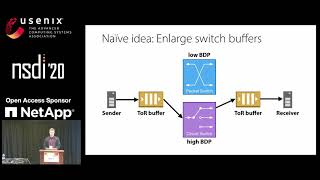
Adapting TCP for Reconfigurable Datacenter Networks
Explores TCP adaptation for modern reconfigurable datacenter networks, proposing dynamic queue resizing and explicit circuit state feedback to improve circuit utilization and performance.
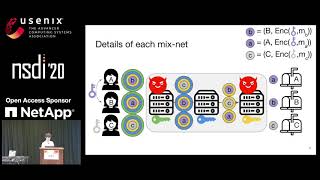
XRD - Scalable Messaging System with Cryptographic Privacy
Scalable messaging system offering cryptographic privacy, using parallel mix networks and novel techniques to support millions of users with low latency while protecting communication metadata.
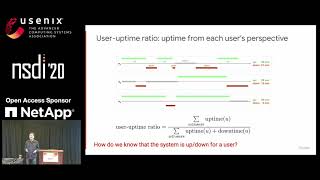
Meaningful Availability
Explores a new availability metric for cloud applications: windowed user-uptime. Discusses its advantages over traditional metrics in accurately reflecting user experience and distinguishing outage patterns.
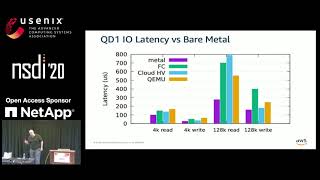
Firecracker - Lightweight Virtualization for Serverless Applications
Explore Firecracker, a lightweight VMM for serverless applications, offering strong security and minimal overhead. Learn about its design, deployment, and impact on AWS Lambda and Fargate services.
Experiences with Modeling Network Topologies at Multiple Levels of Abstraction
Explores MALT, a multi-layer topology representation for network management, covering its benefits, implementation challenges, and lessons learned in creating a comprehensive topology model.
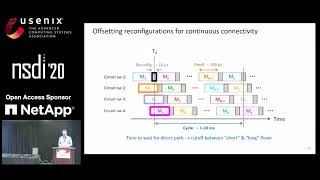
Expanding Across Time to Deliver Bandwidth Efficiency and Low Latency
Innovative network design for datacenters combining low-latency delivery and high-bandwidth efficiency through dynamic reconfiguration, outperforming static topologies for various workloads.
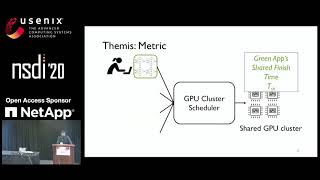
Themis - Fair and Efficient GPU Cluster Scheduling
Innovative GPU cluster scheduling framework for fair and efficient allocation of resources in distributed machine learning workloads, addressing unique challenges of long-running, gang-scheduled tasks and placement sensitivity.

DC-Store - Eliminating Noisy Neighbor Containers Using Deterministic I/O Performance and Resource Isolation
Explore a storage framework offering deterministic I/O performance in multi-container environments, eliminating noisy neighbor issues through hardware and software innovations.
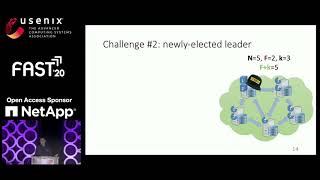
CRaft - An Erasure-coding-supported Version of Raft for Reducing Storage Cost
Explores CRaft, an erasure-coding-supported version of Raft consensus protocol, reducing storage and network costs while maintaining fault tolerance and liveness. Presents design, challenges, and performance improvements.
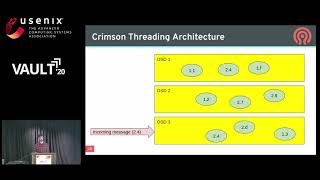
Crimson - A New Ceph OSD for the Age of Persistent Memory and Fast NVMe Storage
Explore Crimson, a new Ceph OSD designed for low-latency persistent memory and NVMe storage. Learn about its architecture, performance benefits, and future developments in this technical deep dive.

Speeding Up Linux Disk Encryption
Explore techniques to optimize Linux disk encryption performance, focusing on dm-crypt architecture and potential improvements for faster transparent data protection.