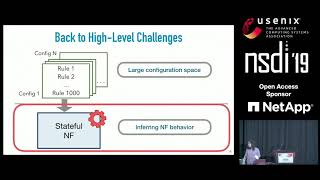
Alembic - Automated Model Inference for Stateful Network Functions
Automated inference of behavioral models for stateful network functions, enabling accurate testing and verification. Introduces Alembic, which synthesizes finite-state machine ensembles for diverse rule types and configurations.
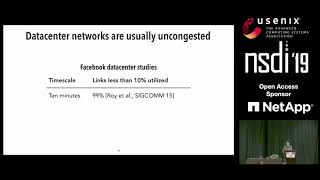
Datacenter RPCs Can Be General and Fast
Efficient RPC library for datacenter networks offering high performance without sacrificing generality. Handles packet loss and congestion while achieving low latency and high bandwidth on commodity hardware.
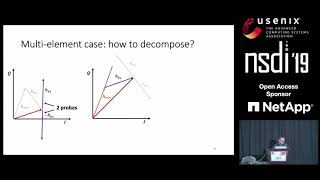
Towards Programming the Radio Environment with Large Arrays of Inexpensive Antennas
Explore reconfiguring wireless environments with large arrays of inexpensive antennas to improve communication. Innovative approach achieves significant throughput and capacity gains in real indoor settings.

The nanoPU - A Nanosecond Network Stack for Datacenters
Innovative NIC-CPU co-design accelerating datacenter applications with μs-scale RPCs. Features fast network-to-CPU path, hardware-supported transport and load balancing, achieving 69ns wire-to-wire response time and improved performance.
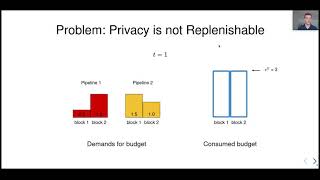
Privacy Budget Scheduling
Explores privacy budget scheduling in machine learning, introducing PrivateKube for managing differential privacy as a resource. Presents DPF algorithm for fair allocation of non-replenishable privacy budgets in ML workloads.
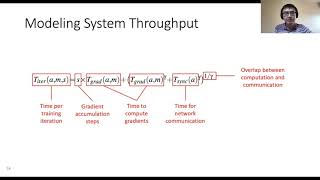
Pollux - Co-adaptive Cluster Scheduling for Goodput-Optimized Deep Learning
Innovative deep learning cluster scheduler optimizing resource allocation and job performance through adaptive co-optimization, resulting in reduced completion times and improved fairness among competing jobs.
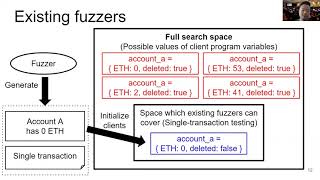
Finding Consensus Bugs in Ethereum via Multi-transaction Differential Fuzzing
Explore multi-transaction differential fuzzing for detecting Ethereum consensus bugs, improving security and reliability in blockchain networks.
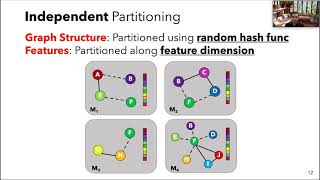
Distributed Deep Graph Learning at Scale
Explores a novel system for scaling Graph Neural Network training to large real-world graphs, introducing pipelined push-pull parallelism for faster and more efficient distributed processing.
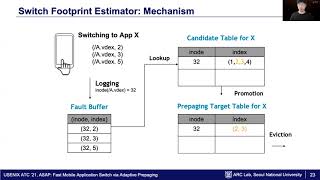
ASAP - Fast Mobile Application Switch via Adaptive Prepaging
Innovative mobile OS technique reducing app switch time by up to 35.7% through adaptive prepaging, enhancing user experience and resource utilization on memory-constrained devices.
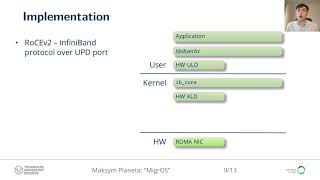
MigrOS - Transparent Live-Migration Support for Containerised RDMA Applications
Transparent live-migration architecture for containerized RDMA applications, enabling OS control over active connections without compromising performance or requiring application changes.
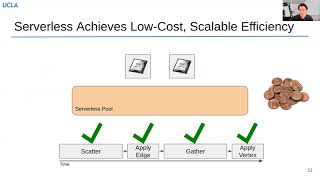
Dorylus - Affordable, Scalable, and Accurate GNN Training with Distributed CPU Servers and Serverless Threads
Distributed system for training Graph Neural Networks using serverless computing, offering affordable scalability for billion-edge graphs with improved performance-per-dollar compared to GPU servers.
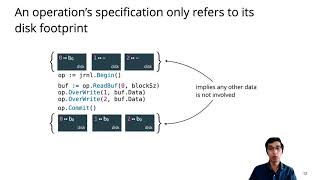
GoJournal - A Verified, Concurrent, Crash-Safe Journaling System
Explore GoJournal, a verified concurrent journaling system for storage applications. Learn about its implementation, performance, and the challenges overcome in its development and verification process.
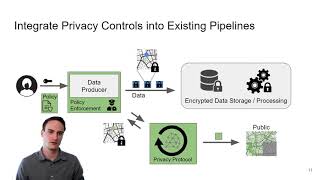
Zeph - Cryptographic Enforcement of End-to-End Data Privacy
Cryptographic system for enforcing user-defined privacy policies in real-time data analytics, ensuring compliance and protection against breaches while maintaining scalability and low latency.
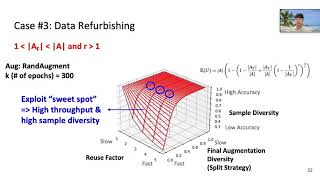
Refurbish Your Training Data - Reusing Partially Augmented Samples for Faster Deep Neural Network Training
Innovative data refurbishing technique accelerates deep neural network training while maintaining model generalization by reusing partially augmented samples and optimizing CPU-GPU overlap.
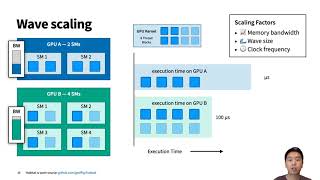
Habitat - A Runtime-Based Computational Performance Predictor for Deep Neural Network Training
Explore a runtime-based technique for predicting GPU performance in deep neural network training, aiding cost-efficient hardware selection for researchers and practitioners.
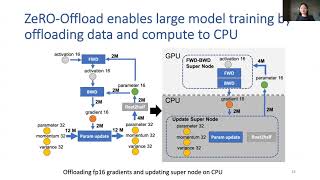
ZeRO-Offload - Democratizing Billion-Scale Model Training
ZeRO-Offload: Enabling billion-scale model training on a single GPU by offloading data and compute to CPU, minimizing data movement, and optimizing efficiency. Scales to multiple GPUs and works with model parallelism.
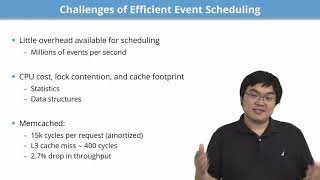
SKQ - Event Scheduling for Optimizing Tail Latency in a Traditional OS Kernel
Explore SKQ, a FreeBSD Kqueue redesign that significantly improves application tail latency and low-latency throughput through scalable architecture and event scheduling policies.
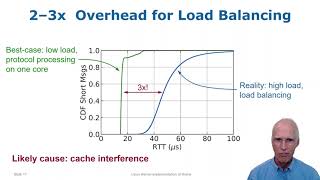
A Linux Kernel Implementation of the Homa Transport Protocol
Explore Homa/Linux: a high-performance transport protocol outperforming TCP and DCTCP in latency and congestion control, with potential for further optimization through software overhead reduction.
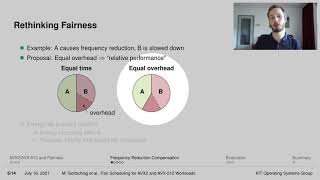
Fair Scheduling for AVX2 and AVX-512 Workloads
Explore fair CPU scheduling for AVX2 and AVX-512 workloads, addressing power-limited CPUs and frequency reduction impacts. Learn techniques to improve performance isolation and fairness in multi-task environments.
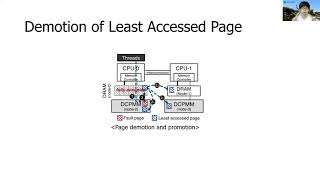
Exploring the Design Space of Page Management for Multi-Tiered Memory Systems
Explores page management strategies for multi-tiered memory systems, analyzing access locality and tier importance to optimize performance in DRAM and SCM configurations.
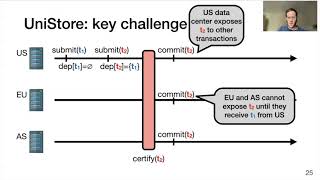
UniStore - A Fault-Tolerant Marriage of Causal and Strong Consistency
Explores a fault-tolerant data store combining causal and strong consistency for geo-distributed systems, addressing liveness challenges and optimizing durability costs in multi-consistency environments.