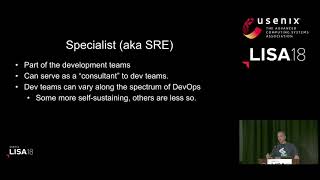
SRE and DevOps at a Startup
Exploring SRE and DevOps implementation strategies for startups, comparing centralized and distributed team approaches, and discussing challenges and lessons learned.
Deploying SRE Training Best Practices to Production - What We Learned
Explore best practices for SRE training, including sequential learning, hands-on experiences, and continuous education. Learn from Google's insights on building effective SRE teams and fostering a culture of reliability.

SRE Theory vs. Practice - A Song of Ice and TireFire
Humorous talk contrasting idealized SRE practices with real-world challenges. Speakers debunk perfect environments, offering practical insights and relatable experiences for SRE professionals.
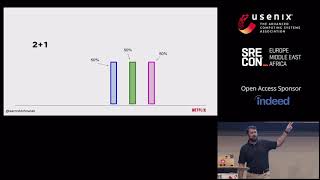
Availability, Latency, and Cost - Withstanding Regional Outages
Explore Netflix's multi-region strategy for improved availability and latency, including algebraic models, incident management, and design considerations for efficient failovers and user steering.
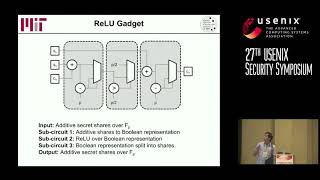
GAZELLE - A Low Latency Framework for Secure Neural Network Inference
Efficient framework for secure neural network inference combining homomorphic encryption and two-party computation, outperforming existing systems in speed while preserving privacy for cloud-based machine learning.
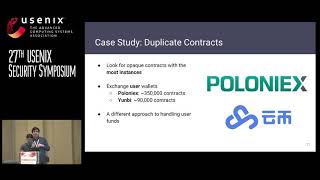
Erays - Reverse Engineering Ethereum's Opaque Smart Contracts
Reverse engineering tool for Ethereum smart contracts, providing insights into code complexity, reuse, and linking contracts to public source code. Demonstrates applications in high-value wallets, arbitrage bots, and popular games.

Why Do Keynote Speakers Keep Suggesting That Improving Security Is Possible
Humorous critique of tech industry's approach to security, highlighting flaws in machine learning, AI, and IoT while advocating for ethical computing and thoughtful development.

Hunting for Risky Dependencies in the World of Microservices
Discover how to identify and mitigate hidden vulnerabilities in microservice architectures using OpenTelemetry, with real-world examples from Google Maps' high-risk dependencies.
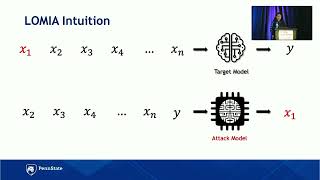
Are Your Sensitive Attributes Private? Novel Model Inversion Attribute Inference Attacks on Classification Models
Novel model inversion attacks on classification models reveal vulnerabilities in ML technologies, potentially leaking sensitive training data. Explores confidence score-based and label-only attacks, demonstrating disparate vulnerability across different…

Who Are You - I Really Wanna Know - Detecting Audio DeepFakes Through Vocal Tract Reconstruction
Explore innovative audio deepfake detection using vocal tract reconstruction. Learn how fluid dynamics and articulatory phonetics can identify impossible anatomical arrangements in synthesized speech.
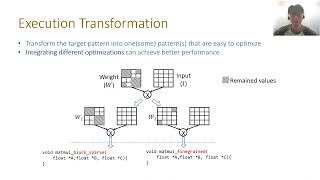
SparTA - Deep-Learning Model Sparsity via Tensor-with-Sparsity-Attribute
Explores deep learning model sparsity via Tensor-with-Sparsity-Attribute, enabling efficient sparse models across various patterns and optimization techniques, delivering significant speedups compared to state-of-the-art solutions.

Carbink - Fault-Tolerant Far Memory
Fault-tolerant far memory system using erasure-coding and remote memory compaction for efficient datacenter applications, offering improved latency and performance over existing solutions.
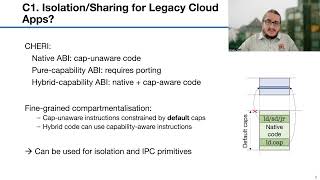
CAP-VMs - Capability-Based Isolation and Sharing in the Cloud
Explore capability-based isolation and efficient data sharing in cloud environments using cVMs, a novel VM-like abstraction leveraging memory capabilities for enhanced security and performance.
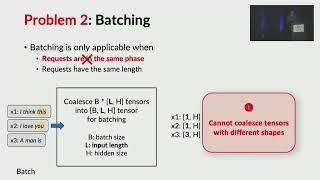
Orca - A Distributed Serving System for Transformer-Based Generative Models
Explore Orca, a distributed serving system for transformer-based generative models, featuring iteration-level scheduling and selective batching to enhance performance and efficiency in large-scale language model inference.
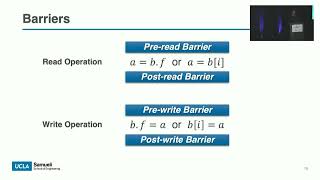
MemLiner - Lining up Tracing and Application for a Far-Memory-Friendly Runtime
MemLiner: Runtime technique improving far-memory systems by aligning application and garbage collection memory accesses, reducing local-memory working set and enhancing remote-memory prefetching for better performance.
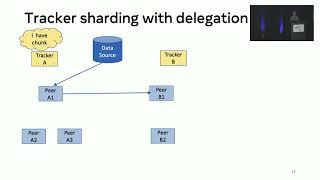
Owl - Scale and Flexibility in Distribution of Hot Content
Explore Owl, Meta's high-scale content distribution system combining centralized control with peer-to-peer data transfer, offering improved speed and flexibility over traditional methods.
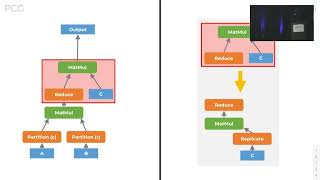
Unity - Accelerating DNN Training Through Joint Optimization of Algebraic Transformations and Parallelization
Explore Unity, a system optimizing distributed DNN training through joint algebraic transformations and parallelization. Learn about its unified parallel computation graph and hierarchical search algorithm for improved performance.
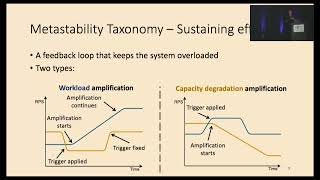
Metastable Failures in the Wild
Explores metastable failures in distributed systems, analyzing real-world incidents to categorize triggers and amplification mechanisms, aiding understanding and potential solutions for this prevalent issue.
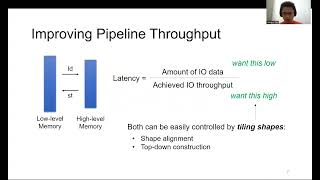
ROLLER - Fast and Efficient Tensor Compilation for Deep Learning
Introduces ROLLER, a fast tensor compilation approach for deep learning using rTile abstraction and recursive construction, generating efficient kernels in seconds for various accelerators.
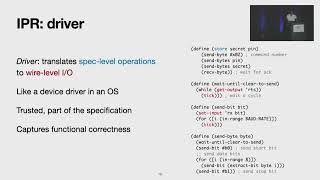
Verifying Hardware Security Modules with Information-Preserving Refinement
Explore Knox, a framework for building verified hardware security modules (HSMs) that eliminates bugs and side channels through formal verification and information-preserving refinement.
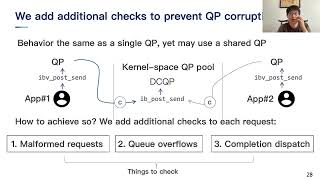
KRCORE - A Microsecond-scale RDMA Control Plane for Elastic Computing
Microsecond-scale RDMA control plane for elastic computing, enabling rapid connection establishment and efficient data transfer in distributed systems and serverless environments.