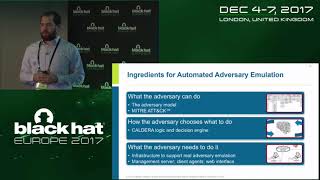
CALDERA - Automating Adversary Emulation
Automate adversary emulation for network security using CALDERA. Replicate realistic post-compromise techniques, leveraging benign system functionality to enhance defensive strategies.

Effective Vulnerability Discovery with Machine Learning
Explore machine learning techniques for effective vulnerability discovery in software dependencies, enhancing security analysis beyond traditional methods.
Securing the Next Version of HTTP - How QUIC and HTTP-3 Compare to HTTP-2
Explore QUIC and HTTP/3 protocols, their security features, and improvements over HTTP/2. Learn about encryption, handshakes, and performance enhancements in next-gen web communication.

3D Red Pill - A Guest-to-Host Escape on QEMU/KVM Virtio Device
Demonstration of a guest-to-host escape exploit on QEMU/KVM virtio-gpu devices, showcasing vulnerability analysis, exploitation techniques, and potential security solutions.

Kr00k - How KRACKing Amazon Echo Exposed a Billion+ Vulnerable Wi-Fi Devices
Discover critical Wi-Fi security vulnerabilities affecting billions of devices, including Amazon Echo. Learn about Kr00k, its impact, and see a live demonstration of the exploit.

ZombieLoad - Leaking Data on Intel CPUs
Explore ZombieLoad, a critical Intel CPU vulnerability. Learn about its mechanics, implications for data security, and potential exploits through demonstrations and insights.

Multiple Bugs in Multi-Party Computation - Breaking Cryptocurrency's Strongest Wallets
Explore vulnerabilities in advanced cryptographic methods for cryptocurrency wallets, focusing on multi-party computation and threshold signature schemes. Learn about potential attacks and security considerations.

Engineering Empathy - Adapting Software Engineering Principles and Process to Security
Explore how software engineering principles can enhance security practices, featuring insights from a role-reversal experiment between security and runtime teams.

Hacking the Supply Chain - The Ripple20 Vulnerabilities Haunt Tens of Millions of Critical Devices
Exposición sobre vulnerabilidades críticas Ripple20 que afectan a millones de dispositivos IoT en diversos sectores, detallando su descubrimiento, impacto y explotación técnica.

IMP4GT - IMPersonation Attacks in 4G Networks
Explore IMP4GT attacks in 4G networks, revealing vulnerabilities in LTE security. Learn about impersonation techniques, their impact, and consequences for users and law enforcement.

A Framework for Evaluating and Patching the Human Factor in Cybersecurity
Explore a framework for assessing and improving human-related cybersecurity vulnerabilities, focusing on evaluating and enhancing the human factor in security systems.

Security Research on Mercedes-Benz - From Hardware to Car Control
Explore Mercedes-Benz car security research, from hardware analysis to gaining control. Learn about attack surfaces, reverse engineering, and cloud control in modern connected vehicles.

A Hacker's Guide to Reducing Side-Channel Attack Surfaces Using Deep Learning
Explore deep-learning techniques to identify and reduce side-channel attack vulnerabilities, leveraging AI explainability for efficient implementation assessment and improved security.

Needing the DoH - The Ongoing Encryption and Centralization of DNS
Explore DNS encryption's impact on internet privacy, security, and network operations. Delve into DoT and DoH standards, their implications for users and providers, and the shift towards centralized DNS.

Attacking iPhone XS Max
Explore iPhone XS Max vulnerabilities, including PAC implementation, XNU bug exploitation, and kernel read/write access. Learn about Unix Domain Socket, race conditions, and unprotected control flow transfer points.
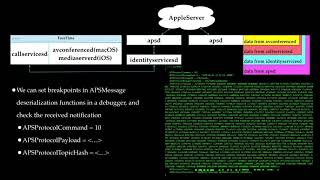
Towards Discovering Remote Code Execution Vulnerabilities in Apple FaceTime
Explore FaceTime's vulnerabilities through reverse engineering, focusing on call initialization, connection processes, and potential attack surfaces for remote code execution.

Unveiling the Underground World of Anti-Cheats
Explore anti-cheat techniques in gaming, from market analysis to advanced methods like memory manipulation, with insights on implementation and real-world examples.
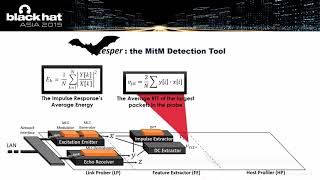
See Like a Bat - Using Echo-Analysis to Detect Man-in-the-Middle Attacks in LANs
Explore Vesper, a novel MitM detector for LANs using echo-analysis. Learn about its application, effectiveness against various attacks, and practical deployment strategies.
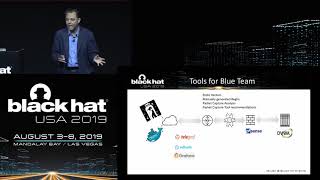
Defense Against Rapidly Morphing DDOS
Explore defenses against rapidly evolving DDoS attacks, examining the ProtonMail case and evaluating mitigation strategies for SOC operators facing dynamic, high-speed threats.
Exploiting the Hyper-V IDE Emulator to Escape the Virtual Machine
Explore a critical Hyper-V vulnerability, its exploitation on Windows Server 2012R2, and learn about virtualization security, memory manipulation, and payload strategies in this technical deep dive.

Messaging Layer Security - Towards a New Era of Secure Group Messaging
Explore secure group messaging protocols, focusing on Messaging Layer Security (MLS) for corporate settings. Learn about encryption, scalability challenges, and the future of secure communication.