Moving Red Hat Enterprise Linux into a New World
Exploring Red Hat Enterprise Linux's evolution to meet modern infrastructure demands, focusing on modularization, flexibility, and optimization for various use cases and deployment scenarios.
Anatomy of a Big Data Application in Containers
Explore the anatomy of data-intensive containerized applications, their lifecycle, and architectural patterns using real-world examples like Amazon Retail, Uber, and Strava.
Lessons Learned on the DevOps Front
Transforming DevOps: From bottleneck to enabler. Learn how Red Hat's team improved communication, infrastructure, and culture to boost R&D productivity and deliver better outcomes for customers.
The Intelligent Cloud
Explore the universe through data: Learn about the Sloan Digital Sky Survey, SQL Server on Linux, and how advanced analytics and machine learning are revolutionizing our understanding of space.

App Dev and Operations for Evolving IT Environments
Paul Cormier explores IT evolution, modern app development, and Red Hat's tools for adapting to changing environments. Discusses open source, infrastructure, management, and the convergence of operations and applications.
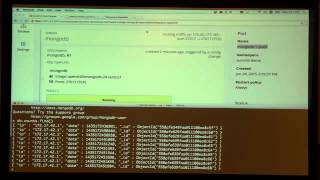
OpenShift 3 and the Next Generation of PaaS
Explore OpenShift 3's next-gen PaaS capabilities, leveraging Docker containers, Kubernetes orchestration, and Red Hat technologies to accelerate application delivery and enable DevOps practices.
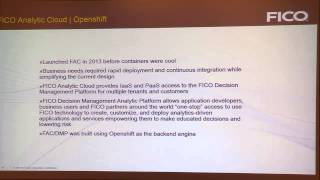
FICO Analytic Cloud - How We Transitioned to SaaS from a Legacy IBM - VMware Application
Explore FICO's transition to SaaS with the Analytic Cloud, leveraging Red Hat's portfolio to expand market reach, democratize analytics, and generate significant revenue growth in just one year.
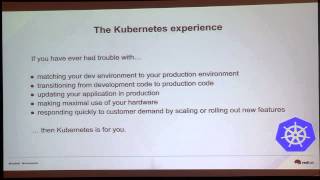
Build Your Modern, Portable PaaS Platforms with Containers and Kubernetes
Explore modern PaaS platforms using containers and Kubernetes, focusing on portability and efficiency in application deployment and management for distributed systems.
A Successful Path to PaaS at University of Technology, Sydney
Discover how UTS successfully implemented OpenShift PaaS, navigating organizational change and enhancing practice-based learning. Learn strategies for quick adoption and overcoming innovation challenges in higher education.

Demystifying systemd
Explore systemd in RHEL 7: init command translation, legacy script conversion, service unit customization, and resource allocation via cgroups. Learn to leverage modern Linux system management tools.
Red Hat Enterprise Virtualization Hypervisor - KVM Now and in the Future
Explore KVM features in RHEL 6 and 7, upcoming developments for NFV and Power8, and future plans for Red Hat Enterprise Virtualization Hypervisor. Gain insights from engineering experts.
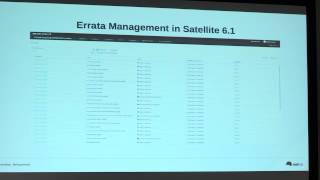
Shellshock, Heartbleed – What’s the Next Headache for Compliance?
Explore strategies for rapid detection and remediation of security issues in hybrid environments using Red Hat CloudForms and Satellite, with a focus on compliance challenges and effective remediation patterns.
Red Hat Training and Certification Update - Red Hat Summit
Discover Red Hat's new training initiatives, including Subscription Learning, DevOps, and OpenStack, designed to prepare IT professionals for future challenges.
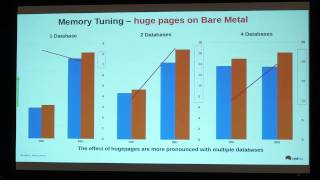
Performance Tuning Red Hat Enterprise Linux Platform for Databases
Optimize Red Hat Enterprise Linux for database performance through OS tuning, Linux containers, and performance tools. Learn NUMA, memory, network, and virtualization tuning techniques.
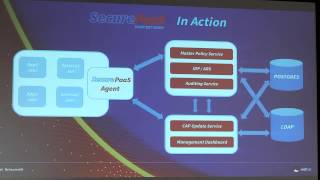
SecurePaaS with OpenShift on Red Hat JBoss Middleware
Explore security concerns in PaaS environments and witness a technical demo of SecurePaaS capabilities in OpenShift with Red Hat JBoss Middleware for enhanced identity management and authorization.
Red Hat's Container Strategy
Explore Red Hat's container strategy, including benefits, runtimes, security, and management. Learn how containerization can transform enterprise IT and accelerate business agility across hybrid cloud environments.
Reduce Operational Risk with Analytics from Red Hat Access Insights
Discover how Red Hat Access Insights uses analytics to enhance stability, security, and compliance for Red Hat Enterprise Linux systems, providing key operational insights.
Super Privileged Containers - Red Hat Summit
Explore super privileged containers in Red Hat Enterprise Linux Atomic Host. Learn to manipulate security settings, manage host systems, and run advanced operations like loading kernel modules and debugging processes.
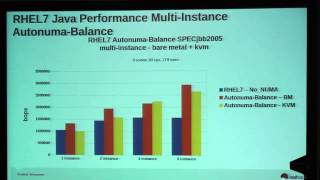
Performance Analysis and Tuning of Red Hat Enterprise Linux
Comprehensive guide to configuring, analyzing, and optimizing Red Hat Enterprise Linux systems for peak performance across various applications, featuring expert insights on hardware, tools, and tuning techniques.
Building Enterprise Clouds - Resetting Expectations to Get Them Right
Explore enterprise cloud challenges, market shortcomings, and strategies for successful private cloud implementation. Learn to reset expectations and overcome common pitfalls in cloud computing projects.
Red Hat Enterprise Linux OpenStack Platform High Availability
Explore options for maximizing OpenStack uptime and mitigating risks using Red Hat Enterprise Linux OpenStack Platform. Learn about high availability, easy deployment, and distributed layouts for fault-tolerant, scale-out workloads.