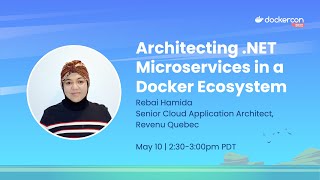
Architecting .NET Microservices in a Docker Ecosystem
Explore microservices architecture, .NET Core solutions, and Docker containers for cloud-based applications. Learn design principles, implementation approaches, and deployment strategies in Azure.
Docker and Pyrsia - Securing the Software Supply Chain
Explore securing the open-source software supply chain with Pyrsia and Docker. Learn about vulnerabilities, exploits, and innovative solutions to enhance security in modern application development.

Removing Complexity from Integration Tests Using Testcontainers
Simplify integration testing with Testcontainers: Learn to create isolated, repeatable environments for databases, Kafka, and cloud services directly in your test code, enhancing local development and CI pipelines.

Running an AWS Stack on Your Local Machine
Learn to efficiently run an AWS Stack locally using Docker Desktop and Docker Compose, simplifying development setup and avoiding configuration headaches for new team members.

Building Observability for 99% Developers
Discover how to build observability into deployments for efficient software development. Learn about the needs of small teams and explore solutions for better visibility and monitoring in modern applications.
Deploying Machine Learning Models for Forensic Anthropology with Docker and Streamlit
Deploy ML models for forensic anthropology using Docker and Streamlit. Learn to create a web application for skeletal sex prediction, combining archeology, physics, and technology for impactful research in bioarchaeology.
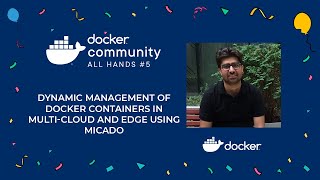
Dynamic Management of Docker Containers in Multi-Cloud and Edge Using MiCADO
Explore MiCADO: an open-source framework for dynamic management of Docker containers across multi-cloud and edge environments, built on Kubernetes. Learn about its components, policies, and applications in various scenarios.
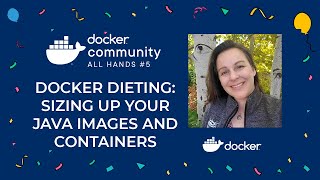
Docker Dieting - Sizing up Your Java Images and Containers
Learn strategies to optimize Java images and containers, reducing size and improving security while maintaining functionality and performance.
Bluetooth Mesh and Zephyr
Explore Bluetooth mesh fundamentals and implementation on Zephyr RTOS, covering key concepts like models, messages, and security for creating large-scale, secure Bluetooth device networks.
NuttX for Embedded Linux Developers
Explore NuttX RTOS for resource-constrained devices, its Linux-like features, and real-world applications in Sony products. Learn about porting Linux apps and networking capabilities.
Low-Latency, Deterministic Networking with Standard Linux using XDP Sockets
Explore low-latency, deterministic networking using XDP sockets in Linux. Learn implementation, performance evaluation, and advantages over traditional solutions for high-throughput applications.
Multi-core Application Development with Zephyr RTOS
Explore multi-core application development using Zephyr RTOS, covering AMP and SMP models, current support status, implementation challenges, and performance benefits for embedded systems.
Developing the RISC-V Hypervisor Extensions in QEMU
Explore RISC-V Hypervisor Extensions implementation in QEMU, covering architecture differences, specification challenges, and current status. Gain insights into Hypervisor development and porting for RISC-V platforms.
Profiling CPU and Memory on Linux, with Opensource Graphical Tools
Learn to profile CPU and memory on Linux using open-source graphical tools like heaptrack and hotspot. Discover efficient ways to identify performance bottlenecks and memory allocation issues in your applications.
The First Stable libcamera Release - A Call for Public API Review
Comprehensive overview of libcamera's features, architecture, and API, calling for developer feedback as it approaches stability. Practical examples and discussion included.
A Dive into Zephyr Device Driver Model
Explore Zephyr's efficient device driver model, integrated with device tree, enabling easy hardware porting and flexible peripheral access for developers.
Debian or Yocto Project - Which is the Best for Your Embedded Linux Project
Comparison of Debian and Yocto Project for embedded Linux, exploring strengths, weaknesses, and best use cases for each approach in real-world scenarios.
Zephyr OS Memory Protection
Explore MPU-based memory protection in Zephyr RTOS, covering security domains, permission management, object allocation, system calls, and IPC mechanisms for embedded systems.
Home Automation with MQTT
Explore MQTT protocol for home automation, including integration with open-source platforms, message conventions, and practical examples using Raspberry Pi and Arduino-based sensors.
Enabling the TPM2.0 Ecosystem in Linux
Explore TPM2.0 in Linux: Learn about security chip functionality, use cases, and the tpm2-software stack. Discover how to enhance system security using TPM in various applications.
License Compliance in Embedded Linux with the Yocto Project
Explore license compliance tools in Yocto Project for embedded Linux, covering best practices, pitfalls, integration methods, and recent improvements. Gain insights on fulfilling GPL obligations effectively.