OWASP Flagship Projects - OWASP DefectDojo
Learn about OWASP DefectDojo, an open-source application security management tool. Explore its features, automation capabilities, deployment options, and community-driven development.
OWASP Cloud-Native Application Security Top 10 Flagship Project
Explore key security challenges and best practices for cloud-native applications, focusing on OWASP's top 10 vulnerabilities and mitigation strategies.
Preventing Mobile App and API Abuse
Explore mobile app and API security threats, countermeasures, and defense-in-depth techniques through a courier service's evolving security approach against malicious attacks.
Pose a Threat - How Perceptual Analysis Helps Bug Hunters
Innovative techniques for efficient bug hunting using perceptual analysis, serverless infrastructure, and machine learning to identify security vulnerabilities at scale.
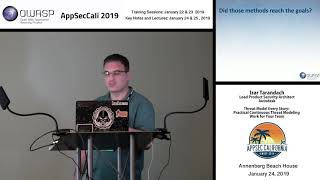
Threat Model Every Story - Practical Continuous Threat Modeling Work for Your Team
Explore continuous threat modeling for agile teams, focusing on collaborative methodologies and the PyTM open-source tool to enhance product security throughout development.
Authentication as a Microservice - Portable Customer Identity Management
Explore microservice-based authentication, portable identity management, and JWT security. Learn advantages, pitfalls, and best practices for decoupling user data in modern applications.

Human Factors That Influence Secure Software Development
Explores human factors influencing secure software development, including environmental conditions, developer characteristics, and team dynamics. Discusses strategies to identify and mitigate vulnerability-prone code before issues arise.

Flying Above the Clouds - Securing Kubernetes
Explore Kubernetes security, from container isolation to authentication and authorization. Learn to build resilient cloud-native systems and deploy secure services in a distributed environment.
Breaking Fraud and Bot Detection Solutions
Demystifying browser fingerprinting and user behavior tracking in fraud detection, exploring vulnerabilities, and sharing real-world implementation flaws in bot prevention systems.

A New Framework to Automate MSTG and MASVS in Your CI/CD Pipeline
Automate mobile app security testing using BDD and UI automation frameworks. Integrate OWASP MASVS/MSTG into CI/CD pipelines for faster, repeatable security checks at DevOps speed.
Web Application Compromise Mitigation with Crypto Anchoring - AppSecUSA
Explore crypto anchoring as a solution to protect sensitive data from breaches, paired with effective monitoring for enhanced web application security.

My Journey Through Building an Advanced Bot Detection Product
Explore the evolution of bot detection and management, focusing on fraudulent activities, detection techniques, and best practices for protecting e-commerce and finance websites.
The Anatomy of a Secure Web Application in Java Using Spring Security and Apache Fortress
Practical guidance on implementing secure Java web applications using Spring Security and Apache Fortress. Covers authentication, authorization, and confidentiality controls with hands-on demos and code examples.
Open Source Security Tools for Kubernetes Applications
Explore open-source tools for securing Kubernetes applications, covering image scanning, runtime security, and anomaly detection. Learn practical strategies for maintaining a secure cloud-native environment.
Lessons from Integrating Third Party Library Scanning in DevOps Workflow
Integrating third-party library scanning in DevOps: automation strategies, architectural choices, and best practices for secure development at scale. Tips for seamless implementation and measuring success.

Making Security Approachable for Developers and Operators
Explore strategies to make security more accessible for developers and operators through APIs, secure-by-default platforms, and policy as code, enhancing overall security posture.

Perimeter-less - Engineering the Future of Defense
Explore modern defense strategies for complex digital ecosystems, focusing on designing defensible systems beyond traditional perimeter security to protect platforms, applications, and services at internet scale.
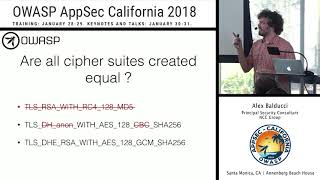
What's New in TLS 1.3
Explore TLS 1.3's security enhancements, new protocol handshakes, and 0-RTT resumption. Learn about potential deployment pitfalls and how to avoid them in this comprehensive overview of the latest TLS version.
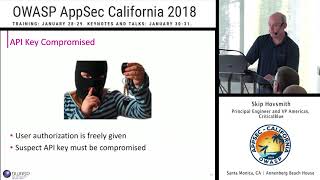
A Tour of API Underprotection
Explore API security threats, protection techniques, and advanced strategies. Learn about OAuth2, static API keys, mobile security, certificate pinning, and emerging technologies to strengthen your API security posture.
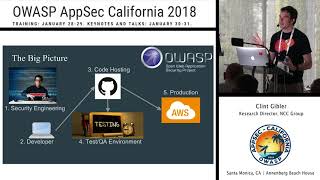
SecDevOps - Current Research and Best Practices
Explore current research and best practices in SecDevOps, covering static and dynamic analysis, security scaling, and infrastructure best practices for improved application security.
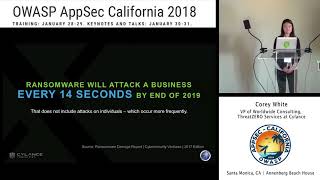
Prevention as a Business Strategy
Explore how prevention-focused cybersecurity strategies using AI and machine learning can protect businesses from evolving threats, reducing risks and costs associated with traditional detect-and-respond approaches.