The Tales of a Bug Bounty Hunter
Explore advanced mobile security techniques and real-world vulnerabilities in Instagram, with insights on bug bounty hunting, responsible disclosure, and prevention strategies in the software development lifecycle.
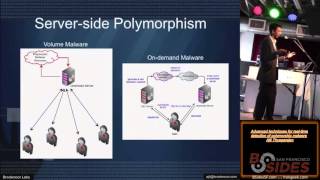
Advanced Techniques for Real Time Detection of Polymorphic Malware
Explore advanced techniques for detecting polymorphic malware in real-time, including approximation matching algorithms and bloom filters. Compare efficiency and performance of various methods for fast identification and classification.
Securing the Road to Autonomy
Expert panel discusses challenges and strategies for securing autonomous vehicles, addressing cybersecurity risks and safety concerns in the evolving automotive industry.
In-Secure Remote Operations - What Sucks, Rocks, and a Super-CLI
Explore secure remote operations, analyzing pros and cons of jump server architectures, role-based shells, and PowerShell limitations. Includes new research on full token hijacking from network logon sessions without hashes or TGTs.
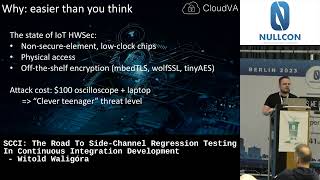
The Road to Side-Channel Regression Testing in CI Development
Explore integrating side-channel regression testing into CI development, with practical demonstrations and insights on implementing countermeasures for sample attacks.
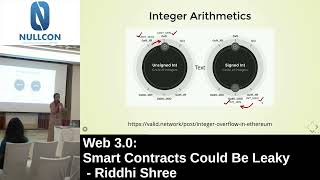
Web 3.0 Smart Contracts Could Be Leaky
Explore the challenges and solutions in writing secure smart contracts for Web 3.0, including preventing sensitive information leaks and deploying to decentralized servers.

Honey I Just Put The Hospital On A Ventilator
Explore DICOM file vulnerabilities in healthcare and learn about an entropy-based detection technique to identify malicious files, with demonstrations of attacks and protective solutions for Linux and Windows.

Securing the Software
Expert panel discusses strategies and challenges in software security, offering insights for industry professionals and organizations to enhance their cybersecurity practices.
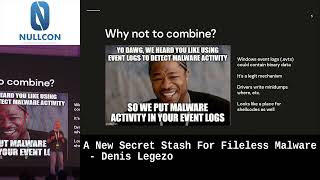
A New Secret Stash For Fileless Malware
Explores advanced fileless malware techniques using Windows event logs for code hiding and infection. Reveals new methods to conceal shellcode and manipulate logging functions.
PAM Maturity From Zero Trust To Least Privilege
Panel discussion on PAM maturity, exploring the journey from zero trust to least privilege. Industry experts share insights on implementing effective privileged access management strategies in modern cybersecurity landscapes.
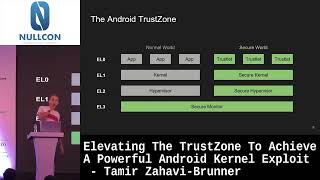
Elevating the TrustZone to Achieve a Powerful Android Kernel Exploit
Explore a novel Android kernel exploitation technique using TrustZone to bypass security mitigations, achieve 100% reliability, and create a versatile exploit applicable across devices and versions.

Quantum Computing - Are We There Yet?
Explore quantum computing progress, including Google's recent breakthrough, and learn about quantum gates, error correction, and future challenges in building large-scale quantum computers.

Linux on Open Source Hardware with Open Source Chip Design
Explore open hardware projects for Linux, including BeagleBone and OLinuXino. Learn about RISC-V and free FPGA toolchains for creating libre systems and running Linux on open source chip designs.

Der netzpolitische Jahresrückblick
Jahresrückblick zu netzpolitischen Ereignissen 2019: IT-Sicherheit, Staatstrojaner, Uploadfilter, KI und Blockchain. Ausblick auf 2020 mit Fokus auf EU-Kommission und Plattformregulierung.
Mifail oder - Mit Gigaset wäre das nicht passiert!
Überblick über DECT-Technologie, Sicherheitsanalyse und kreative Lösungen für Kompatibilitätsprobleme. Einblicke in Eventphone's Telefonsystem und dessen Weiterentwicklung auf chaosnahen Events.

Mensch - Kunst - Maschine
Erforschung der Schnittstelle zwischen KI und Kunst: Potenziale, Herausforderungen und philosophische Fragen zur Kreativität, Intentionalität und dem Wesen der Kunst im Kontext künstlicher Intelligenz.

Hacking the Media - Geflüchtete schmuggeln, Nazis torten, Pässe fälschen
Rückblick auf kreative Aktionen zivilen Ungehorsams: Von Cop Maps bis Seenotrettung. Humorvolle Einblicke in Kommunikationsguerilla und Medienaktionen des Peng Kollektivs für soziale Bewegungen.
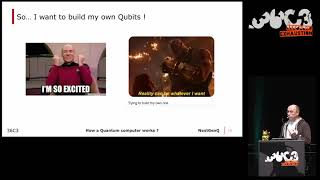
Build Your Own Quantum Computer at Home - Hacker Style
Explore building a quantum computer at home using trapped ion technology. Learn about quantum computing basics, its potential impact on cybersecurity, and follow a hacker's journey to create DIY quantum hardware.
ZombieLoad Attack
ZombieLoad: Powerful Intel CPU vulnerability allowing data leaks across processes, kernels, and VMs. Explores attack methods, demonstrates real-world impacts, and discusses implications for hardware/software security.

Vehicle Immobilization Revisited
Uncovering vulnerabilities in modern vehicle immobilization systems through analysis of ECM-BCM authentication protocols, revealing potential security risks in various car models.
Offene Sensordaten für Jedermann - Ein Citizen Science Projekt basierend auf Open Source und
Entdecken Sie die senseBox: Ein DIY-Baukasten für Citizen Science. Messen Sie Umweltdaten, analysieren Sie Ergebnisse und beteiligen Sie sich an Forschung. Fördern Sie Umweltverständnis und digitale Bildung durch Open-Source-Technologie.