Generating Music From Emotion - and Other Experiments
Explore innovative techniques for generating music based on emotional patterns in books, videos, and films, using sentiment analysis and other non-musical data as foundations for musical storytelling.
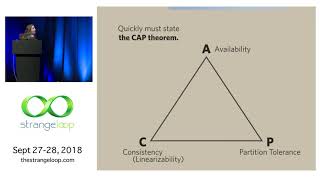
Towards Language Support for Distributed Systems
Exploring language-level solutions for distributed systems challenges, focusing on CRDTs and serverless function compositions to simplify development and enhance reliability.
Universal Reason
Explore building universal ReactJS apps with ReasonML, a typed language compiling to JavaScript. Learn language basics, library bindings, and full-stack development for modern web applications.
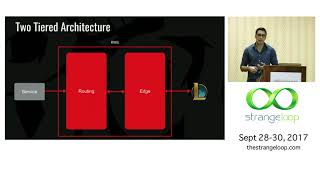
Riot Messaging Service - Message Players Like a Pro
Explore the architecture and scalability of Riot Games' messaging system for League of Legends, enabling real-time communication with millions of players across hundreds of services.
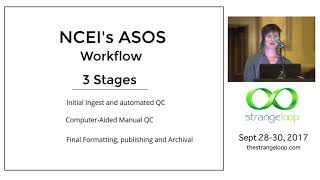
Onyx-Native, Information Flow Models and Scientific Computing
Explore Onyx-Native library for modernizing legacy scientific computing systems, focusing on information flow models and their application to complex, long-lived codebases like NOAA's ASOS Ingest System.
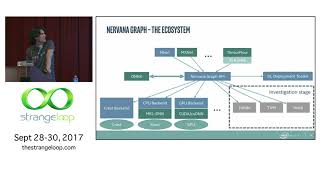
Towards New Deep Learning Abstractions on Top of Existing Frameworks
Explore Nervana Graph, a Python library for efficient neural network implementation across platforms. Learn about its modular design, computational efficiency, and hardware flexibility.
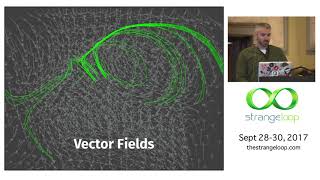
Aesthetic Engine 2
Explore alternative web data interpretation and artistic rendering with Aesthetic Engine 2. Discover unconventional approaches to data visualization and software development in the era of Big Data.
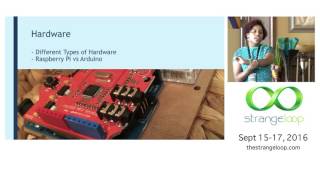
Build Your Child Their Very Own Node.js Frozen Bot
Create a voice-responsive NodeBot using Node.js, robotics frameworks, and Arduino. Learn step-by-step bot creation for customizable functionality.
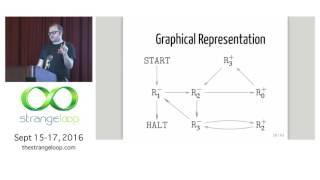
Unlimited Register Machines, Gödelization and Universality
Explore computational theory through Unlimited Register Machines, understanding Turing equivalence and universality. Gain insights into the foundations of computing power and algorithmic complexity.

Wikimedia Content API - A Cassandra Use-case
Explore Wikimedia's use of Apache Cassandra for their content API, addressing challenges in storing and serving massive datasets with low latency in a global environment.
Changing the Engine in Flight - Rebuilding Monitoring at Scale
Explore real-time data processing architecture for high-traffic monitoring, including distributed systems, Go-based microservices, and Kafka with ElasticSearch. Learn from successes and failures in upgrading monitoring systems.
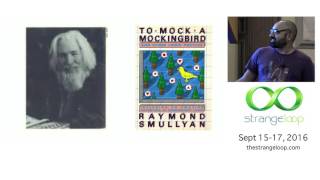
Point-Free or Die - Tacit Programming in Haskell and Beyond
Explore tacit programming in functional languages, its benefits, drawbacks, and applications. Learn eta-reduction, develop intuition, and examine its use in libraries and specialized languages.
PureScript & Pux - A Safer, More Expressive Way to React
Discover PureScript and Pux: a powerful alternative to Elm for React development, offering gradual adoption, hot reloading, and advanced typing features while maintaining compatibility with existing components.
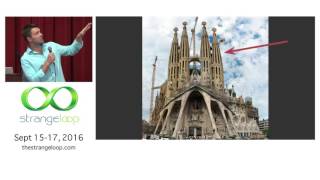
If Gaudí Had a Cluster
Explore a visual programming environment for architects, combining Gaudí's innovative spirit with modern distributed computing to revolutionize building design and unleash creative potential.
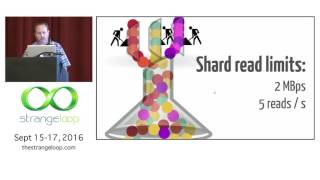
Distributed Commit Log - Application Techniques for Transaction Processing
Explore techniques for leveraging distributed commit logs in transaction processing, including handling duplicates, sharding, exceptions, and debugging in real-time systems.
How to Get Started With Functional Programming
Explore functional programming concepts and learn how to transition from object-oriented to functional paradigms for more reliable and readable code.
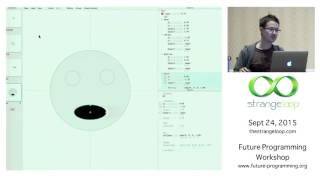
Apparatus - A Hybrid Graphics Editor - Programming Environment
Explore Apparatus, a hybrid tool combining vector graphics and dataflow capabilities for rapid creation of interactive diagrams, bridging spatial and symbolic approaches to visualization.
Relevance of ClojureScript
Explore ClojureScript's relevance in modern web development, comparing its features with ES6 and showcasing code examples to help developers make informed decisions about its adoption.

How the Web Is Democratizing Science - Join In!
Explore how the web enables open science, empowering anyone to access and analyze scientific data. Learn about tools and platforms that facilitate collaborative research and data visualization.
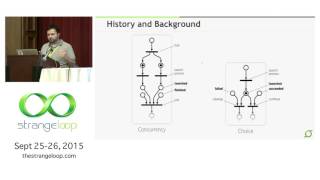
PTero - Architecture and Development
Explore PTero, a workflow system using petri nets for genomic data analysis. Learn about its architecture, development, and advantages in managing complex computational workflows at scale.
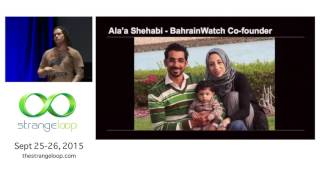
Security for Humans - Privacy and Coercion Resistant Design
Explore privacy-focused design principles and coercion-resistant techniques to enhance digital security for individuals, with insights from a leading cybersecurity expert.