
Behind the New York Times Crossword
Explore the tech behind The New York Times Crossword: serverless architecture, Go rewrite, traffic management, and innovation driving the popular puzzle from creation to solving.
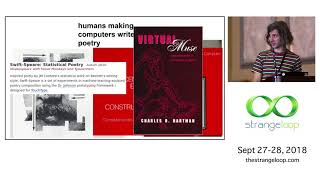
For AI, By AI - Freedom & Evolution of the AlgoPoetic Avant-Garde
Explore AI-generated poetry and its impact on language as a social practice. Delve into the New Yorken Poesry Magazine's approach to machine-created art and the importance of community in algorithmic poetry.
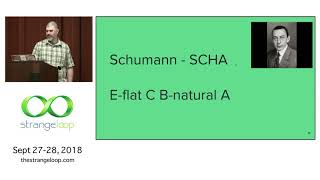
Musical Steganography - Hiding Things in Music
Explore techniques for concealing messages in music, from Bach's compositions to modern digital methods. Learn to apply steganographic principles using TidalCycles and Haskell.
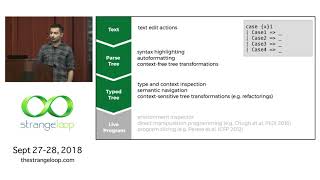
Hazel - A Live Functional Programming Environment with Typed Holes
Explore Hazel, a web-based environment for functional programming with typed holes, enabling continuous type-based services and live debugging during development of incomplete programs.
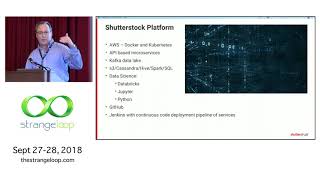
The Search for a New Visual Search - Beyond Language
Exploring AI-powered visual search beyond text, focusing on composition-aware technology for precise image retrieval using machine vision, NLP, and information retrieval techniques.
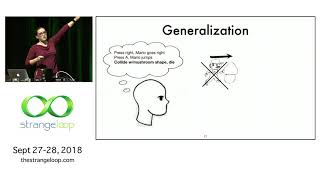
Puzzles, Problems, and Programs
Explore mental model alignment in puzzles, problems, and programming through interactive techniques and informative failure, enhancing cognitive abilities and problem-solving skills.
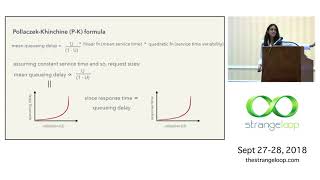
A Practical Look at Performance Theory
Explore performance theory for system tuning and capacity planning. Learn Little's Law, Universal Scalability Law, and real-world applications from companies like Facebook.
A Tale of Two Asyncs - Open Source Language Design in Rust and Node.js
Explore asynchronous programming in Rust and Node.js, comparing language design approaches, technical constraints, and governance models to understand open source language evolution.
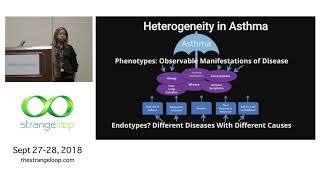
Machine Learning for Personalised Health
Exploring machine learning applications in healthcare for personalized medicine, disease subtyping, and patient stratification. Focuses on probabilistic modeling to uncover heterogeneous disease phenomena and asthma phenotypes.
Proof Theory Impressionism - Blurring the Curry-Howard Line
Exploring approaches to bridge the gap between proof assistants and production languages, focusing on Rust and its potential for incorporating provable system capabilities.
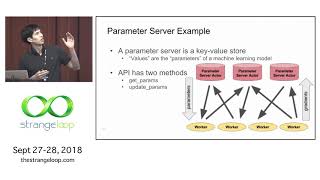
Ray - A Distributed System for Emerging AI Applications
Explore Ray, a scalable distributed system designed for AI workloads, featuring task-parallel and actor abstractions, in-memory storage, and a distributed scheduler for emerging AI applications.
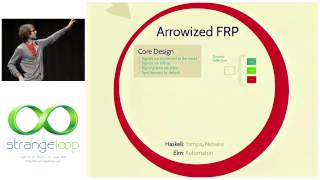
Controlling Time and Space - Understanding the Many Formulations of FRP
Explore diverse formulations of Functional Reactive Programming, their historical and theoretical connections, and how Elm's FRP variation enables features like hot-swapping and time-traveling debugging.
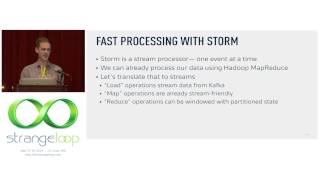
Building Real-time Systems with Open Source Technologies
Learn to build a real-time analytics stack using Kafka, Storm, and Druid for fast, flexible, and reliable data processing. Discover how to combine these technologies with Hadoop for comprehensive analytics solutions.
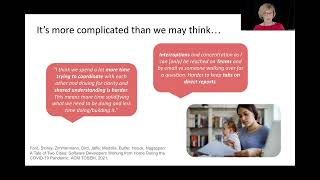
What Does 'Productivity' Actually Mean for Developers?
Explores the complex concept of developer productivity, challenging simplistic metrics and highlighting multifaceted factors that influence software engineering effectiveness.
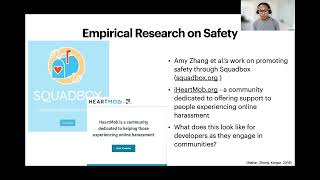
Online Community and Safety in Software Engineering
Empirical research insights on fostering safety in online coding communities, exploring successful strategies and future directions for inclusive software engineering environments.
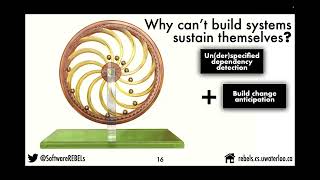
The Unintended Consequences of Mining Software Build Systems
Explore how historical build failure data can improve software development processes, with insights on testing, code reviews, remote onboarding, and productivity measurement.
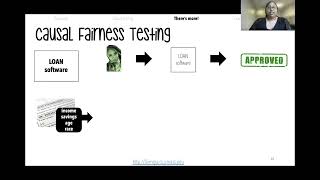
Causal Testing - Understanding the Root Causes of Defects
Explore causal testing techniques to trace software defects to their origins, enhancing fault detection and improving overall software quality and reliability.
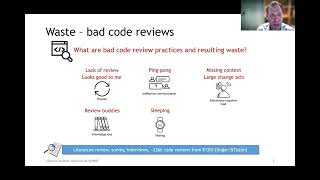
Value and Waste in Software Engineering
Explore sources of waste in software development, including bad code reviews and technical debt, and learn strategies to create value and reduce inefficiencies in the development process.
Challenges and Opportunities for Software Engineering in Papua New Guinea
Exploring software engineering in Papua New Guinea: regional challenges, opportunities, and lessons for global developers on considering local contexts in their work.

Chat with Hillel Wayne about TLA+
Explore TLA+, a formal specification language, with Hillel Wayne. Learn about its applications, benefits, and the upcoming TLA+ Conference, gaining insights into this powerful tool for software design and verification.
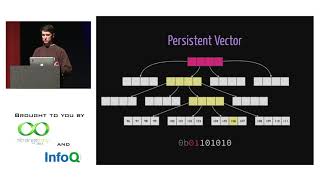
Functional Vectors, Maps, and Sets in Julia
Explore functional data structures in Julia: implementing persistent vectors, hash maps, and sets. Learn optimizations for improved performance in this hands-on coding session.